
Kurashiki and Okayama in One Day Trip from Hiroshima (or Osaka)
The combined day trip to Kurashiki and Okayama that we took in February 2026 turned out to be one of our most favorite day trips in Japan so far. We did it from Hiroshima, but it’s just as feasible from Osaka, and even from Kyoto if you don’t mind an early start and a slightly later return.
Kurashiki is well-known for its beautifully preserved historical quarter and picturesque canal while Okayama is home to Korakuen, one of Japan’s three great landscape gardens. This day trip is perfect if you are looking for something scenic, relaxed, and slightly off the main tourist trail yet still being very easy to access.
Logistics
The first leg of the trip is getting to Okayama, which is very easy via the Shinkansen. From there, it is just a quick and cheap 15-minute local train ride to Kurashiki.
From Hiroshima Station, the ride to Okayama Station takes about 40 minutes. If you are starting from Shin-Osaka Station, it is roughly 45 minutes, and from Kyoto Station, around 60 minutes. The Sanyo Shinkansen runs very frequently, about every 15–20 minutes, so there is really no need to book individual tickets in advance.
The one thing that is worth considering ahead of time is the JR Kansai – Hiroshima Area Pass.
At 17,000 yen, this pass is valid for 5 consecutive days, and it can be an excellent deal depending on your itinerary. It gives you unlimited rides on the Sanyo Shinkansen between Shin-Osaka and Hiroshima (including Nozomi which is the fastest train!). Limited express trains like the JR Haruka to Kansai Airport and even the JR ferry to Miyajima are included.
Buy JR Kansai – Hiroshima Area Pass Now
Klook.com
In practice, the value can become clear very quickly. A one-way Shinkansen ticket between Hiroshima and Okayama already costs just under 7,000 yen, and a full round trip between Osaka and Hiroshima would exceed the price of the pass on its own.
Beyond Kurashiki and Okayama, you can also use this pass to take a day trip to Himeji and Kobe as well. Himeji Castle in Himeji is one of the most impressive original castles to see in Japan.
As for how to structure the day, our personal preference is to arrive at Okayama and head straight to Kurashiki first. Kurashiki has a quaint and charming atmosphere in the morning, and there are plenty of small local restaurants that are perfect for a relaxed lunch. After that, you can return to Okayama in the afternoon to visit Korakuen Garden and Okayama Castle.
Morning: Kurashiki
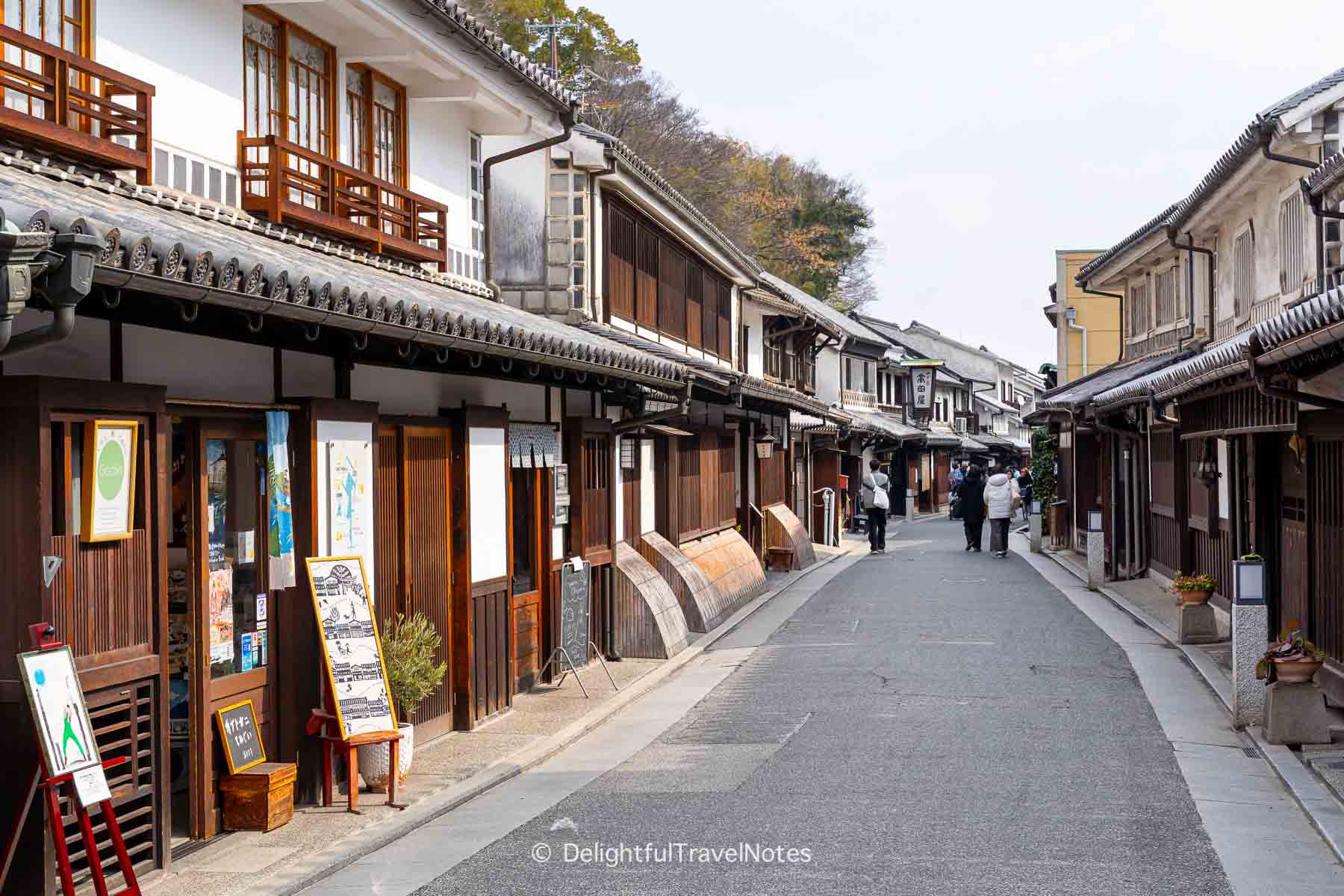
As mentioned earlier, after arriving at Okayama via Shinkansen, we recommend transferring straight to Kurashiki without stopping. From Kurashiki Station, it is about a 10–15 minute walk to the Bikan Historical Quarter. The route is easy to follow, with some English signages along the way, and Google Maps navigation works reliably as well.
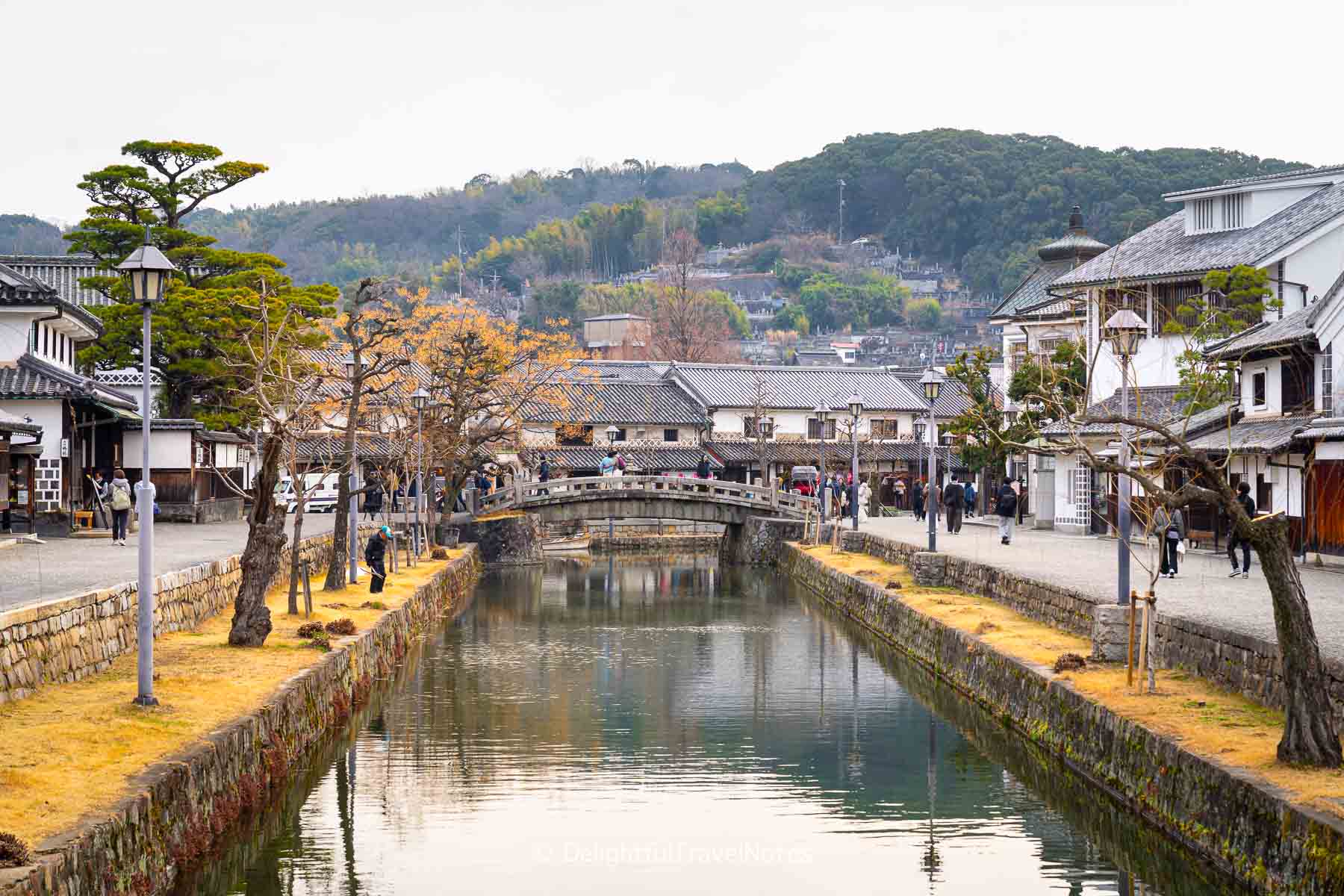
The Bikan Historical Quarter is the perfect place for a slow walk, crossing small bridges, wandering into side streets, and stopping at small souvenir shops. It was very quiet when we arrived in the morning. And although it was a gray winter day, we still found it very picturesque with all the white storehouses lining the canal and their reflections in the water.
The houses in the Bikan Historical Quarter of Kurashiki and those in Gion of Kyoto reflect two different architectural styles. In Kurashiki, the dominant architecture is traditional storehouse. These buildings were designed for storage and that function is expressed in their form. They are characterized by thick white plaster walls and tile roofs, giving them a solid presence.
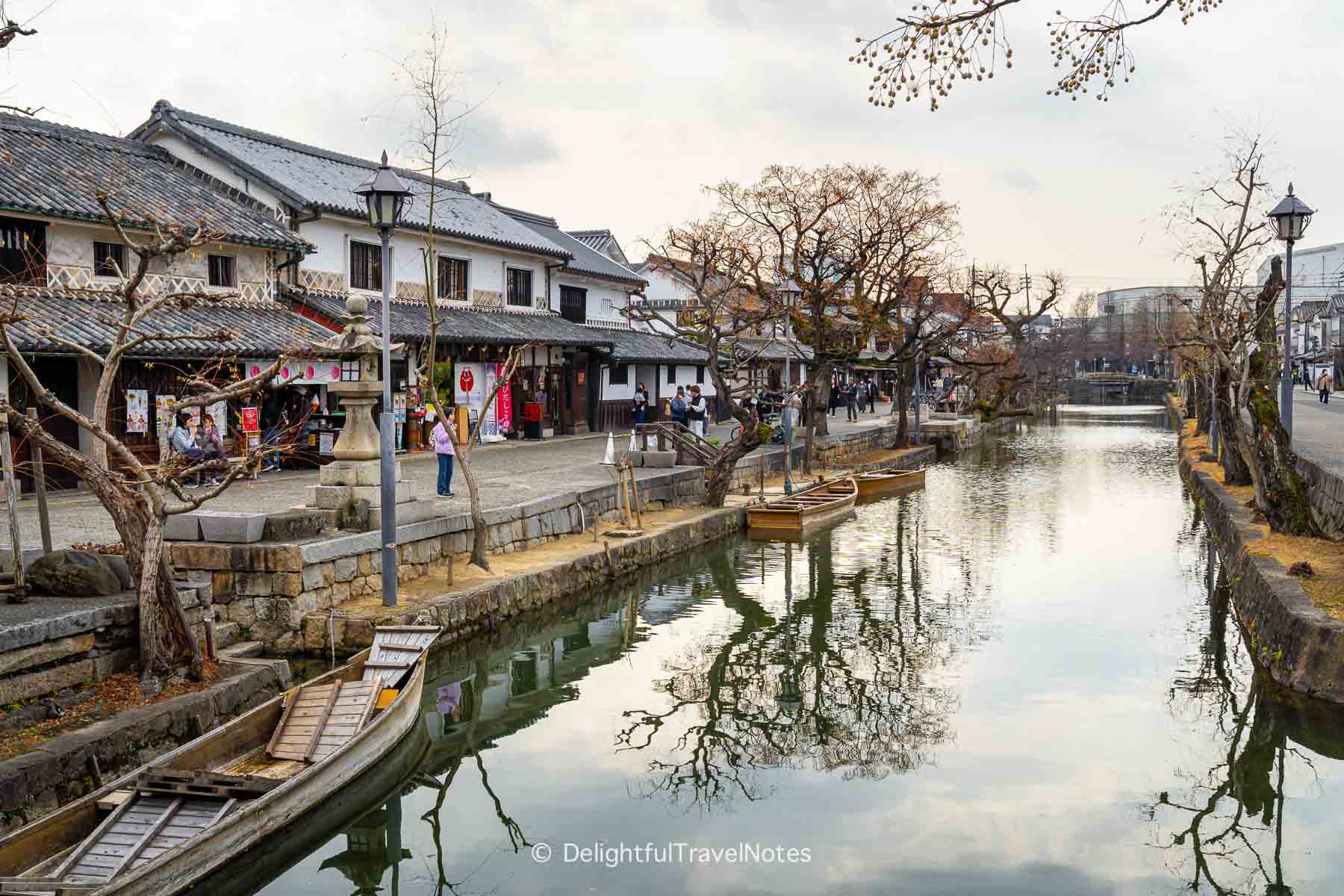
In contrast, the houses in Gion, as well as in areas like Higashi Chaya District in Kanazawa, are primarily machiya, traditional wooden townhouses built for both living and working. You will notice features like wooden lattice facades, sliding doors and discreet street frontages.
As a result, the architectural style in Kurashiki gives the area a brighter and more open appearance, especially in daylight. Gion, on the other hand, with its dark wood tones, gives a stronger sense of restraint and enclosure.
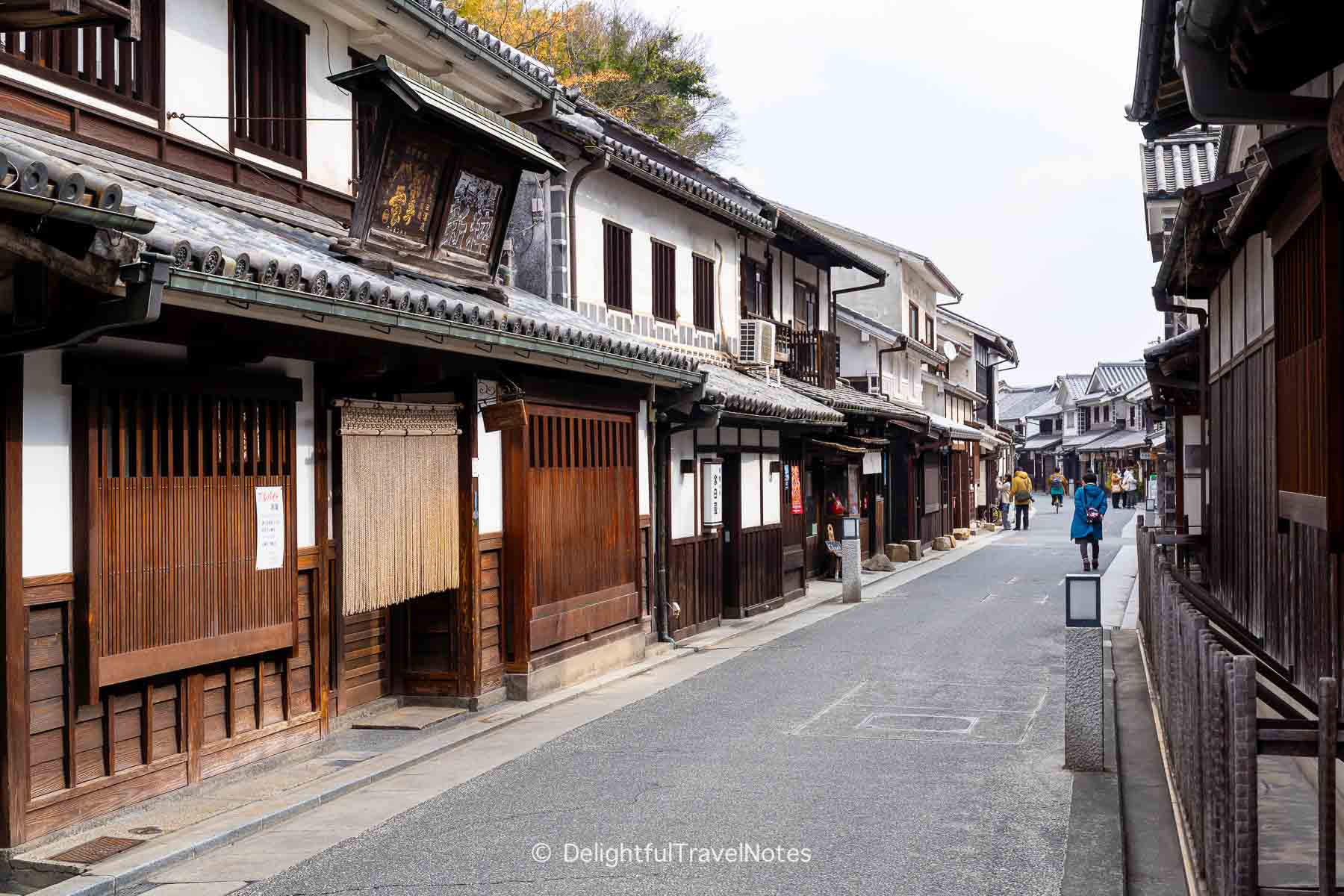
The historical quarter somehow just made us feel very happy, the simple happiness and satisfaction of seeing a pretty and calm place in person. We found ourselves pausing frequently while walking along the canal and in the side streets to take photos and admire the scenes.
A main attraction in this area is the Ohara Museum of Art. Founded in 1930 by Magosaburo Ohara, a local industrialist and patron of the arts, it is considered Japan’s first museum dedicated to Western art. Ohara built his fortune in Kurashiki through the textile industry. He was also deeply involved in supporting education, healthcare, and the arts through funding schools, hospitals, research institutes, and sponsoring artists.
Unfortunately, the museum was closed for renovation during our visit. Given how much the area is shaped by the legacy of Ohara and his enterprises, I think visiting this museum would have provided another piece of context to better understand the cultural aspect of the town. The museum is said to house an unexpectedly impressive collection, including pieces by Monet, El Greco, and Gauguin.
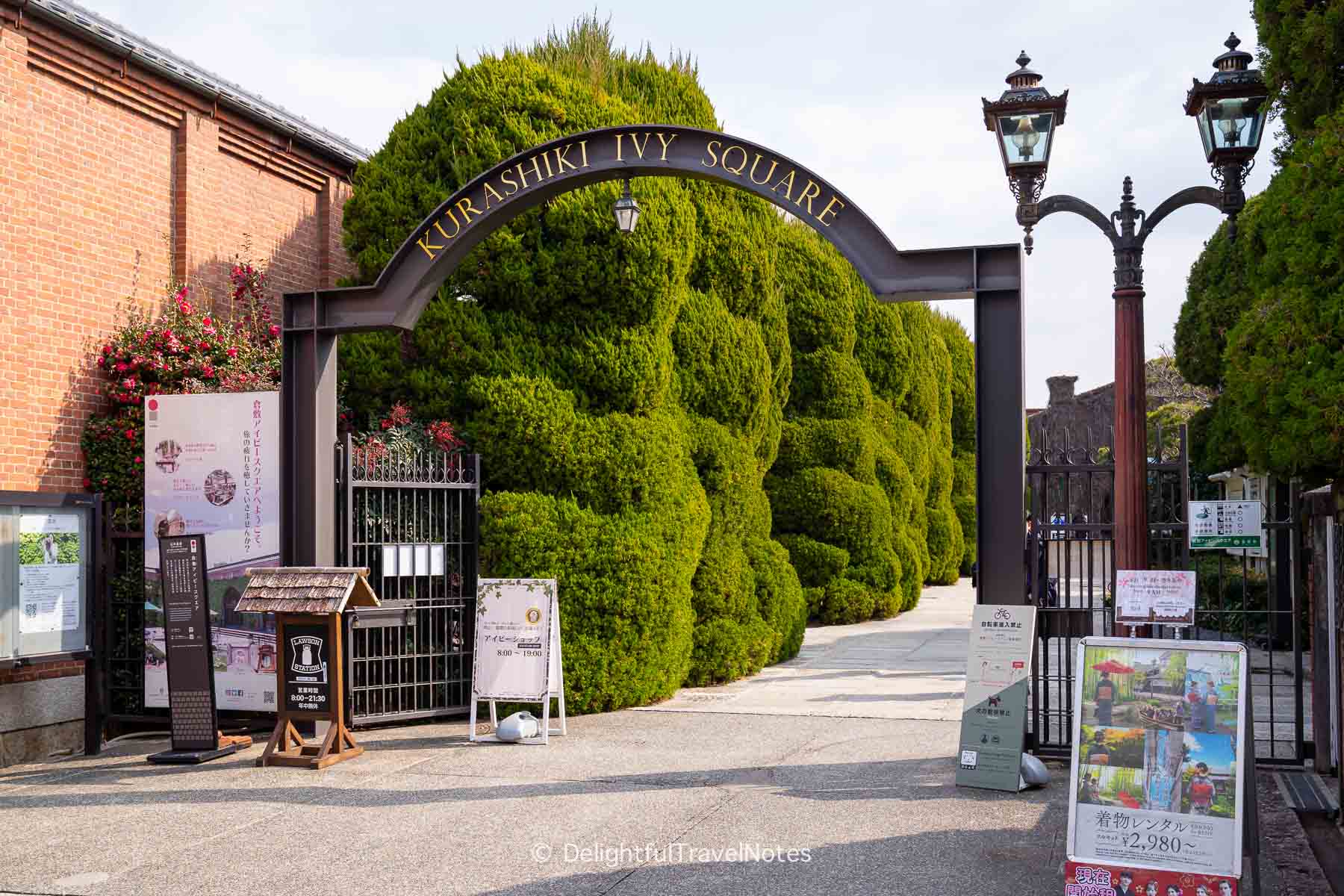
Another notable spot is Kurashiki Ivy Square, a former textile factory that has been repurposed into a cultural and commercial complex. The red-brick buildings, partially covered in ivy, create a different atmosphere from the white-walled storehouses of the Bikan Historical Quarter. Kurashiki is also known for its denim heritage so you will see quite a lot of denim shops in the historical quarter.
Afternoon: Okayama
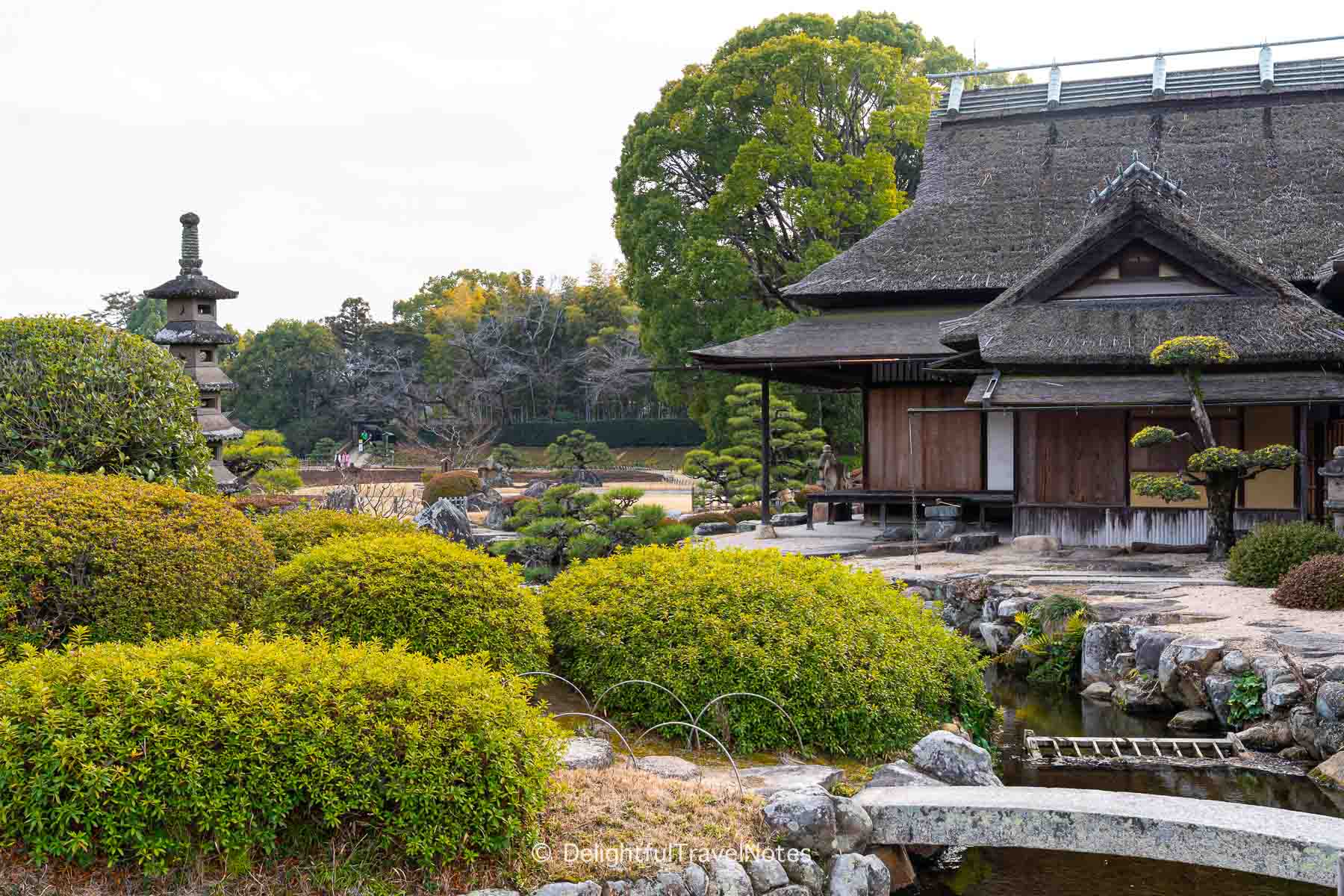
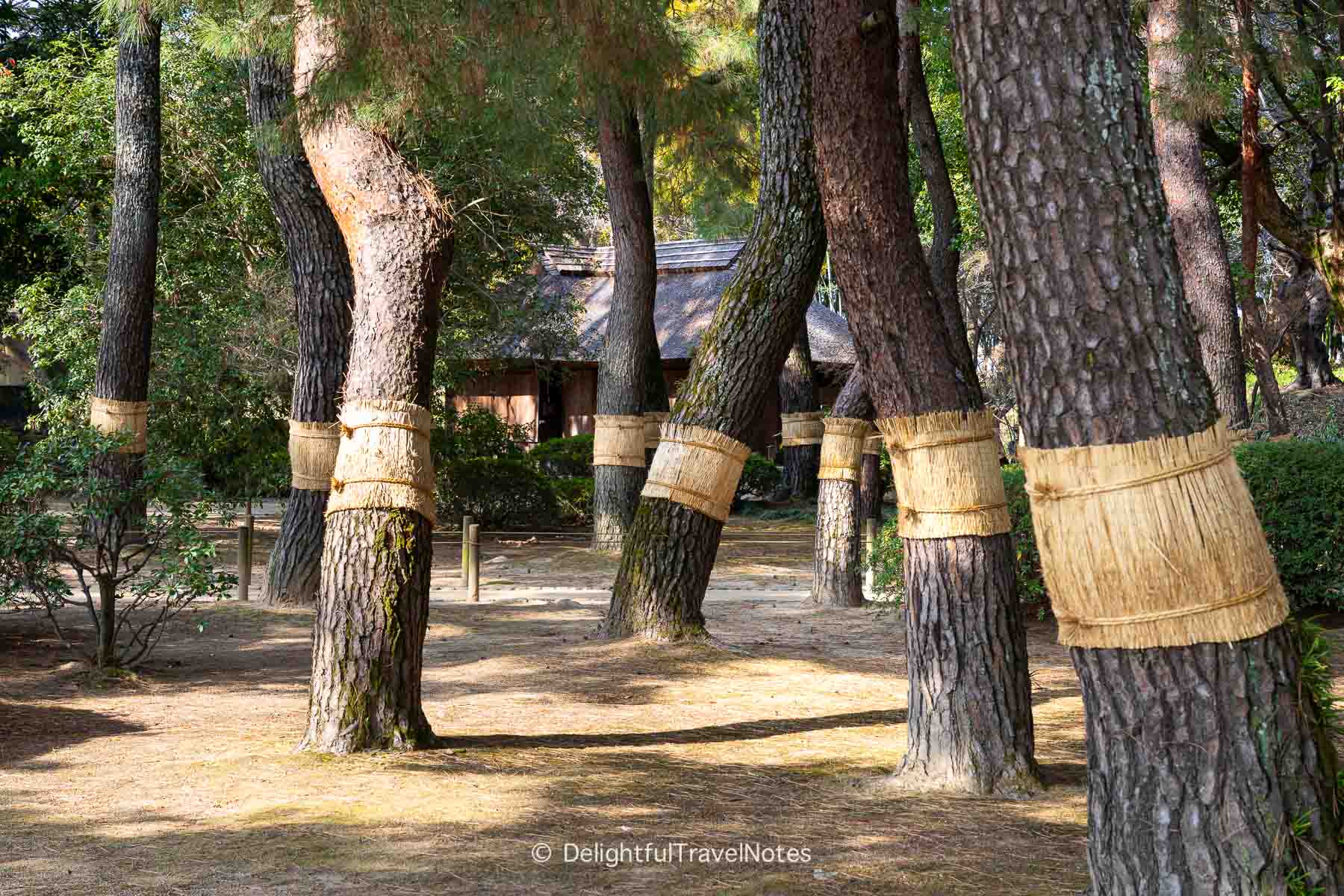
After lunch in Kurashiki, we took the train back to Okayama and then a short taxi ride to Korakuen. Compared to Kenrokuen in Kanazawa, Korakuen is noticeably smaller. Despite that, it still works well as a strolling garden where the scenery subtly changes as you walk. You pass by ponds, small bridges, teahouses, and clusters of trees arranged in a way that feels natural but clearly intentional. The garden was quiet with way fewer visitors than Kenrokuen.
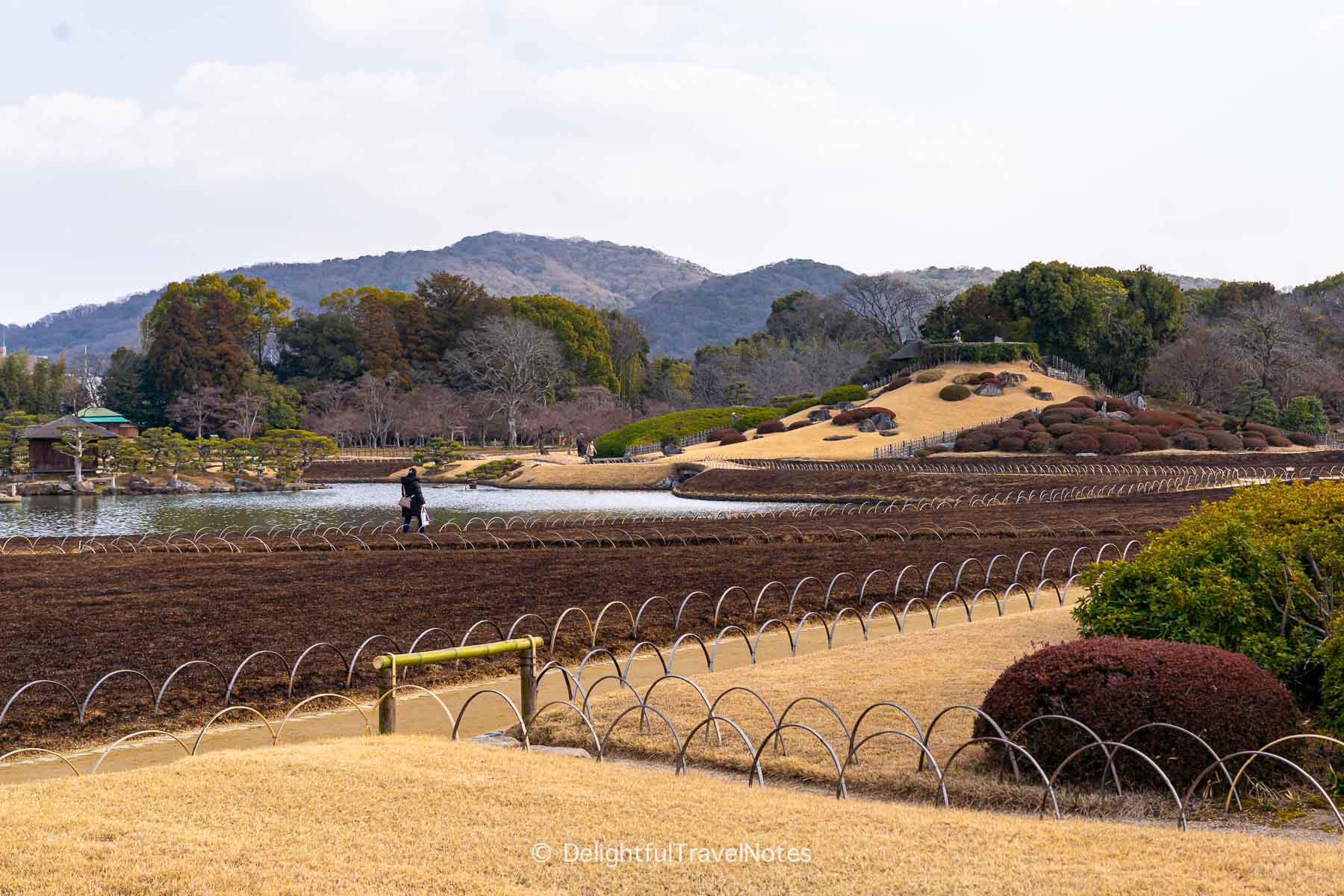
The grass in the garden had just been burned just a few days earlier. This seems like part of the garden’s seasonal maintenance at the end of winter. The charred ground gave the landscape a slightly unusual look.
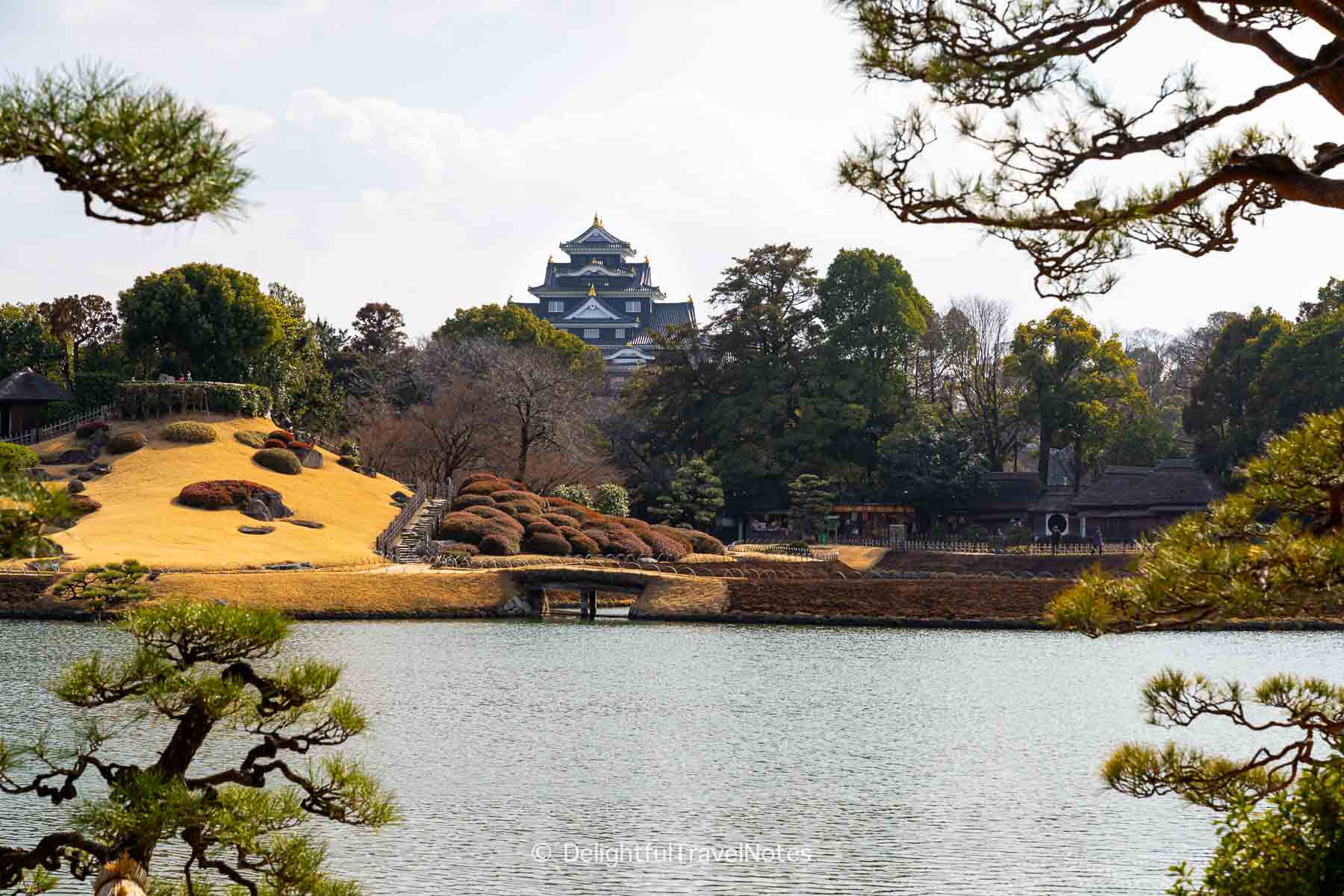
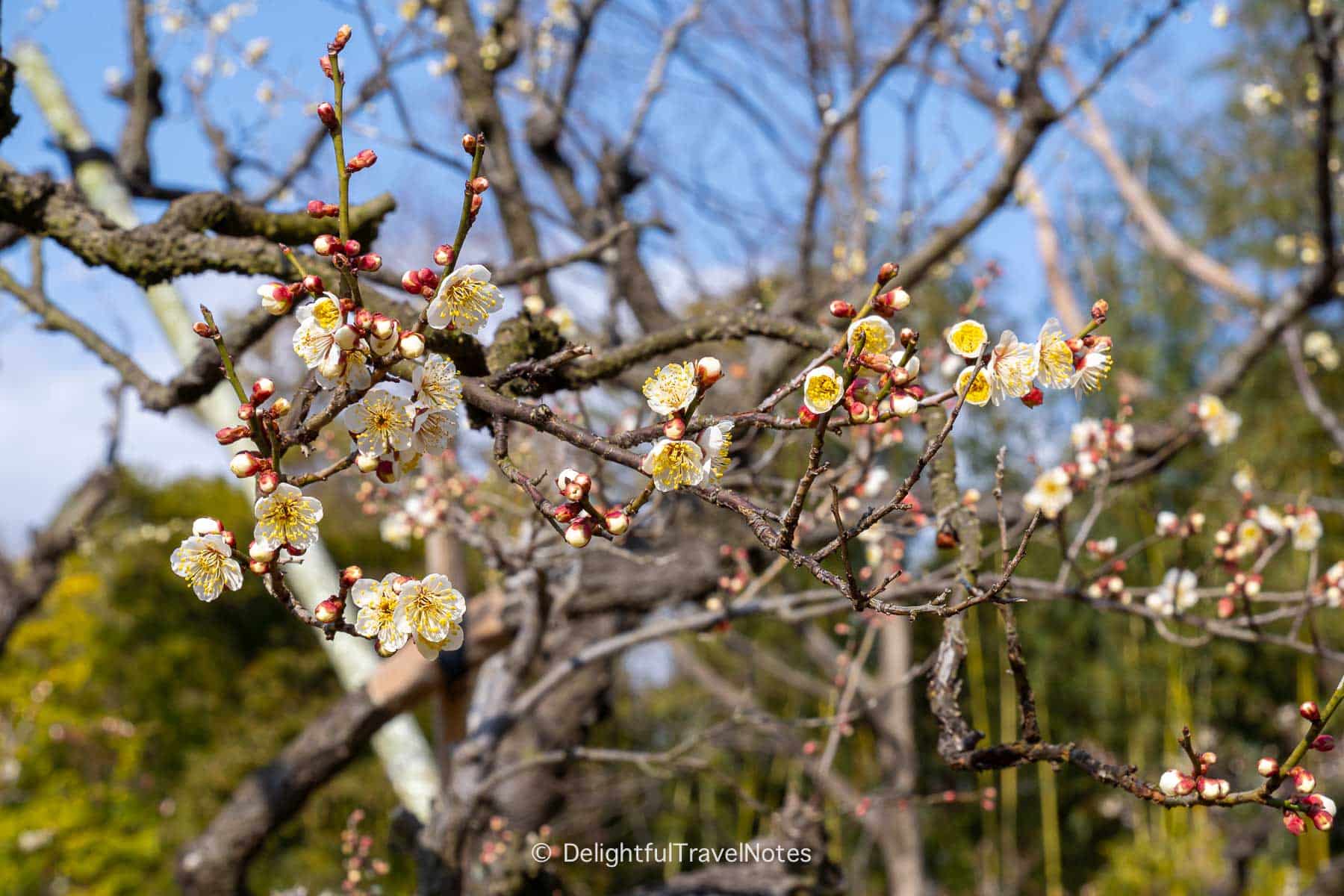
Another highlight when we visited was the ume (plum) grove. Some of the trees had already started to bloom, adding colors to the subdued winter palette. This was also where we first came across a variety of plum blossoms with yellow flowers, which had a surprisingly strong, jasmine-like fragrance.
After viewing the garden, we exited through the southern side, where you get a clear, open view across the river toward Okayama Castle across the Asahi River. Crossing the bridge, we made our way over and took a quick look inside the castle. Most of the displays were in Japanese and the top floor doesn’t feature a panorama viewing deck like at Osaka Castle, so we didn’t spend a lot of time inside.
Exiting the castle, we took a taxi back to Okayama Station and caught the Shinkansen back to Hiroshima for dinner. Overall, it was a very pleasant, slow-paced day trip we would gladly do again. Kurashiki was definitely the most memorable part of the day for us. If your travel plan includes Hiroshima, I highly recommend making time for a day-trip to Kurashiki and an overnight stay on Miyajima.
Explore More
Miyajima Kinsuikan Review: A Ryokan with A Century of History on the Island
Miyajima Trip Report and Why An Overnight Stay is Worth It
Best Areas to Stay in Kyoto (For First-timers and Returning Visitors)