
Miyajima Trip Report and Why An Overnight Stay is Worth It
Planning our February 2026 trip, we spent quite a bit of time debating whether to stay overnight on Miyajima. A ryokan stay on the island would definitely be a splurge, but looking back on past trips, we had always loved spending one or two nights in smaller scenic towns like Hakone and Nara. There is something special about slowing down in places like these, letting go of schedules, sightseeing checklists, and logistics for a while, and simply enjoying the scenery and the quiet atmosphere. In the end, our overnight stay on Miyajima turned out to be one of our favorite parts of our time in Hiroshima Prefecture.
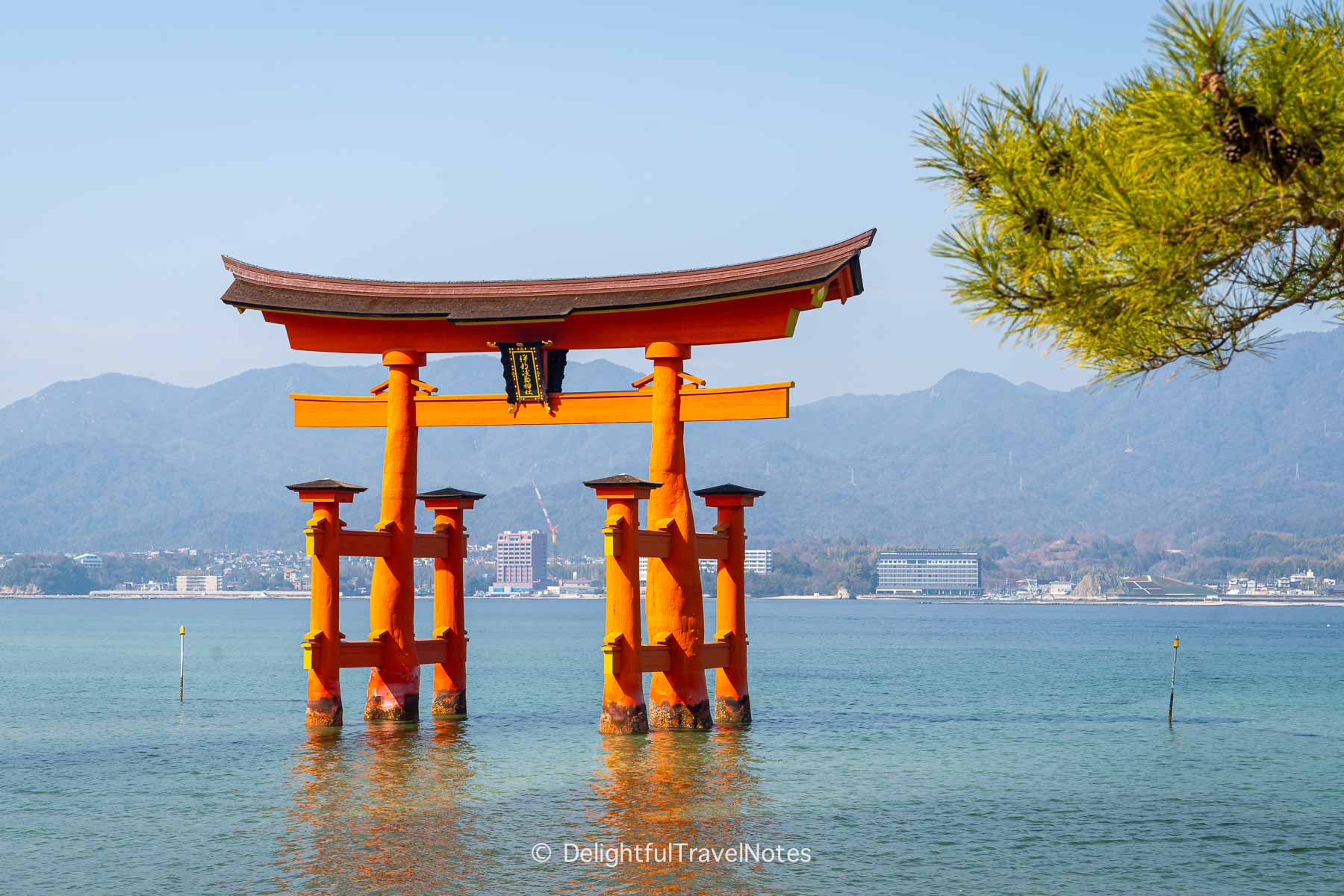
Why An Overnight Stay is Worth It
For us, staying overnight on Miyajima was worth it because it allowed us to experience a different side of the island from what day-trippers usually see. During the middle of the day, Miyajima is lively and full of visitors, especially around Itsukushima Shrine and Omotesando Street. But in the early morning and evening, the island becomes quiet, peaceful, and contemplative.
The biggest advantage we realized after staying overnight was the chance to see Miyajima under different tidal conditions which we hadn’t expected. We visited Itsukushima Shrine several times and each visit the scenery was different depending on the tide. You will see it in our trip details below.
There is also the ryokan experience itself, which added a lot to the stay. Wearing yukata, enjoying a kaiseki dinner that highlighted local ingredients such as anago and oysters, taking a bath, and waking up to the quiet waterfront all made the visit feel more memorable.
Staying overnight suited the kind of travel experience we personally value. Sometimes a place is worth staying overnight not because there are so many attractions, but because it offers the right kind of stillness, beauty, and change of pace that enhance the whole trip.
Of course, whether staying overnight is “worth it” depends on what kind of trip you enjoy. If your goal is to see the main sights, a day trip can cover the essentials. But if you value atmosphere, slower travel, and the chance to experience a place beyond its busiest daytime hours, then staying overnight makes sense.
Day 1
After breakfast, we checked out of the Hilton Hiroshima and took a short taxi ride to Hiroshima Station. From there, we boarded a local train to Miyajimaguchi Station, which took about 30 minutes.
If you are traveling with large suitcases, I would strongly suggest forwarding them to your next destination with Yamato luggage delivery service and bringing a small carry-on to Miyajima. The local train does not have designated storage space for large luggage, and depending on the time of day, it can get quite busy. Once you arrive at Miyajimaguchi Station, you also need to walk to the ferry terminal, so having less to carry makes the whole transfer easier.
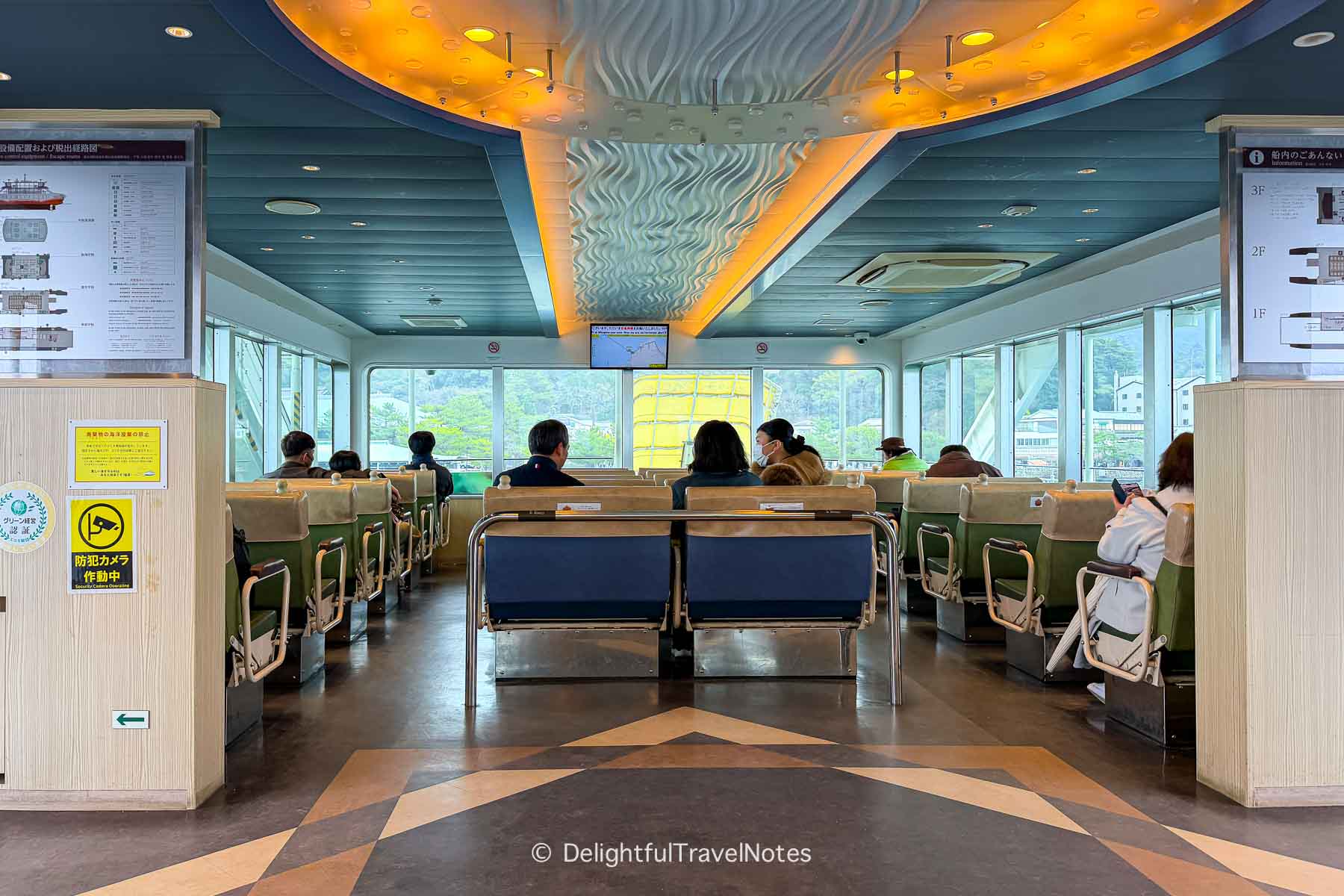
The signs from the train station to the ferry terminal are very clear, and there is usually a steady stream of other travelers heading in the same direction, so it is hard to get lost. JR ferries depart from the Miyajima Ferry Terminal every ten minutes or so, making the connection very convenient. You can simply tap your IC card and board the next available ferry. If you have the Kansai-Hiroshima Area Pass, the ferry tickets are covered by the pass.
💡Transportation tip: If you plan to visit the area between Osaka and Hiroshima, I highly recommend checking out the Kansai-Hiroshima Area Pass. Besides the Miyajima ferry, this regional rail pass offers unlimited travel on JR trains across a wide area, including the Shinkansen. You can also use it to take day trips to Himeji and Kobe, or to Kurashiki and Okayama.
The ferry ride is only around ten minutes. There are plenty of indoor seats, and the ride is smooth enough that even standing would not be a big problem. There is also an outdoor deck if you want to enjoy the view, but since it was the end of winter and still chilly, we were happy to stay inside.
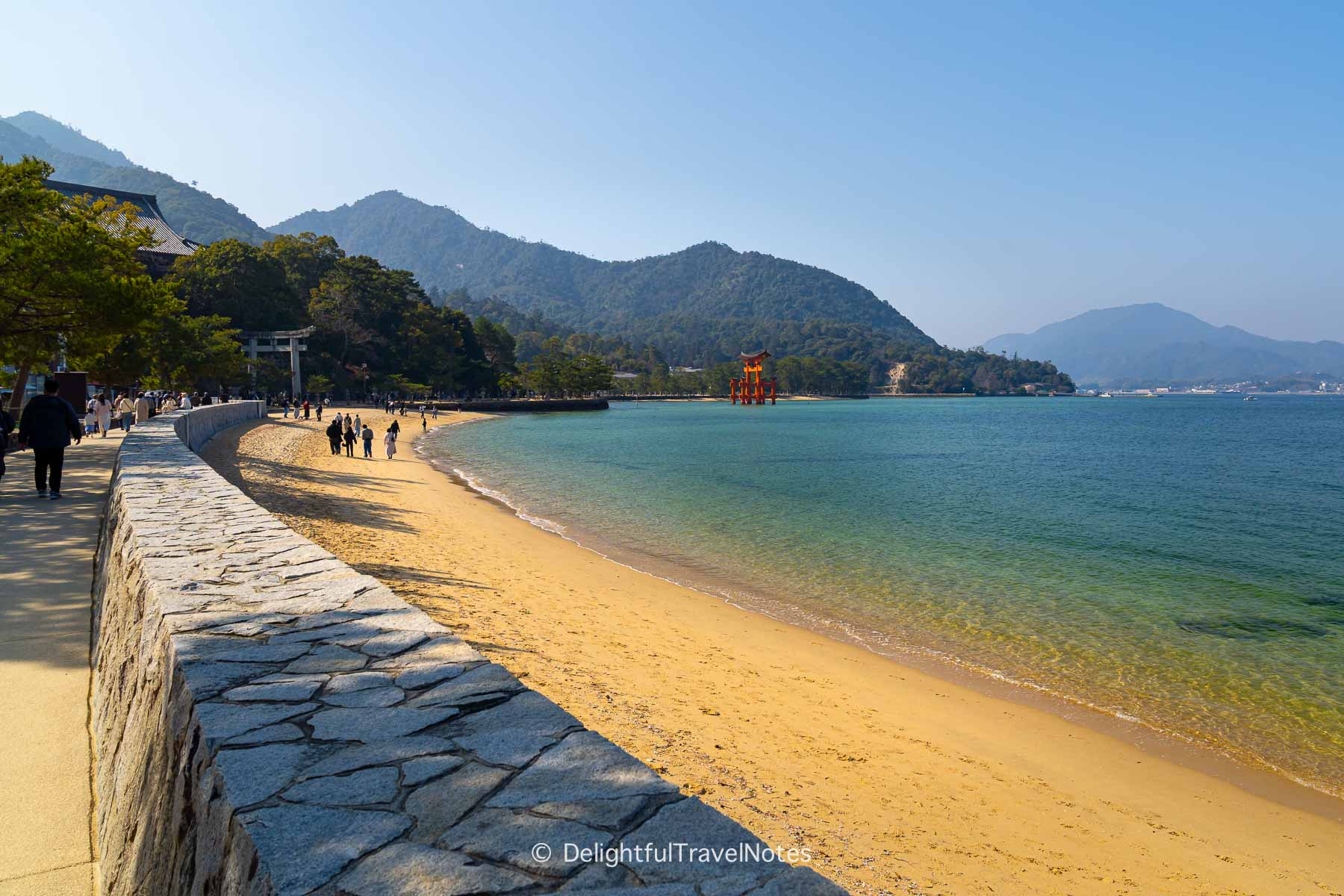
We arrived on Miyajima just before 11 am. Our ryokan, Kinsuikan, is located right along the waterfront promenade and less than a ten-minute walk from the ferry terminal, so we decided to walk there. I am fairly sure the ryokan could also arrange a complimentary shuttle pick-up if needed. The path was a little uneven in places, but overall it was simple and easy to follow.
Since check-in was not until 3 pm, the staff stored our suitcases and gave us two complimentary vouchers for freshly baked momiji manju at a nearby local shop. Momiji manju is Miyajima’s most famous sweet, but it is so widely available in Hiroshima City that we had already tried it before coming to the island. It is a maple leaf-shaped cake filled with sweet fillings with red bean paste being the most traditional one.
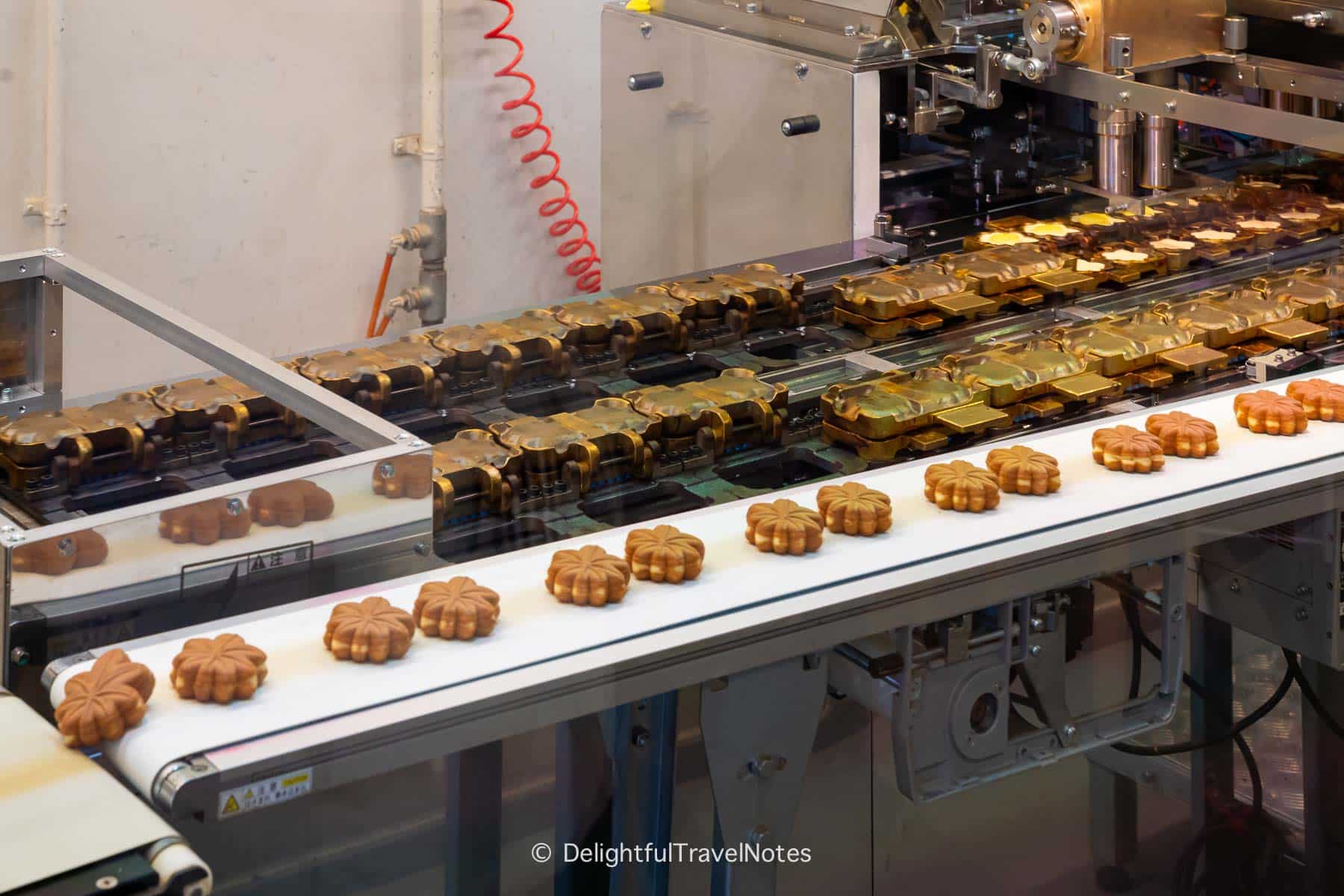
This particular shop, however, offered a fried version: freshly baked manju dipped in batter and fried until crisp. I found this version much more interesting. The regular ones tend to be a bit too sweet for my taste, whereas the fried version had more texture and felt a little less one-dimensional.
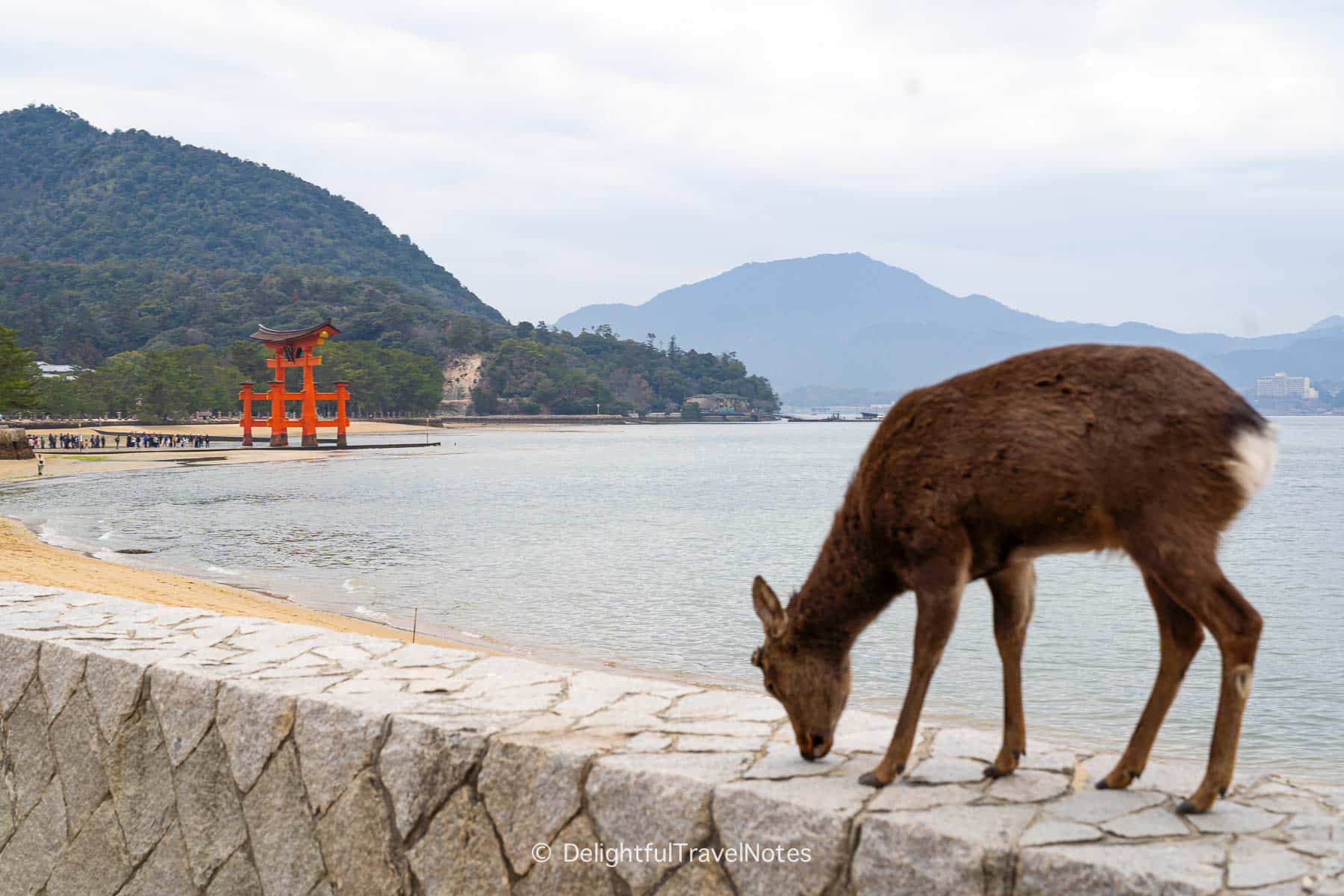
After our snack, we strolled along the waterfront promenade toward Itsukushima Shrine, the island’s most famous landmark and a UNESCO World Heritage site. It was just before noon, and the iconic torii gate was still floating on the water. There were quite a lot of visitors around, but the atmosphere still felt manageable. Busy, yes, but nowhere near what I would call unpleasantly crowded.
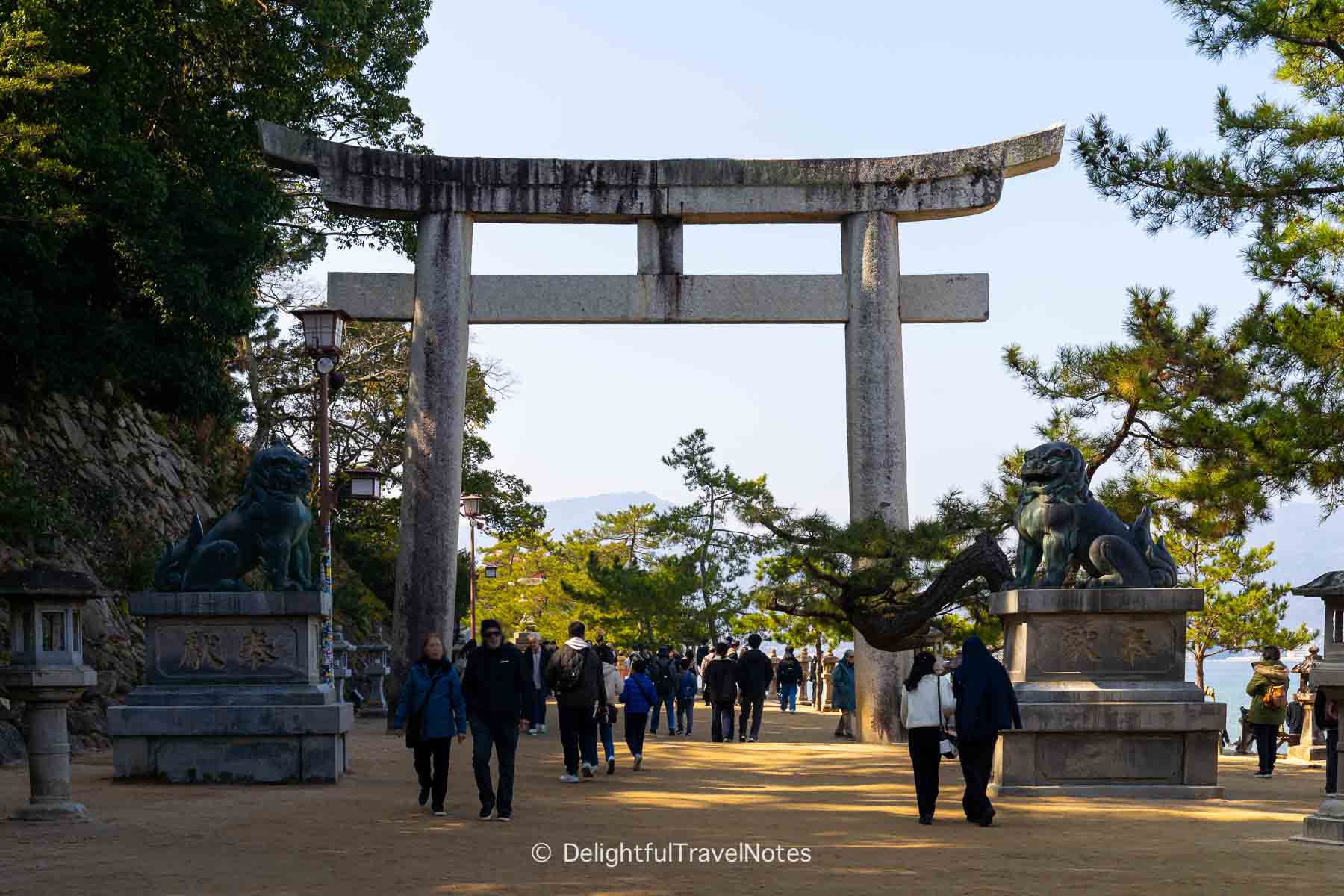
As we got closer to the shrine, we began to spot deer here and there. Before the trip, I had seen many comments online saying that Miyajima was a good alternative to Nara for seeing deer roaming freely. In our experience, though, the number was nowhere near comparable. We only saw a small handful of deer on Miyajima, whereas in Nara, deer seemed to be everywhere.
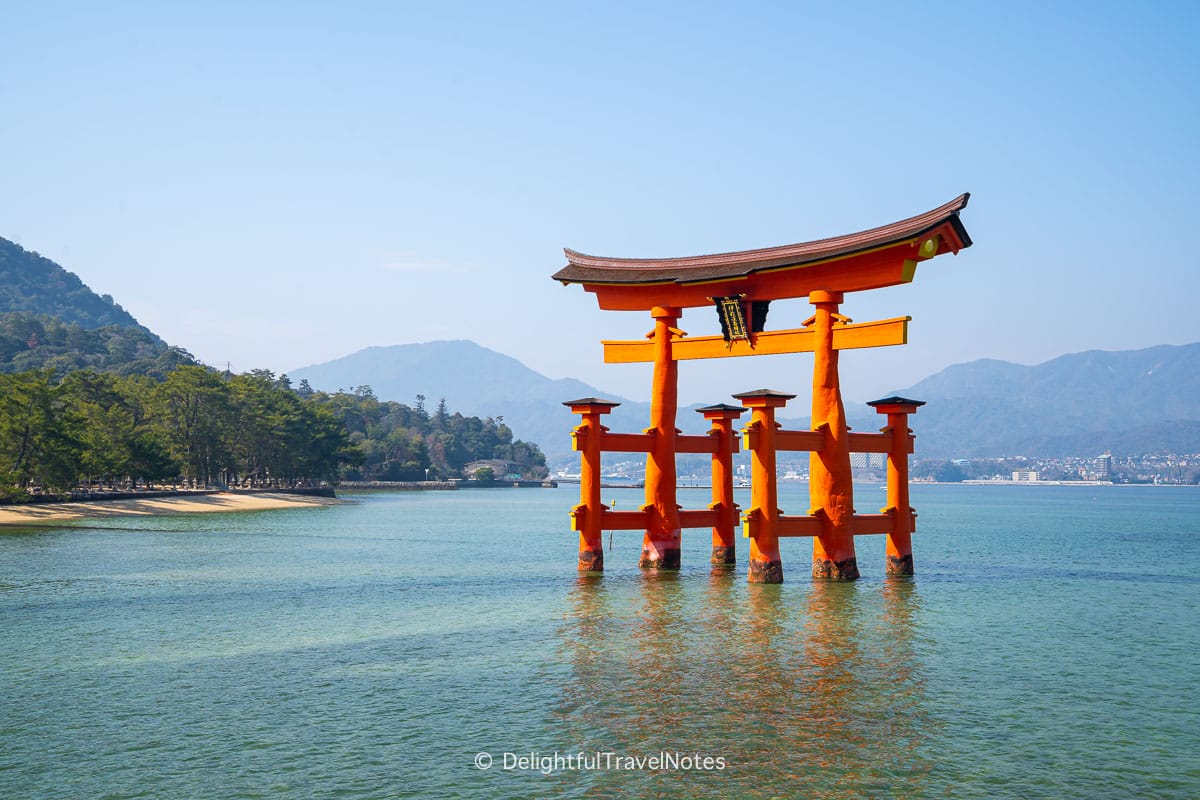
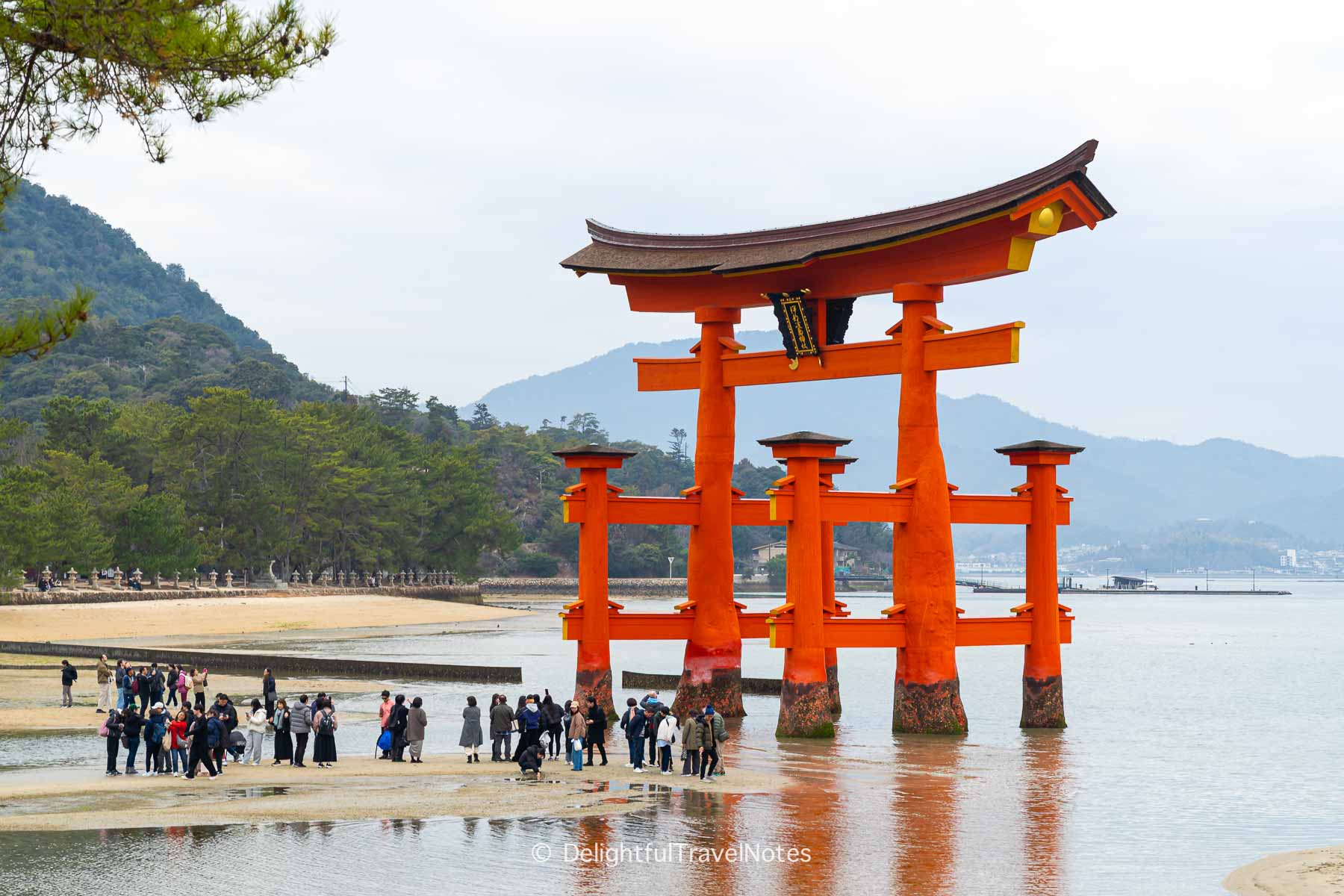
At the entrance to the shrine, there was a sign showing high and low tide times for that day. High tide had been at 8:37 am, and low tide would be at 2:41 pm. We still went into the shrine because we wanted to experience it at different times of day and under different tidal conditions. Along the waterfront outside, the water was still present, but once inside the shrine complex, the tide had already receded enough to expose the ground below. It was interesting to see how much the scenery could change within such a short distance.
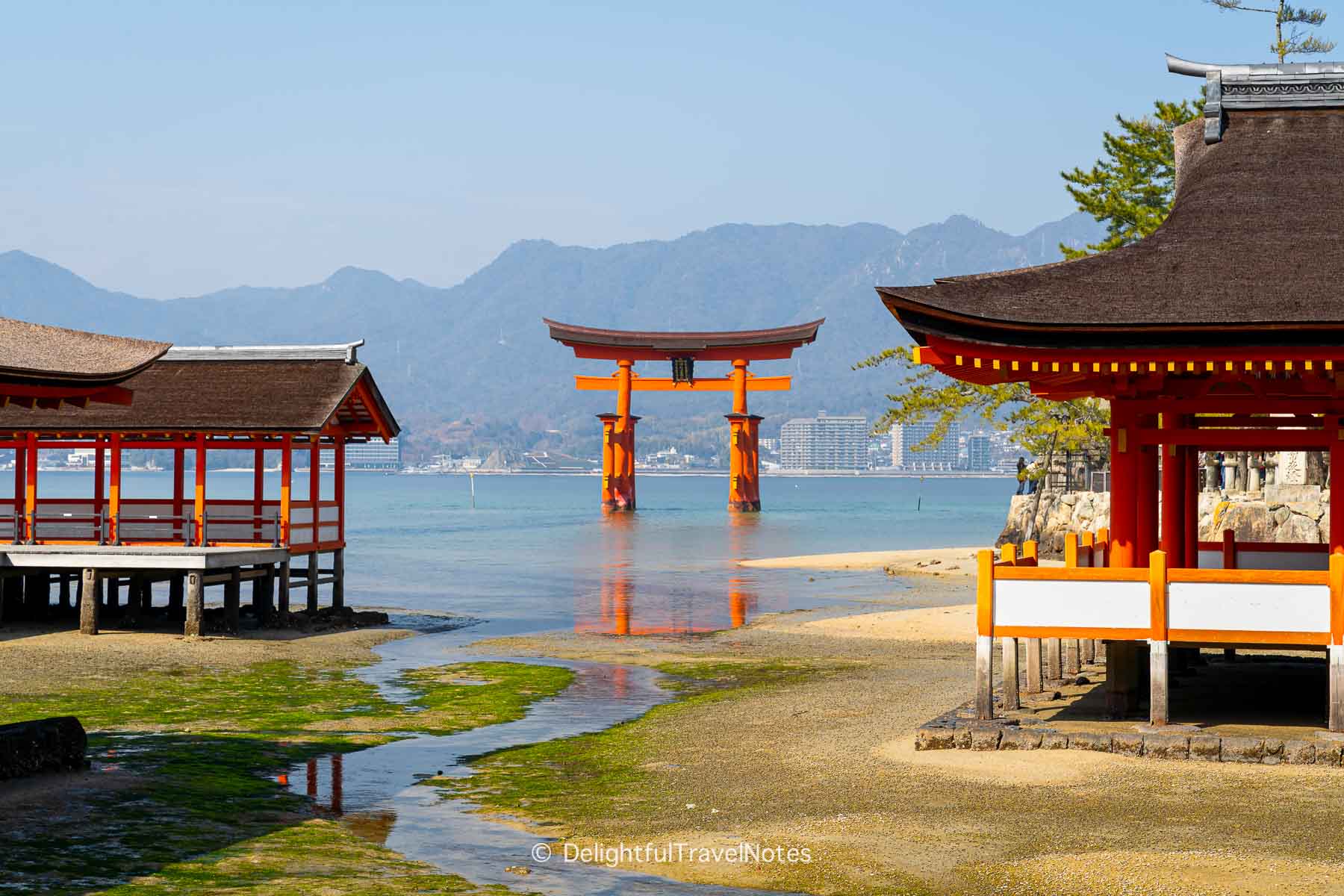
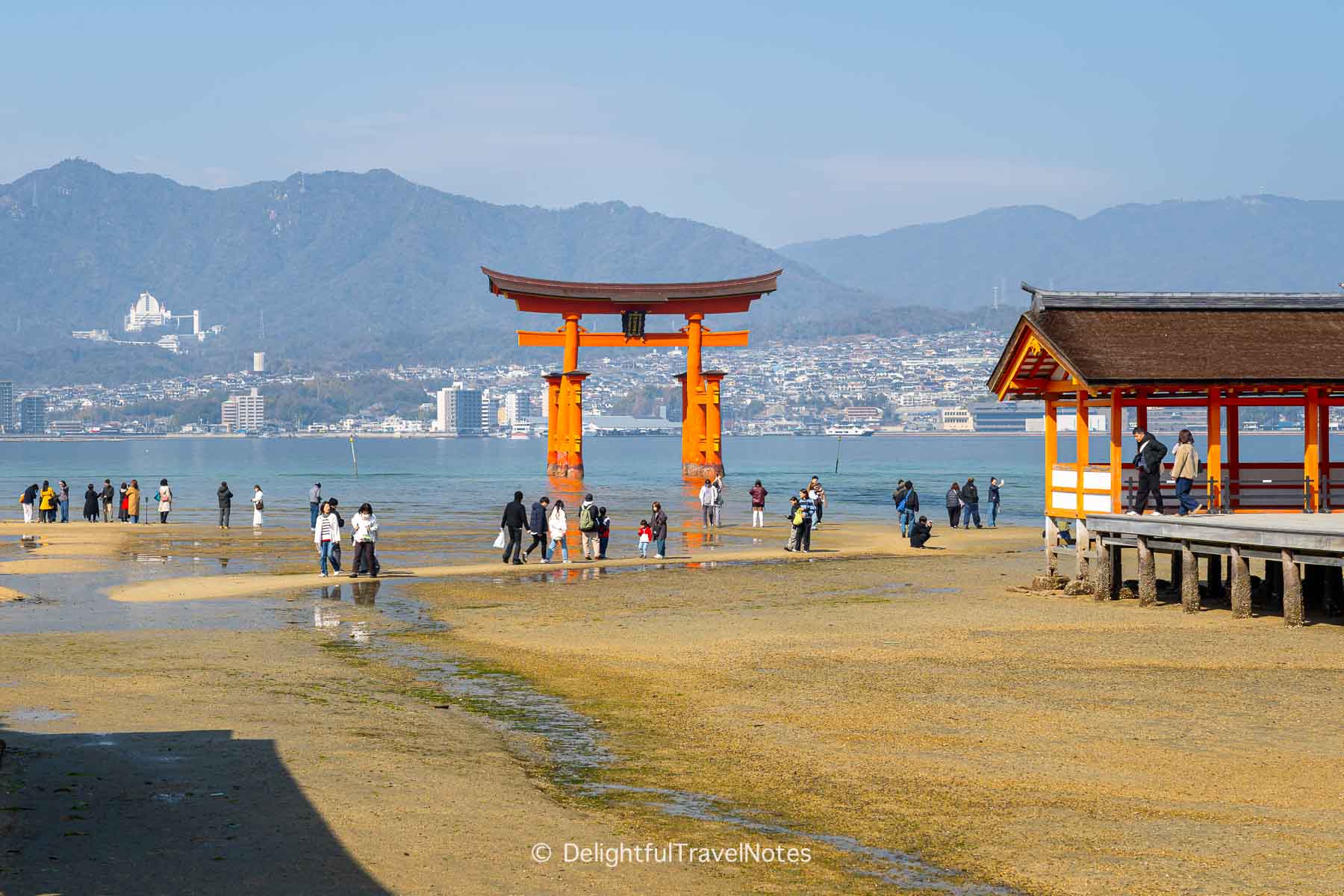
Walking through the vermilion corridors of Itsukushima Shrine, we enjoyed the changing views of the great torii before making our way to the goshuin counter. To our surprise, the line was longer than any goshuin queue we had ever seen. It looked like at least a 30-40 minute wait, and the line was moving slowly. It was a Saturday, perhaps weekdays are better, though I cannot say for sure. In any case, we knew we would still be on the island until the next day, so we decided to skip the line and come back later at a quieter time.
After leaving the shrine, we walked to Daisho-in Temple. One thing we really liked was how compact and walkable the town is. As we moved away from the shrine area, the surroundings became noticeably quieter. Daisho-in had fewer visitors, but we thought it was well worth the visit. Set on a hillside, it felt peaceful and scenic, with a variety of interesting things to see, including stairways, gardens with clusters of statues, and even a small cave and a hall in complete darkness. If you have mobility issues, please note that there are quite a few stairs.
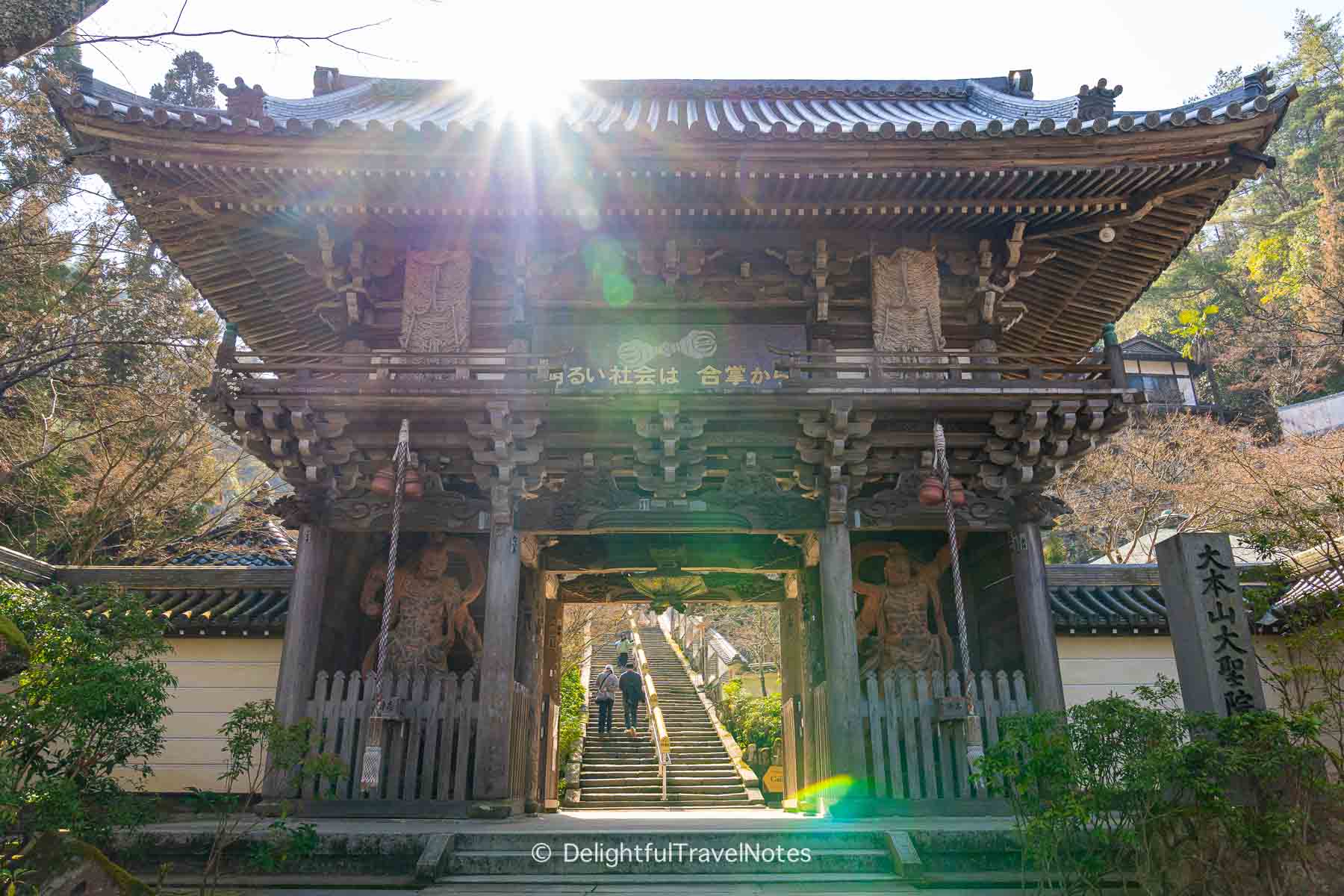
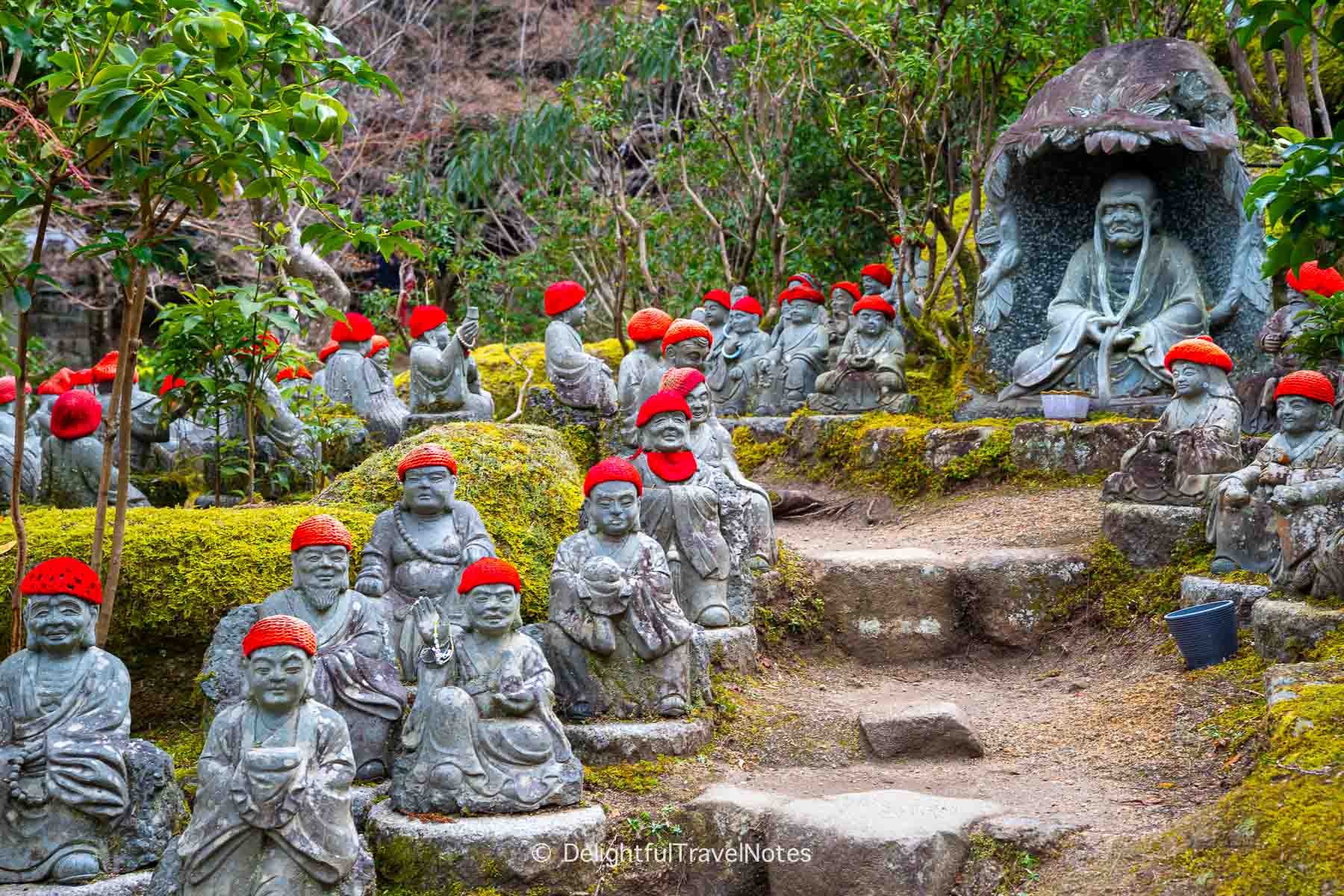
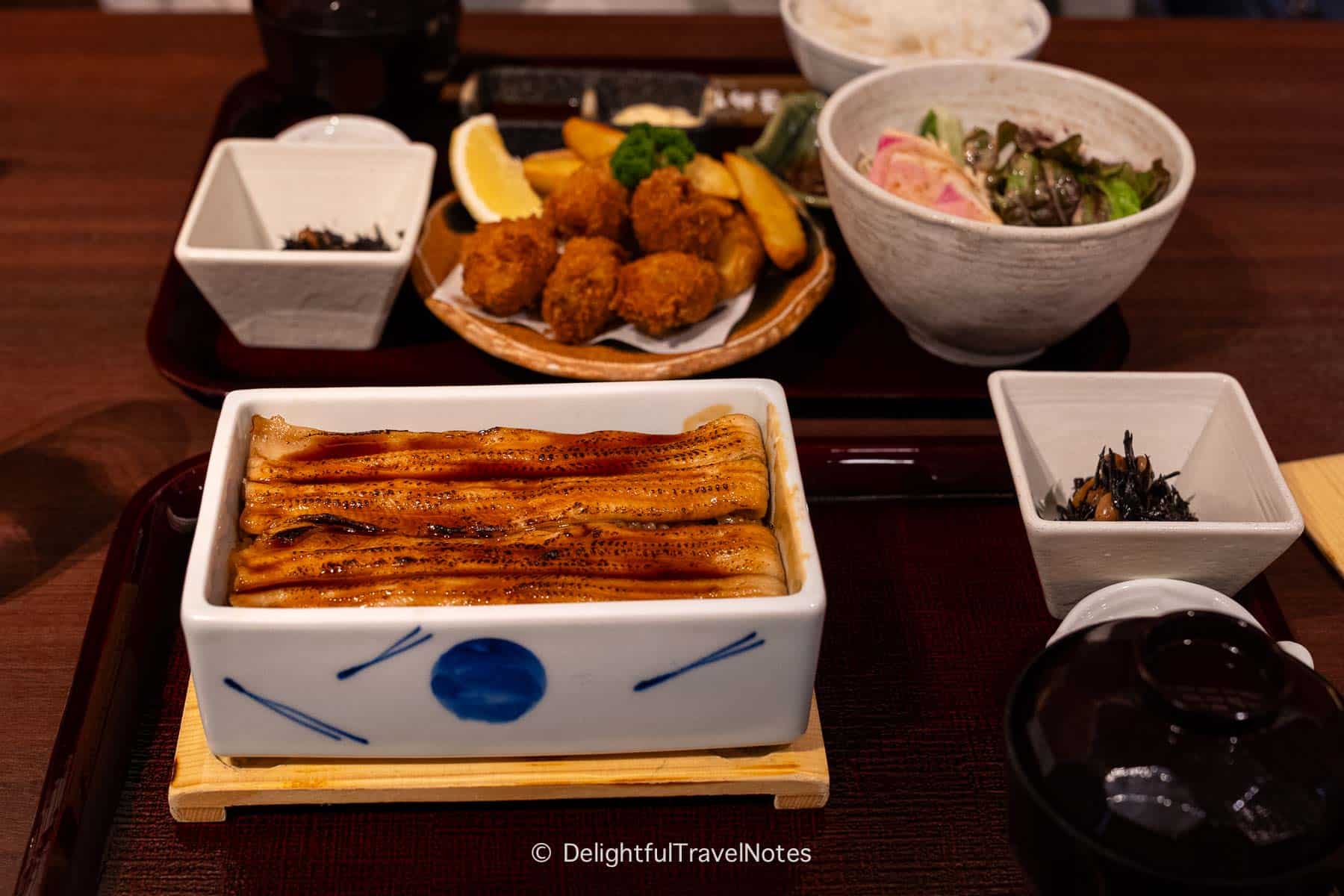
We left Daisho-in around 1:30 pm and headed to Omotesando Shopping Street, which by then was much busier than it had been when we first arrived on the island. For lunch, we stopped at Mametanuki, a sister restaurant of our ryokan, for anago meshi. This is a local dish of grilled saltwater eel served over rice, usually brushed with a sweet-savory glaze. Compared with unagi, anago is lighter and more delicate in flavor. You will find this dish at many restaurants on the island.
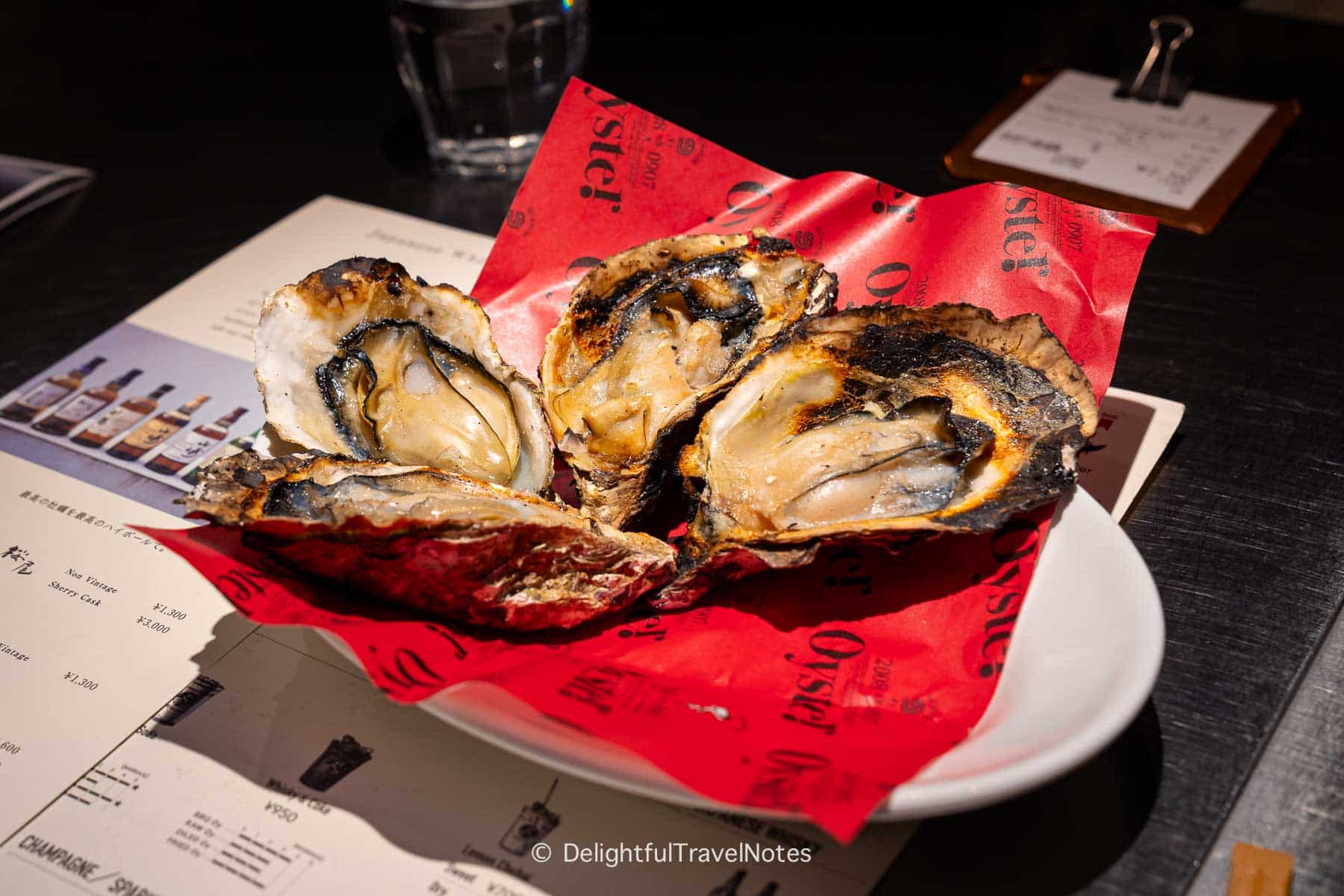
After that, we went to an oyster restaurant right across the street to sample local oysters prepared in different ways. They were tasty but not especially memorable. I had heard that this was not a particularly strong year for oyster harvests in Japan, which may have played a part.
By the time we finished our late lunch, it was close to the published low tide time, so we walked back toward the waterfront. The change in scenery was striking. The water had receded enough for people to walk out toward the otorii. Seeing people gathered around its base really gave a sense of how enormous it is. We did not walk all the way out because, unfortunately, I was wearing white shoes. If we return to Miyajima, we will probably come better prepared with sandals, boots, or something more practical for walking on wet sand and mud.
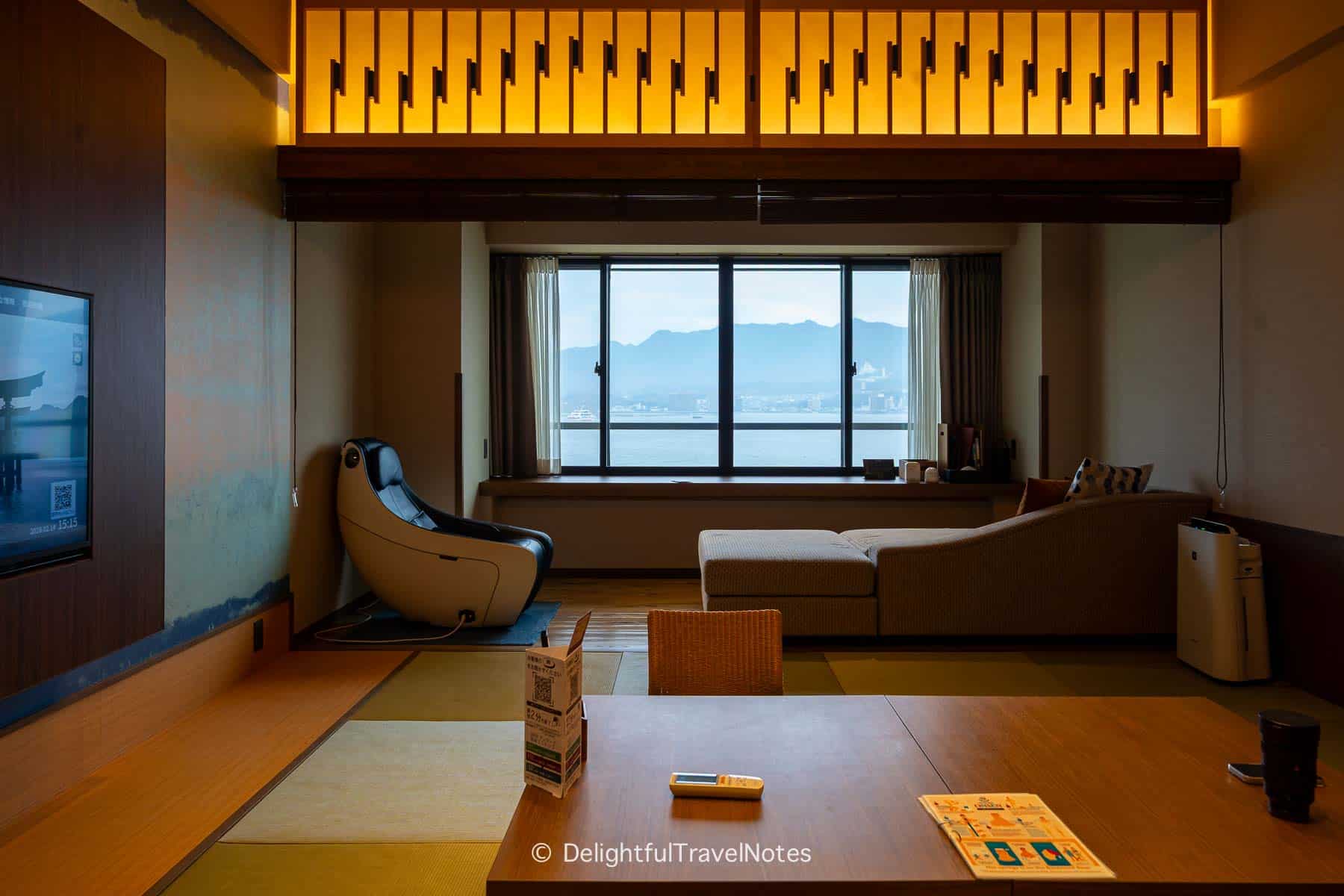
After that, we returned to Kinsuikan to officially check in. At reception, the staff also asked us to choose our preferred times for dinner, breakfast, and our reserved private bath. We had chosen Kinsuikan for its location, long history, and consistently positive reviews, so it was nice to finally settle in and start experiencing it for ourselves. You can read our full review of Kinsuikan ryokan here. Overall, we enjoyed our stay and recommended Kinsuikan for its excellent location and warm service.
Check Prices & Availability of Miyajima Kinsuikan
Booking Agoda Expedia
After a short rest in the room, we went back out to Itsukushima Shrine at around 4 pm to try for the goshuin again. This time, the long line had disappeared, and we only waited about 5-10 minutes. Afterward, we wandered through the souvenir shops. Many stores sold similar Miyajima-themed items like rice paddles, miniature torii gates, momiji manju, and so on. Prices varied slightly, and a few shops carried more distinctive pieces. We ended up buying a fairly large torii ornament to display at home.
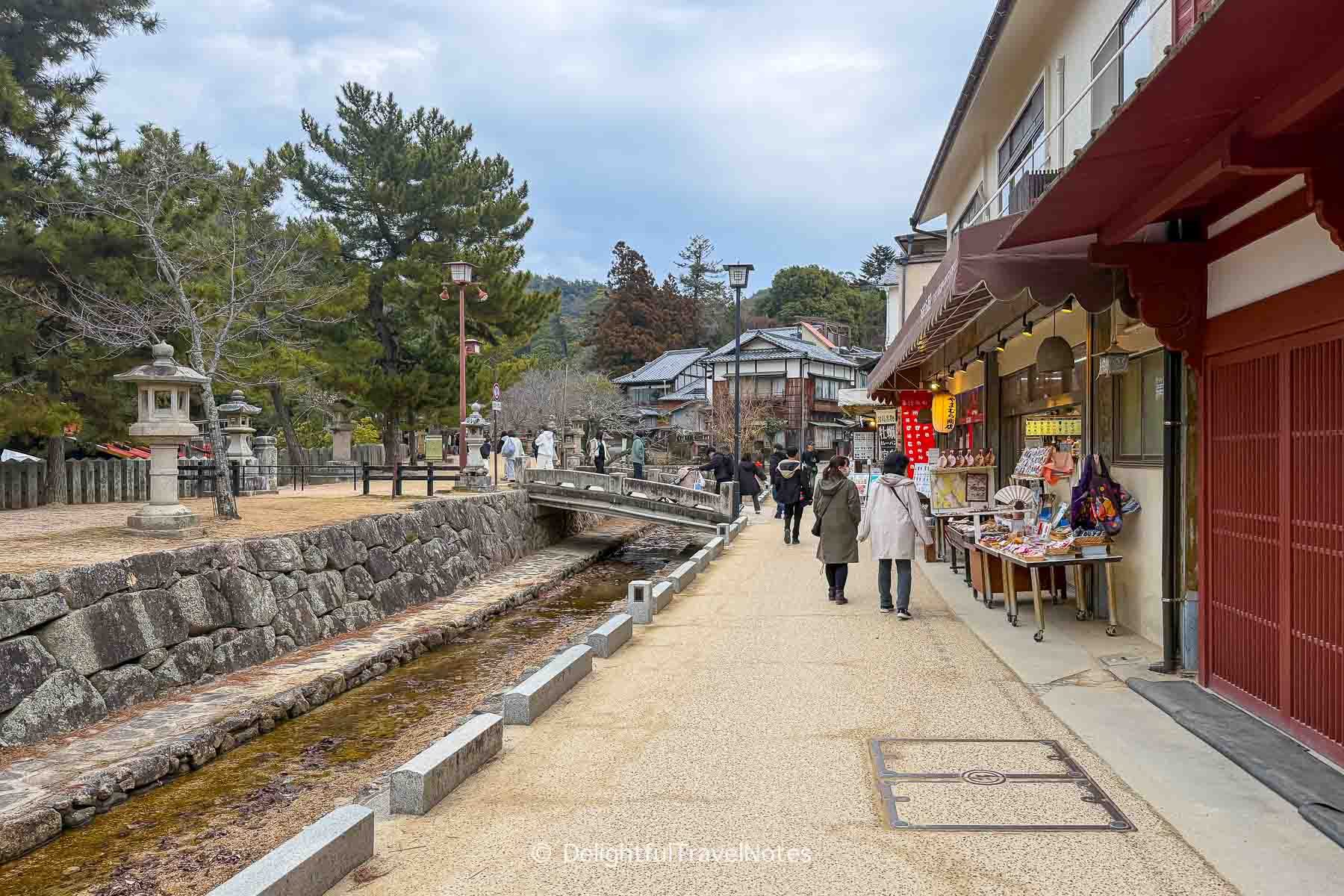
By around 5 pm, many day-trippers had already left the island, and the atmosphere changed completely. The shops were beginning to close, and the streets became quieter. This is one of the main reasons I think staying overnight on Miyajima is worthwhile. Once the crowds leave, the island takes on a much calmer feel. Dining options are quite limited in the evening though, so it is best to book dinner with your ryokan if you stay overnight.
Back at Kinsuikan, Long went to try the public onsen bath, which is relatively rare on Miyajima. After that, we changed into our yukata and got ready for kaiseki dinner. What stood out most about the meal was its strong emphasis on local and seasonal ingredients. Hiroshima and Miyajima specialties, especially anago and oysters, appeared throughout the courses in different ways.
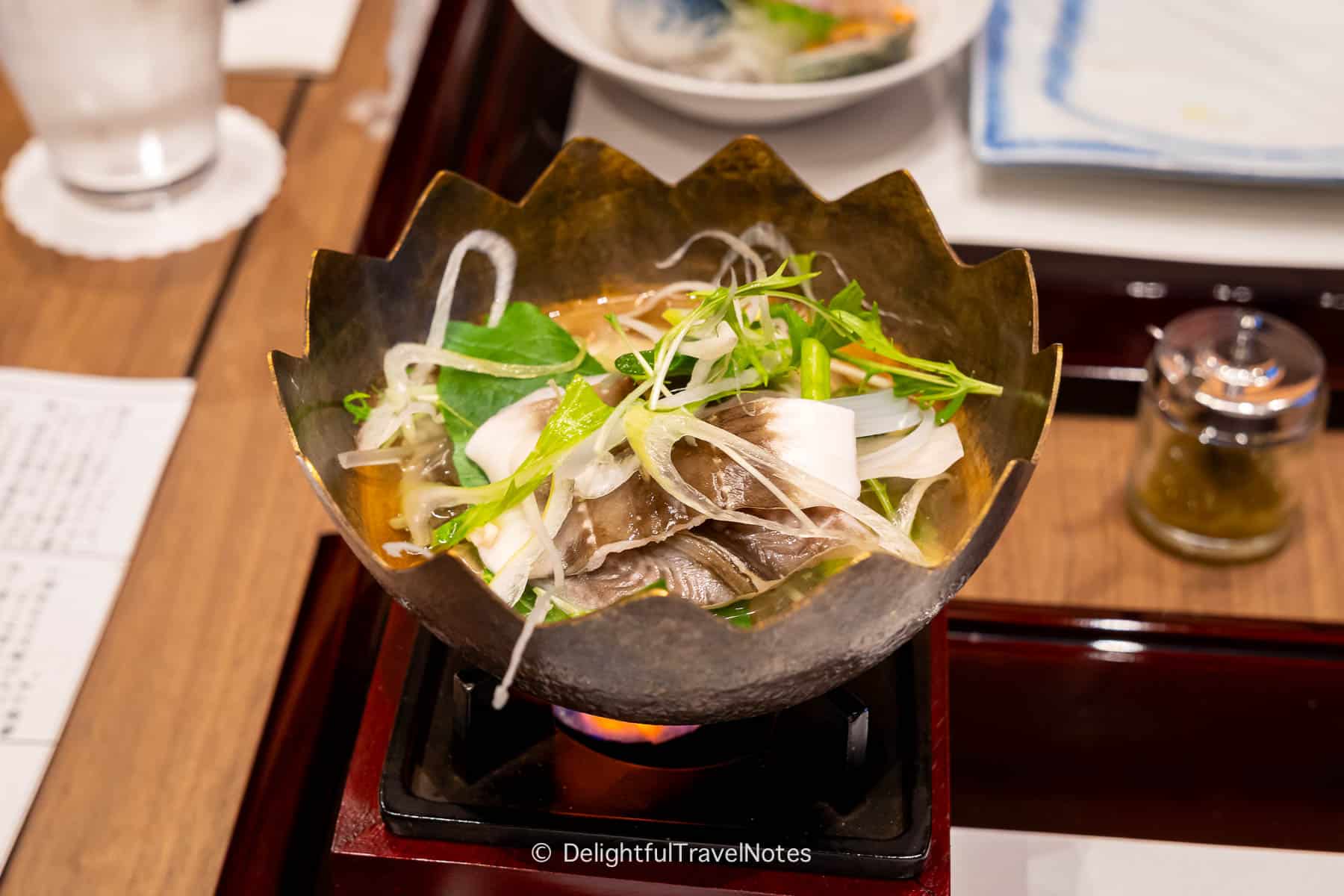
Our favorite dish of the meal was the anago nabe, a hotpot featuring conger eel in a light broth. It was delicate, comforting, and deeply satisfying. For us, it was the highlight of the evening. We wrote more about the dinner in our detailed review of Kinsuikan.
After dinner, we headed to the private bath we had reserved at check-in. The private baths are available to guests staying in Mizuori rooms and the water is just regular hot water. The public bath is the only one that uses onsen water drawn from underground sources.
We had originally considered going out after dinner to see the illuminated torii gate at night, but it was drizzling and quite cold, so we decided instead to enjoy the view from our room and from the ryokan’s rooftop terrace.
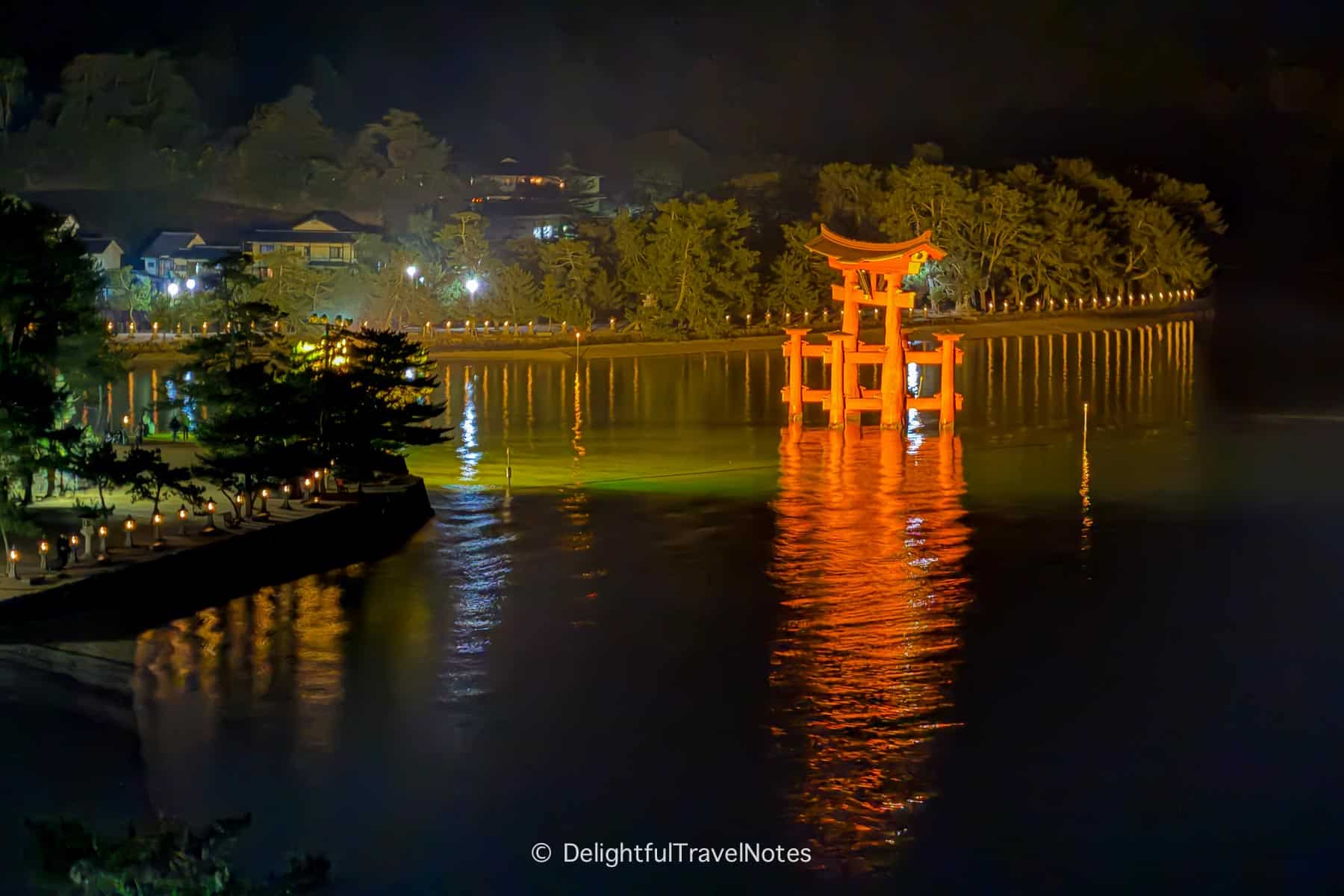
Both inside the ryokan and outside along the island were wonderfully quiet. Coming from a city of more than ten million people, these quiet moments in Japan always feel precious to us.
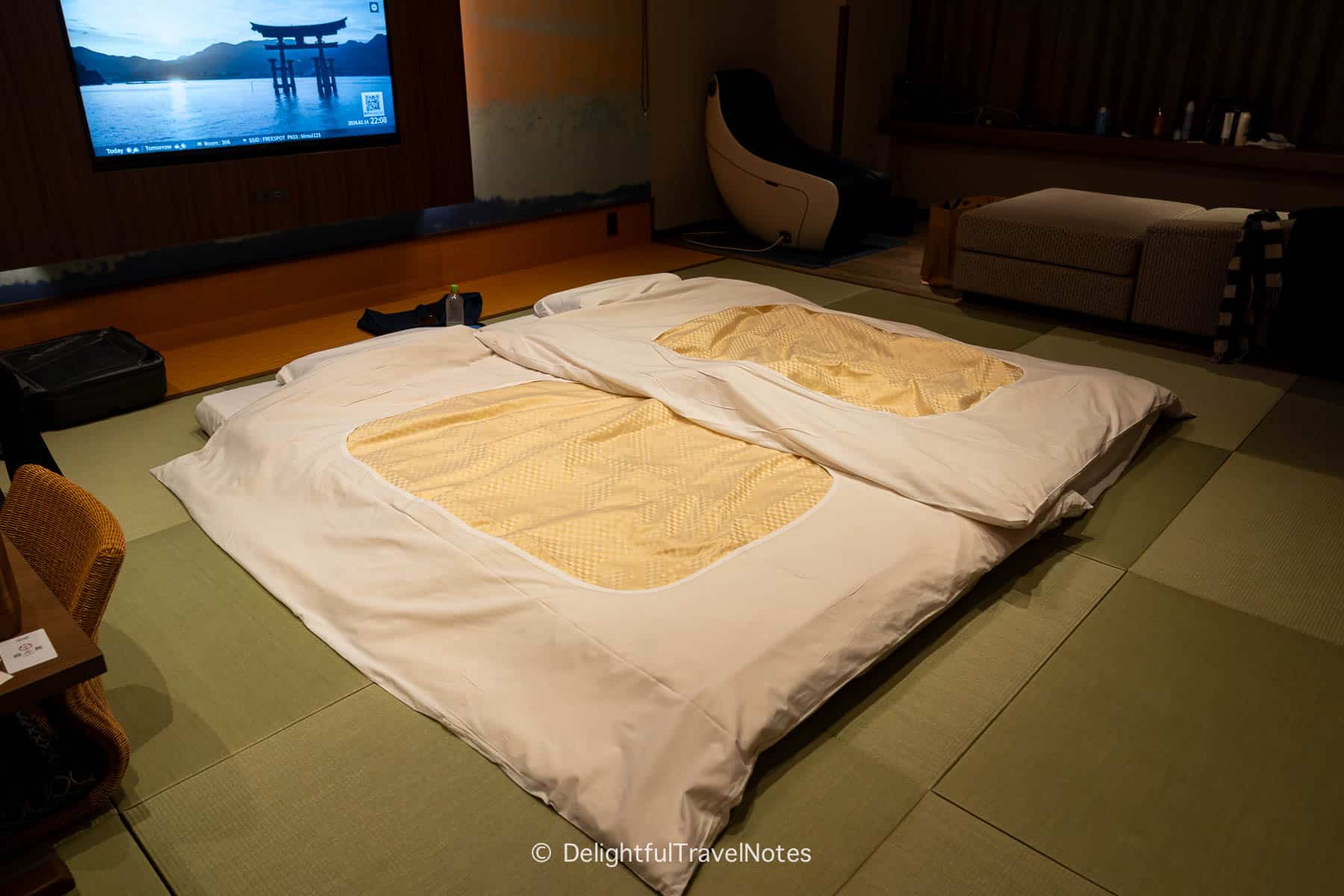
This was our first time trying futon sleeping. By the time we returned from our bath, the staff had already laid everything out. I am glad I tried it once, but that was probably enough for me. In all honesty, I find a modern bed much more comfortable. I also missed having a bedside table, since I often wake up during the night to drink some water.
Day 2
The next morning, we woke up early and headed out for a walk a little before 7 am. The sun had not fully risen yet, and the streets were still almost completely empty. The water was very calm, calmer than at any other point during our stay. For the first time, we were able to see the torii gate mirrored clearly over the water. It was one of the most serene moments we had on the island.
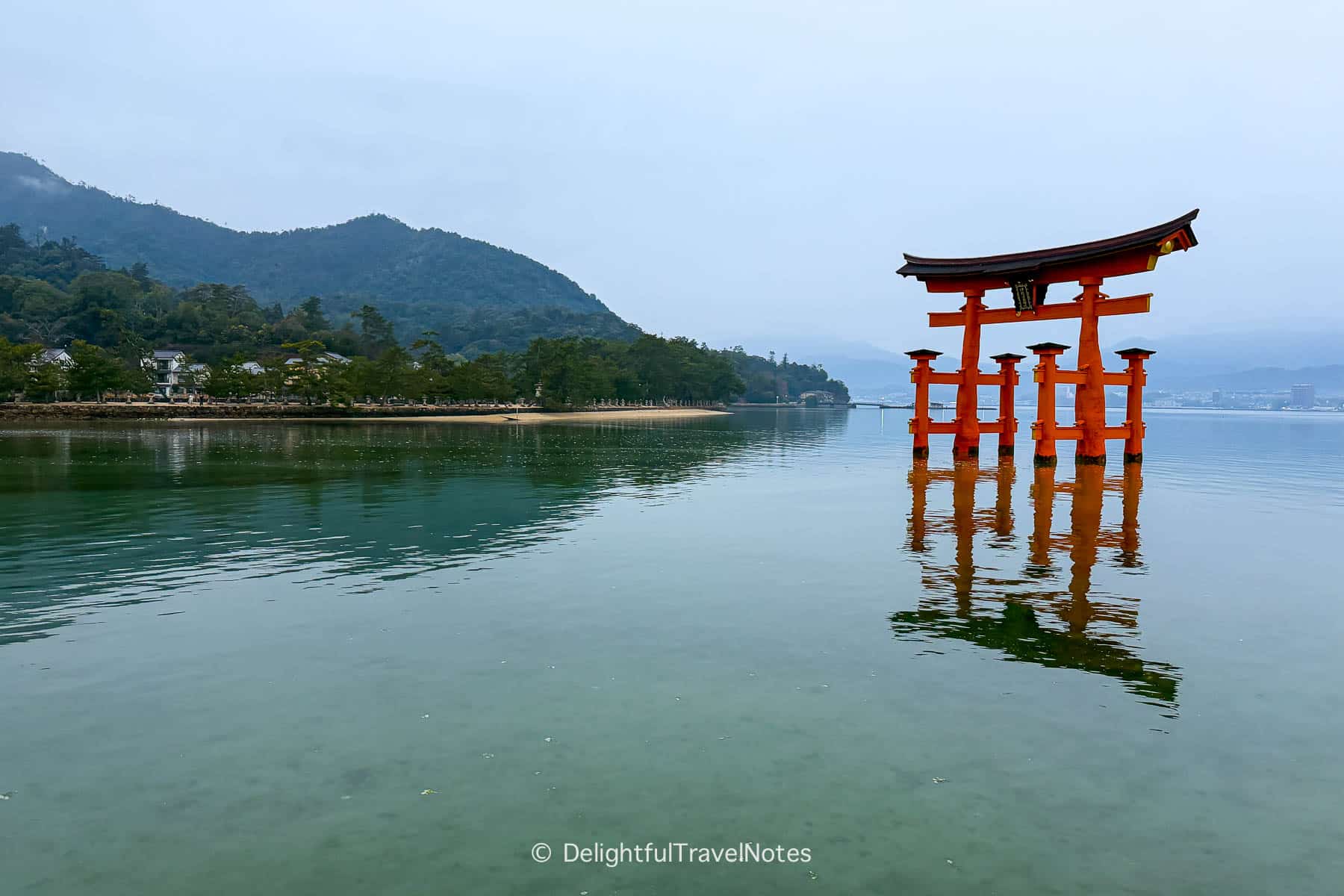
We walked along the waterfront toward Itsukushima. Yes, we went to Itsukushima again as we wanted to see it at different tidal levels. As we approached, the tide kept rising, and by around 7:30 a.m., the shrine’s corridors were “floating” on the water. To me, Itsukushima looked more mesmerizing at high tides than low tides. The only thing was as the morning progressed, the torii’s reflection became less clear. With only a few other visitors around at that hour, the atmosphere felt especially peaceful.
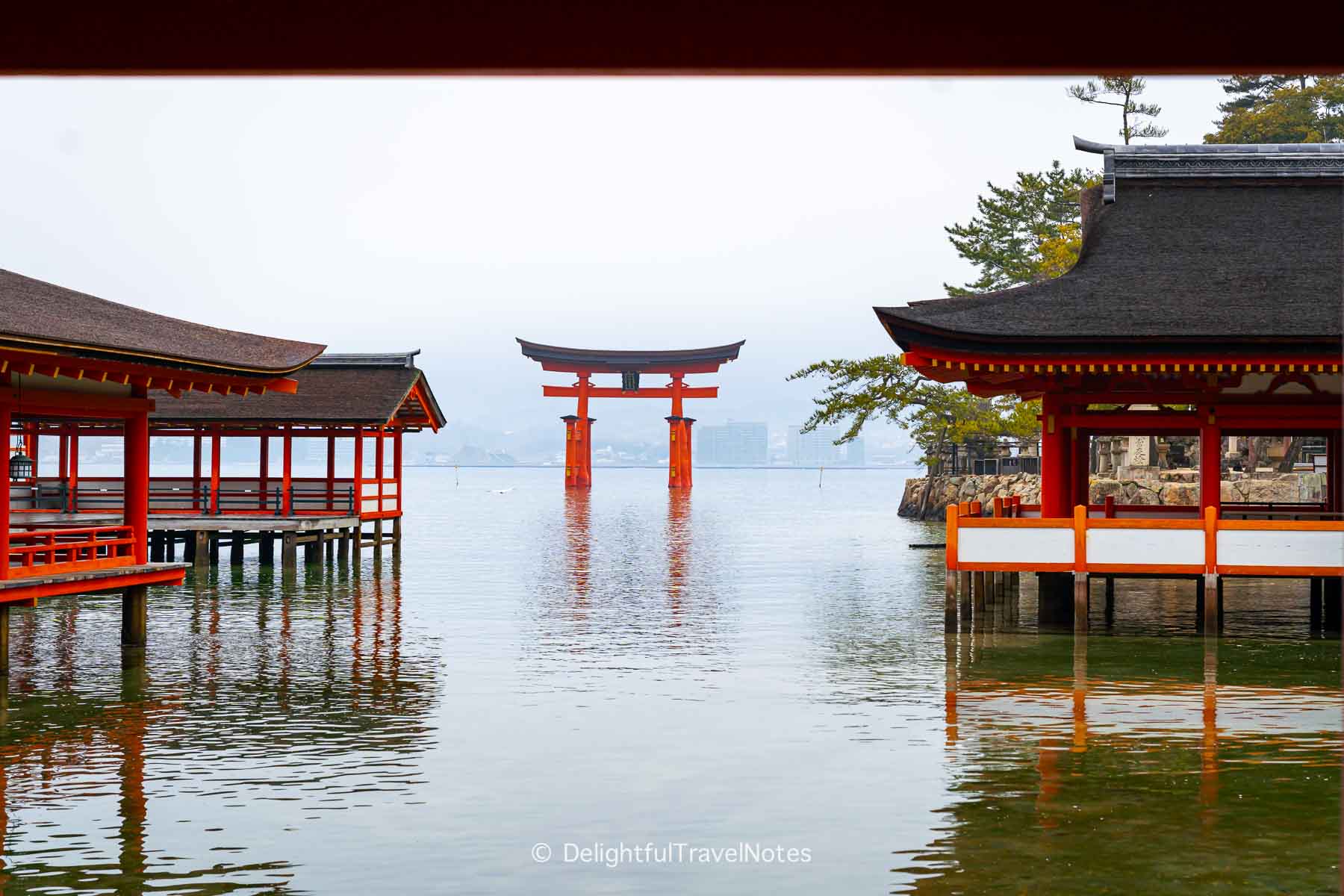
By now, we had already visited quite a number of shrines and temples in Japan, and we had even seen another floating torii in Hakone. Still, the scenery at Itsukushima left a strong impression on us. It felt great to see such a striking man-made structure blended so harmoniously into the surrounding sea, mountains, and sky.
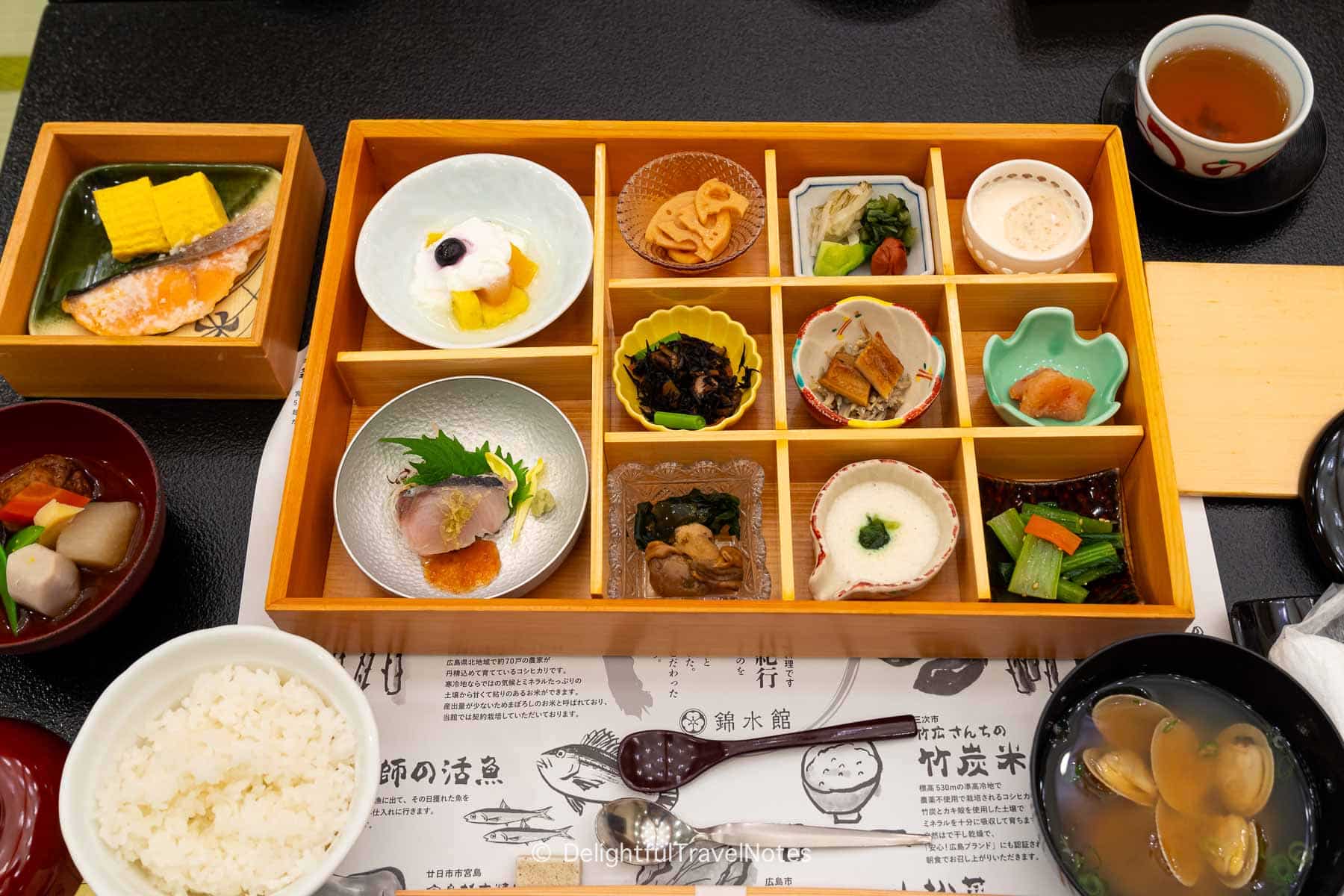
Contented with what we saw, we slowly made our way back to Kinsuikan for breakfast. The breakfast at the ryokan was served as a traditional Japanese set meal, built around balance, variety, and subtle flavors. We had it in the cozy communal dining room, and while it was not the most elaborate or memorable Japanese breakfast we have had in Japan, it was very comforting with the warmth of a home-cooked meal.
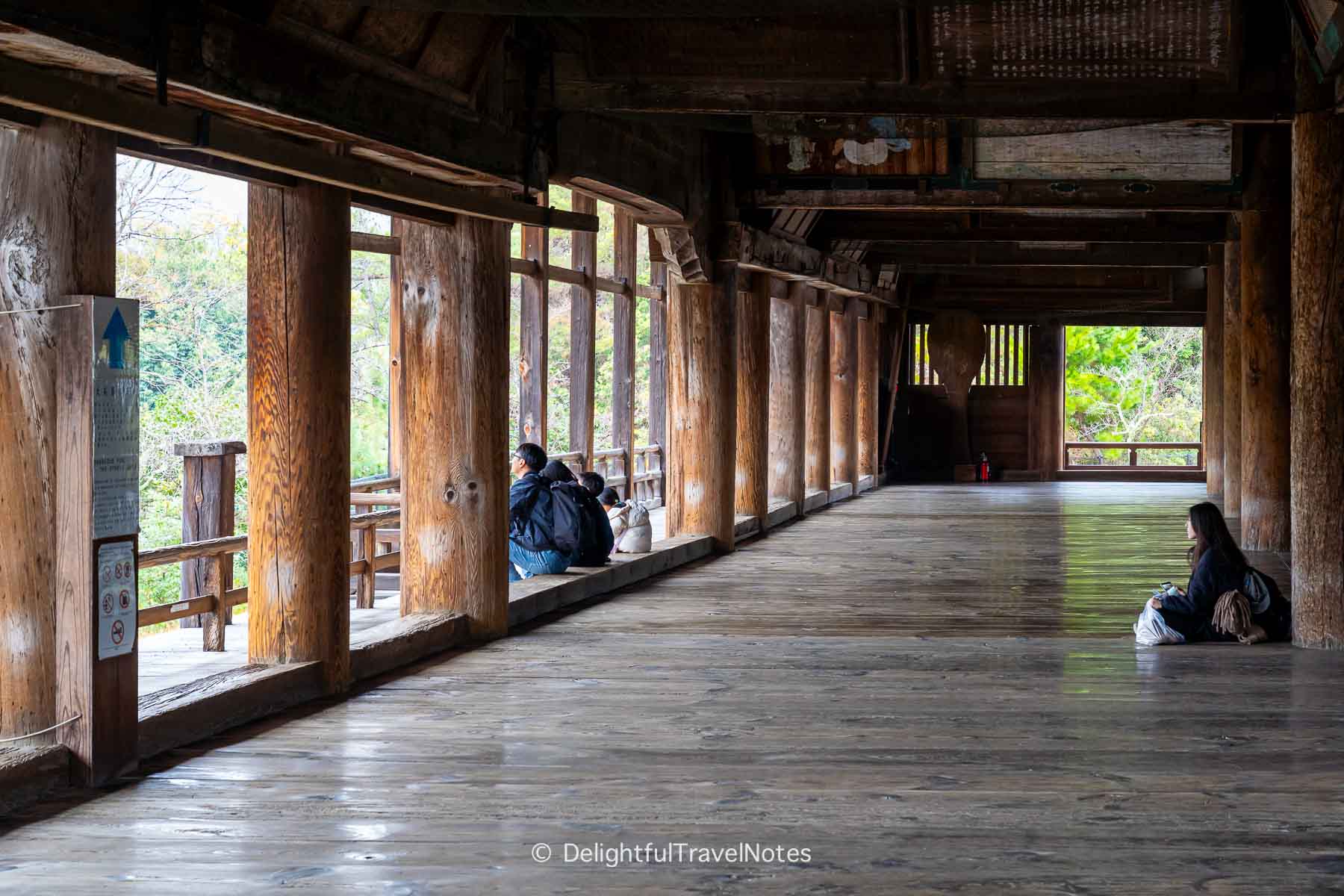
After breakfast, we walked to Senjokaku Pavilion (Hokoku-jinja). If you enjoy grand historic wooden structures such as Kiyomizu-dera, Ishiyama-dera, or Higashi Hongan-ji, I think this pavilion is worth a quick stop. There is a small fee to enter and you will need to take your shoes off. In winter, even with fairly thick socks, we still found the wooden floor quite cold. The pavilion was quiet and atmospheric, almost like stepping back into another time. We sat on the terrace for a little while, taking in the view and enjoying our final moments on Miyajima.
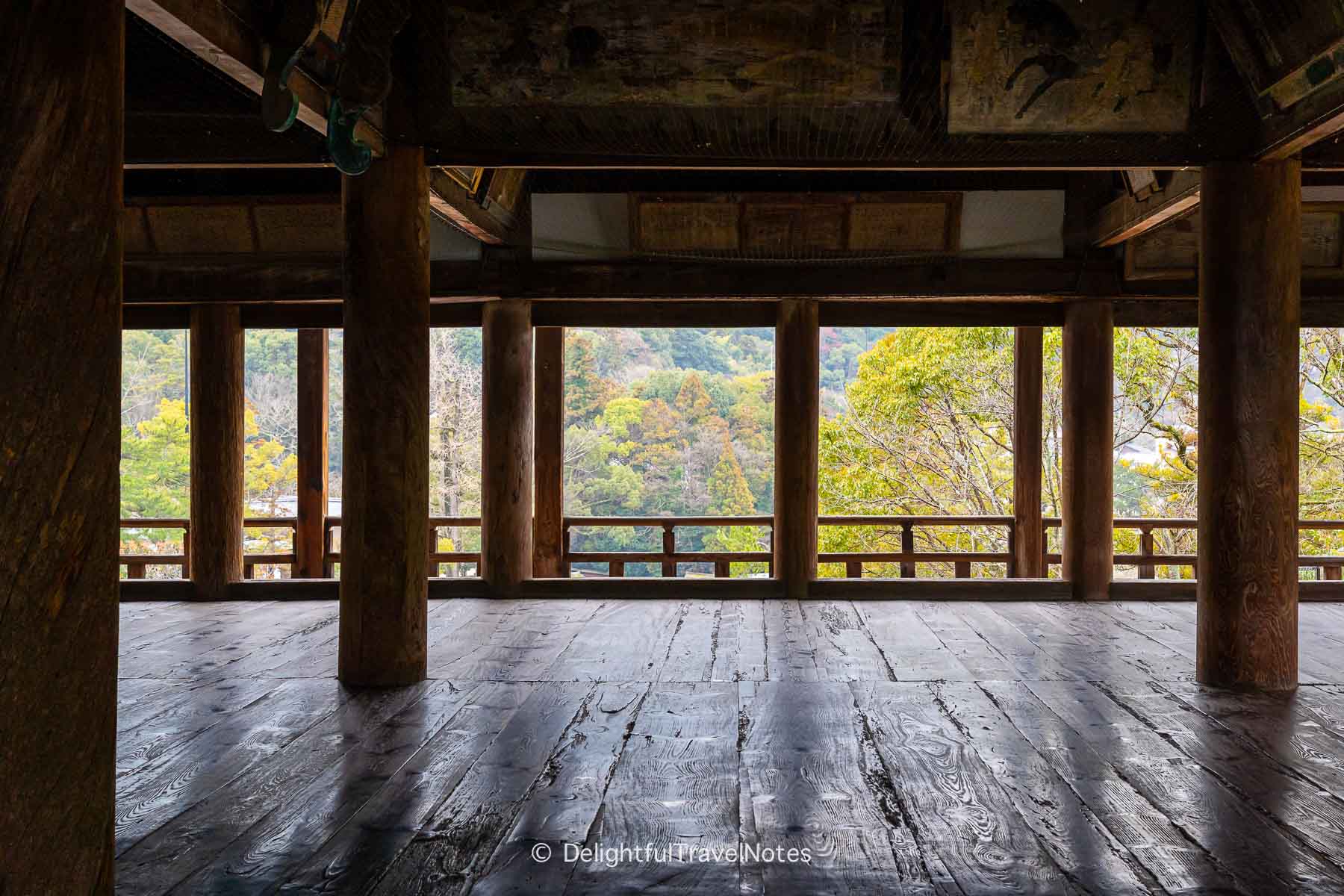
We checked out of Kinsuikan at 11 am and used the ryokan’s complimentary shuttle service to get to the ferry terminal. There were still a few places on the island we did not get to visit, for example Mount Misen, since the ropeway was closed during our stay. Regardless, we left feeling completely satisfied and didn’t feel like missing anything. Our overnight stay on Miyajima was a really nice break in the middle of our 10-day trip.
Explore More
Miyajima Kinsuikan Review: A Ryokan with A Century of History on the Island
Kurashiki and Okayama in One Day Trip from Hiroshima (or Osaka)
Best Areas to Stay in Kyoto (For First-timers and Returning Visitors)