
Miyajima Kinsuikan Review: A Ryokan with A Century of History on the Island
Miyajima is a scenic island less than an hour from Hiroshima. With its coastal views, historic temples, and the iconic torii gate of Itsukushima Shrine, the island offers a refreshing change of pace from the large cities in Japan. While Miyajima can be visited as a day trip, the experience will be a lot more special when you stay overnight in a ryokan.
For our trip in February 2026, we chose Kinsuikan, a traditional inn founded in 1902 with over a century of history. It felt like a fitting choice for the setting, and we were very happy with our stay. Here’s our detailed review to help you decide if it’s the right accommodation for your own visit.
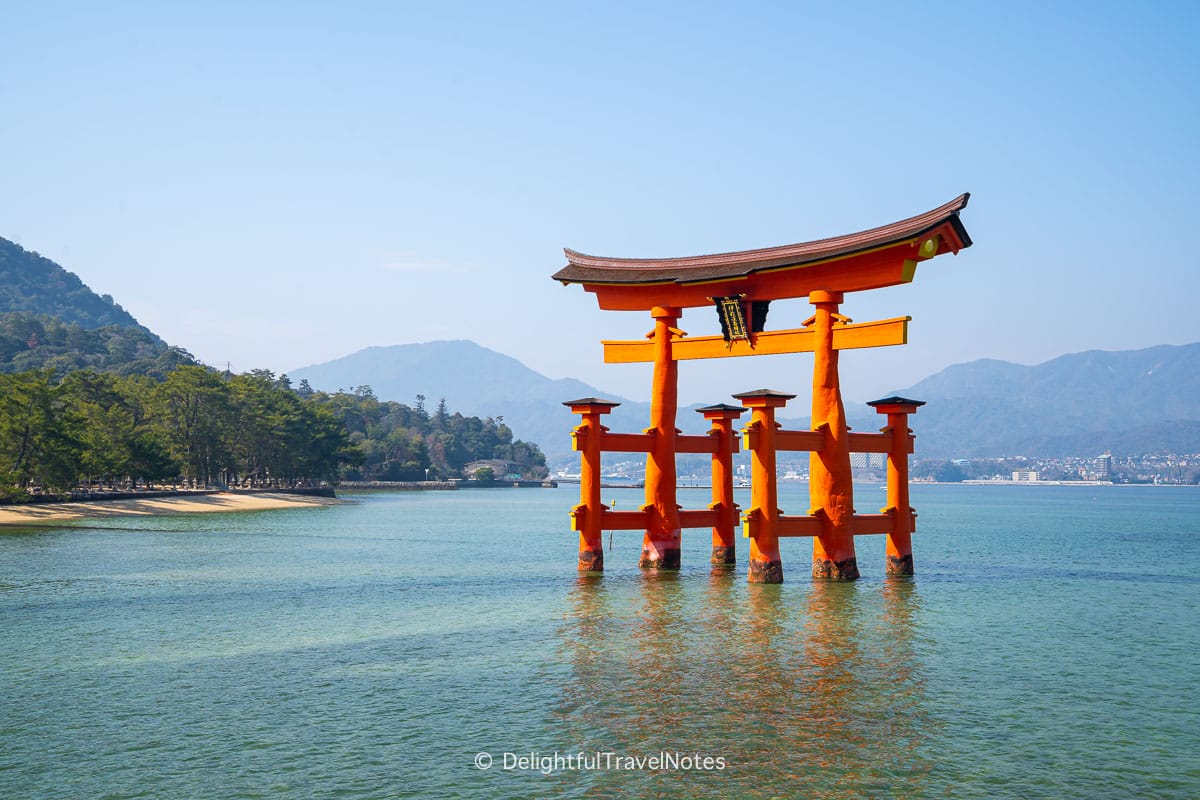
Overview
Quick Links
- Official website (English translation is available)
- Google Maps location
- TripAdvisor reviews
- Booking.com | Agoda | Expedia
What brought Kinsuikan to our attention while researching accommodation options was its excellent location. It is just a five-minute walk from Miyajima Ferry Terminal and about the same distance to Itsukushima Shrine.
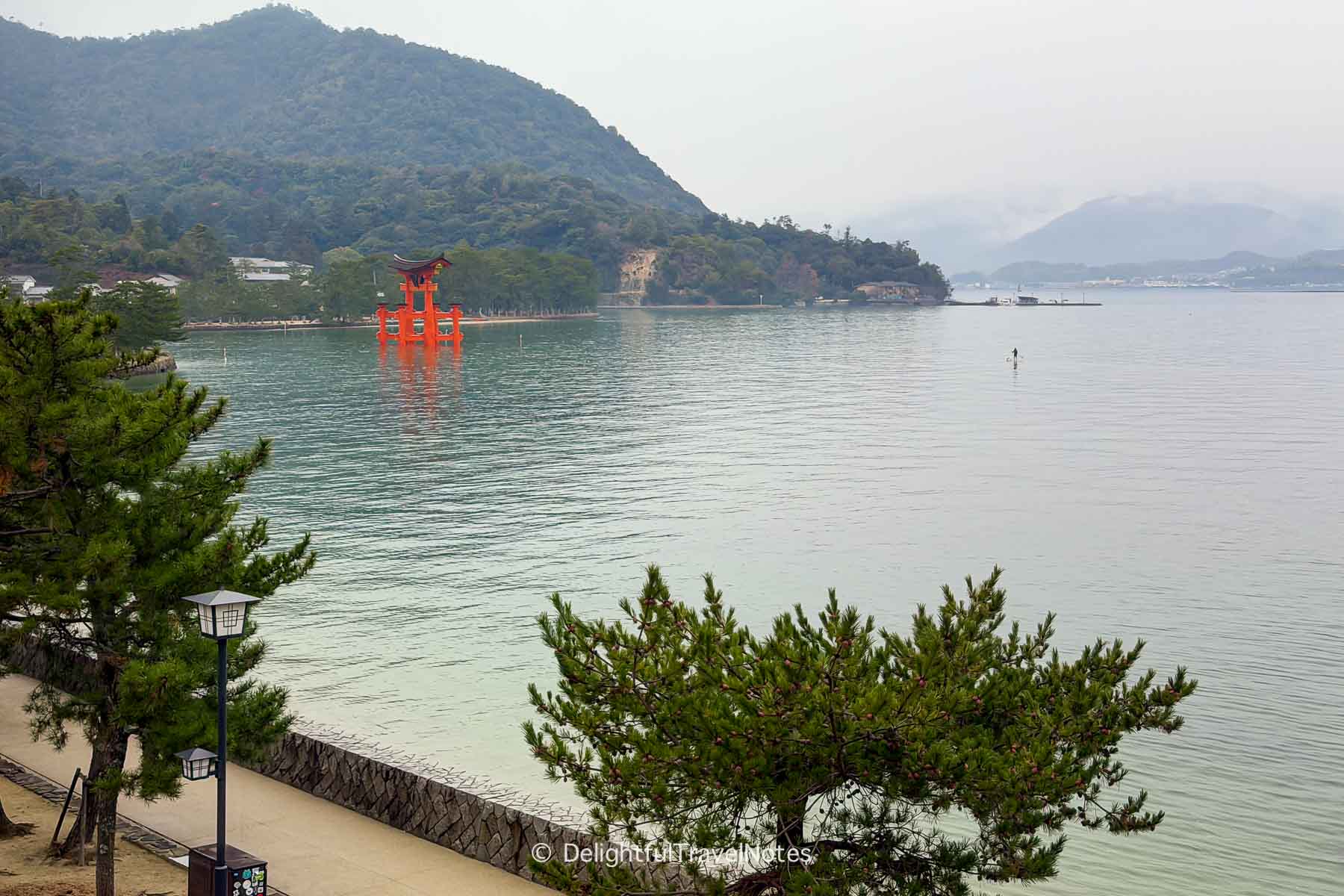
The ryokan is located on the waterfront promenade with open views across the calm waters of the Seto Inland Sea. Some rooms even have side views of the iconic floating torii gate. The lively Miyajima Omotesando Shopping Street is easily accessible via the back entrance, while the front of the ryokan remains quiet. In terms of location, it’s about as good as it can get on the island I think.
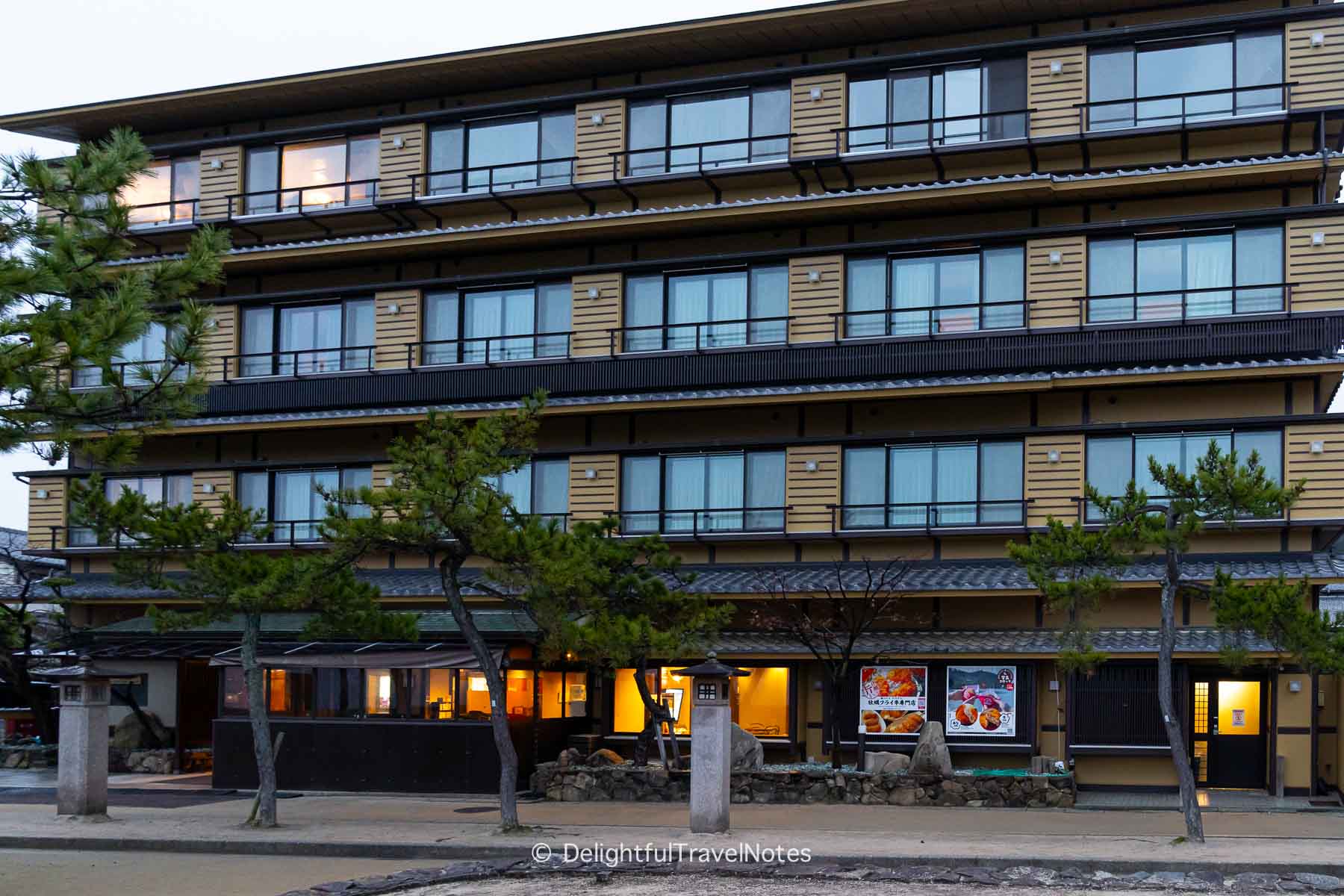
Another feature that sets Kinsuikan apart is its public bath, which uses natural hot spring water drawn from an underground source. This can be very rare in Miyajima since it is not a hot spring town. The rooftop terrace is also a highlight, providing a pleasant space to unwind with views of the ocean and the torii gate in the distance.
The overall atmosphere of the property is calm, cozy and welcoming. Every staff member we encountered was friendly and eager to help. Some rooms have been renovated in recent years. Some of them feature traditional tatami flooring and futon, while there are also rooms with Western beds.
As typical with a ryokan stay, Kinsuikan serves kaiseki dinner and breakfast in traditional style. Both meals successfully incorporated seasonal ingredients and local specialties, which we value highly. Overall, we found both meals enjoyable and filling with several memorable dishes. It didn’t reach the level of elite kaiseki dining, but it delivered a comforting and well-rounded experience with a strong local identity.
In short, I think Kinsuikan is a great choice for a traditional overnight stay on Miyajima Island. It is a very solid and polished mid-upper tier ryokan with an outstanding location and warm service. If you are still debating whether to visit the island as a day trip or spend a night, read my trip report and why an overnight stay on Miyajima is worth it.
Check Prices & Availability of Miyajima Kinsuikan
Booking Agoda Expedia
Our Room
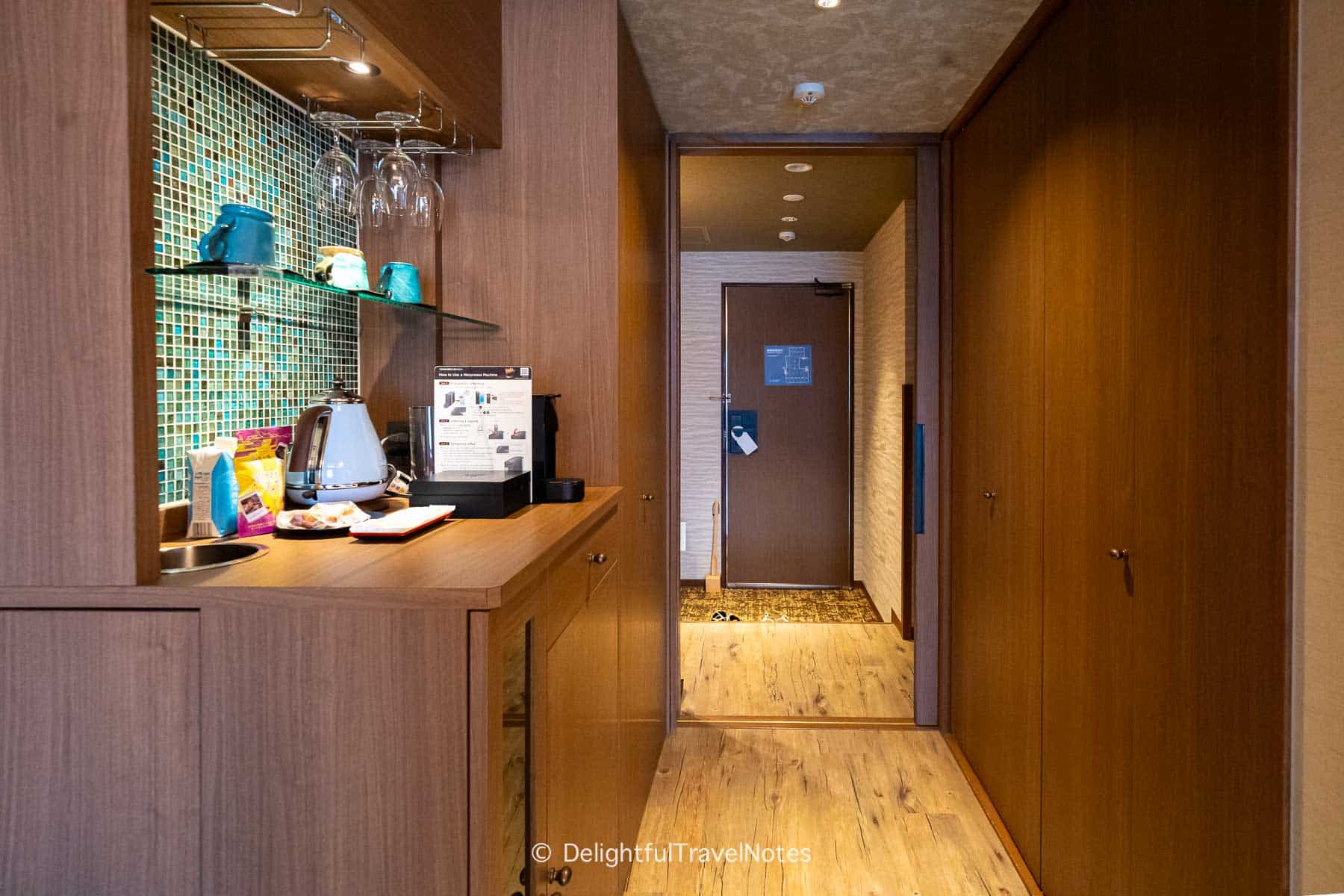
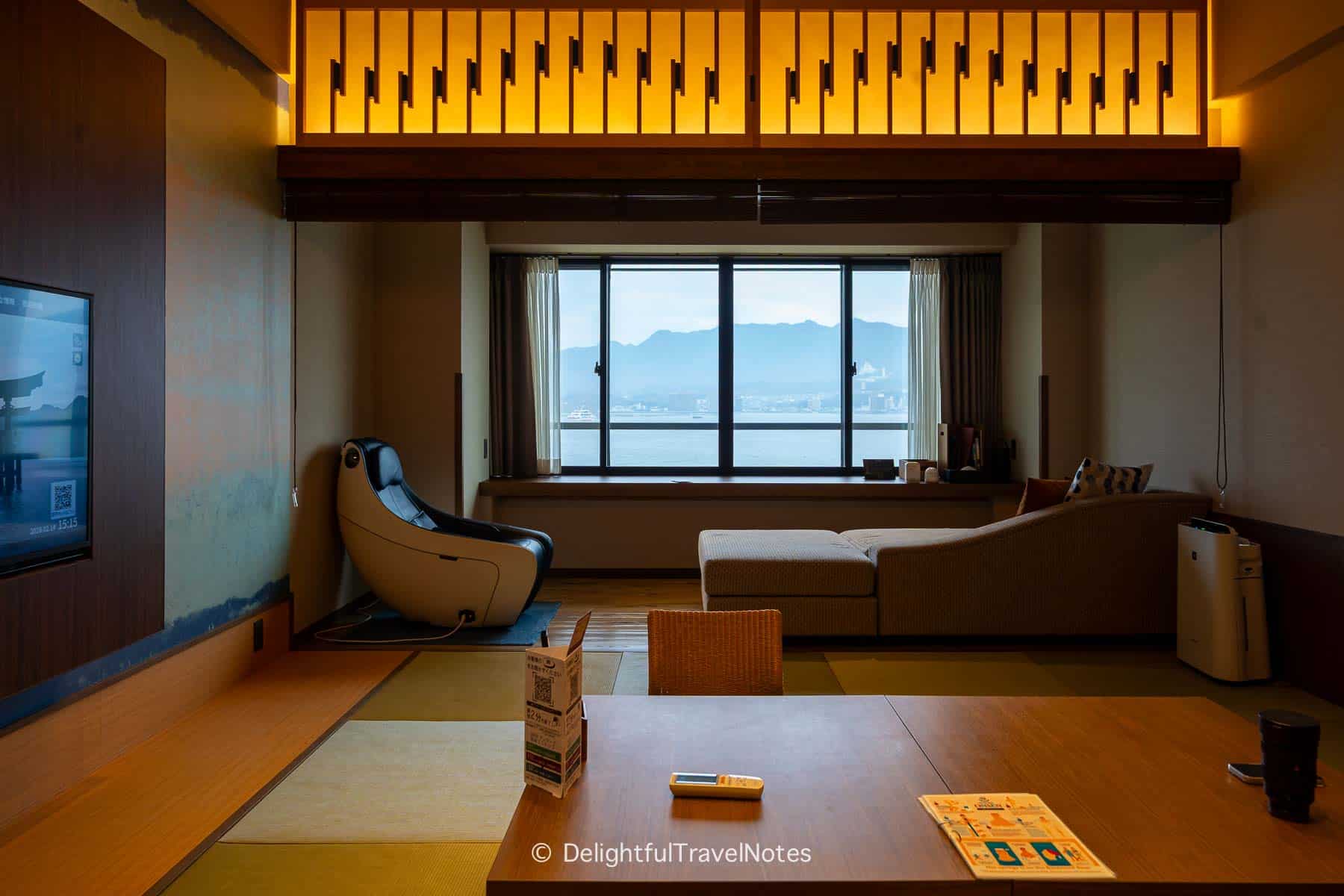
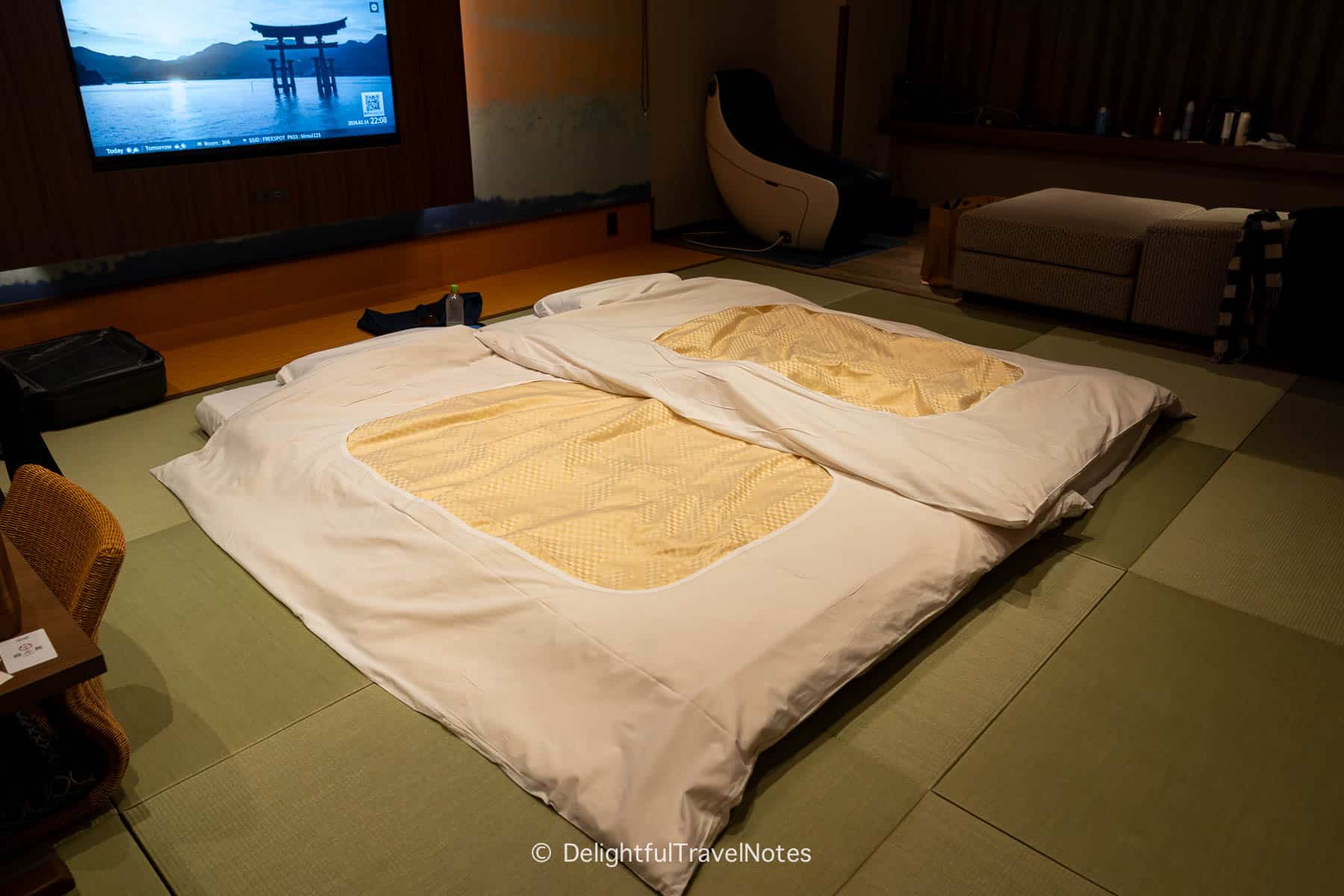
This time, my husband wanted to try sleeping on futons. Since we were only staying one night, I was okay to go along with it. If we had had a longer stay, I would have definitely picked Western beds instead. And so, we booked Mizuori room, which was renovated in 2024. The room size is listed in “tatami mats” so I don’t know its exact size in square meters, but it was pretty spacious for two people. You can see the layout of this room as well as other rooms on the ryokan’s webpage.
In the center of the room is a low dining table and two floor chairs. This was where our kaiseki dinner would be served in room. At night, staff would move the table and chairs aside to lay out futons directly on the tatami.
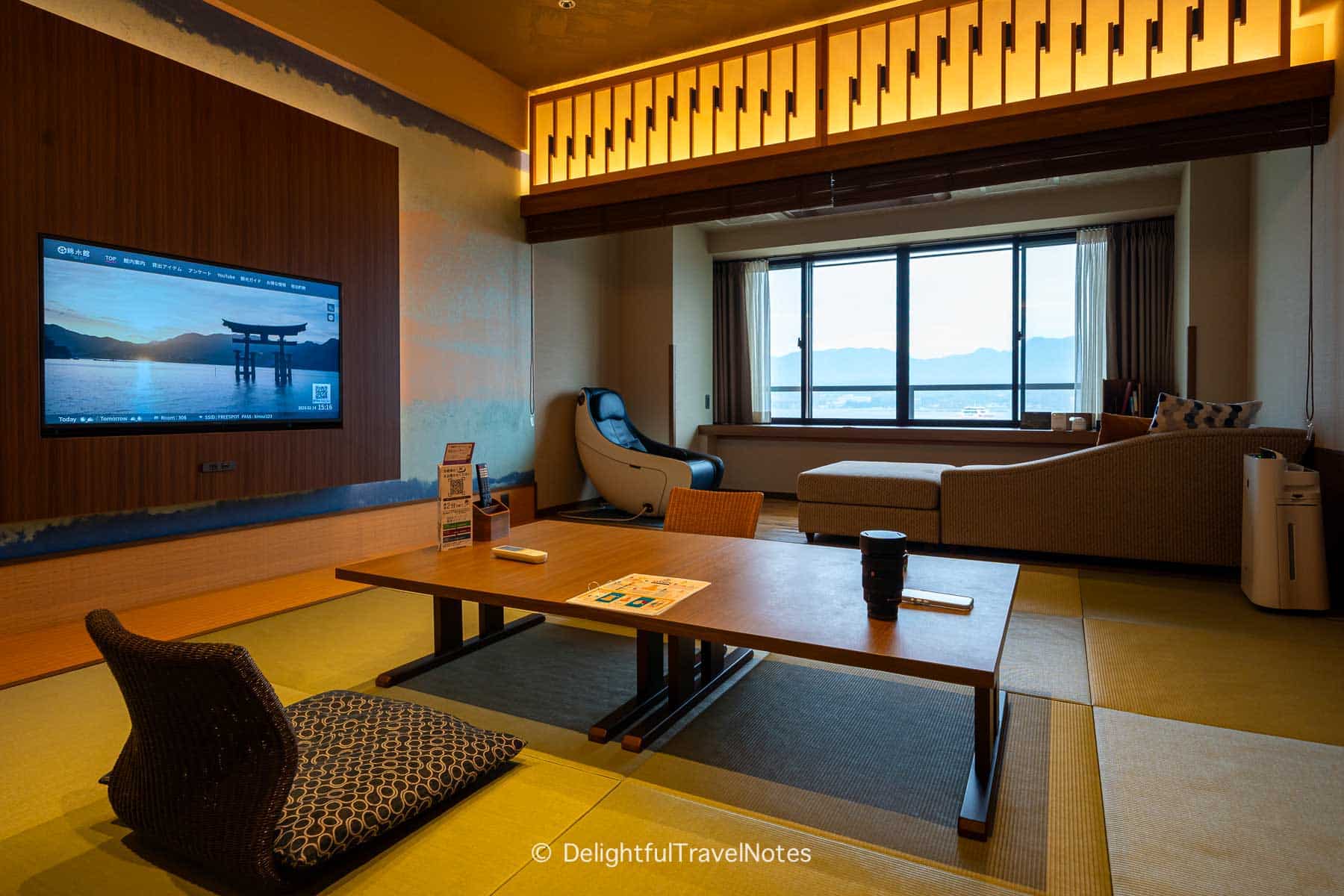
Another reason we chose this room was for the view. The large window looks out toward the waterfront, with a clear view of the calm sea and mountains in the distance. You can also catch a glimpse of the floating torii gate. Despite facing the street, the double-layered windows provide good sound insulation, and we didn’t notice any noise during our stay.
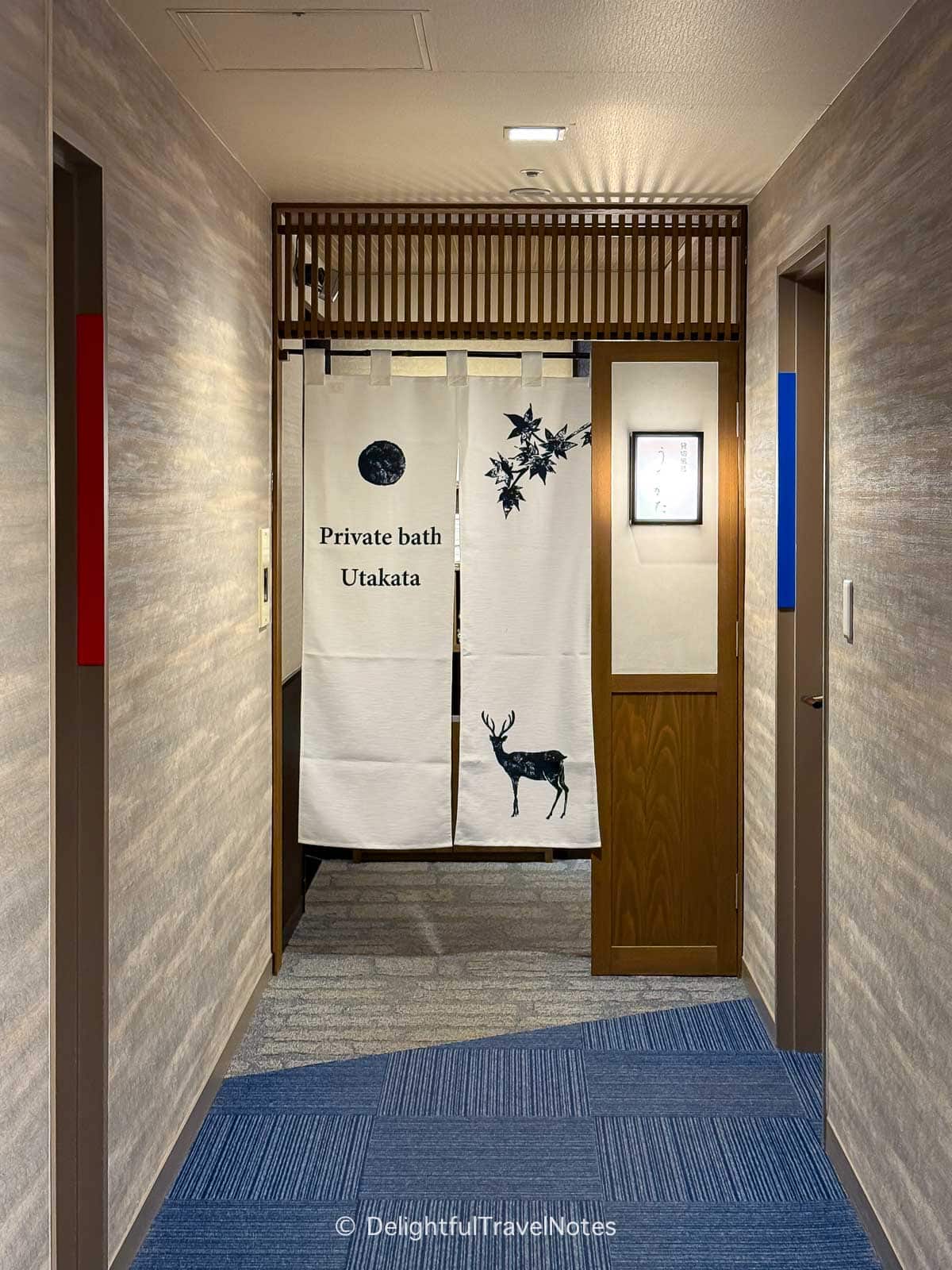
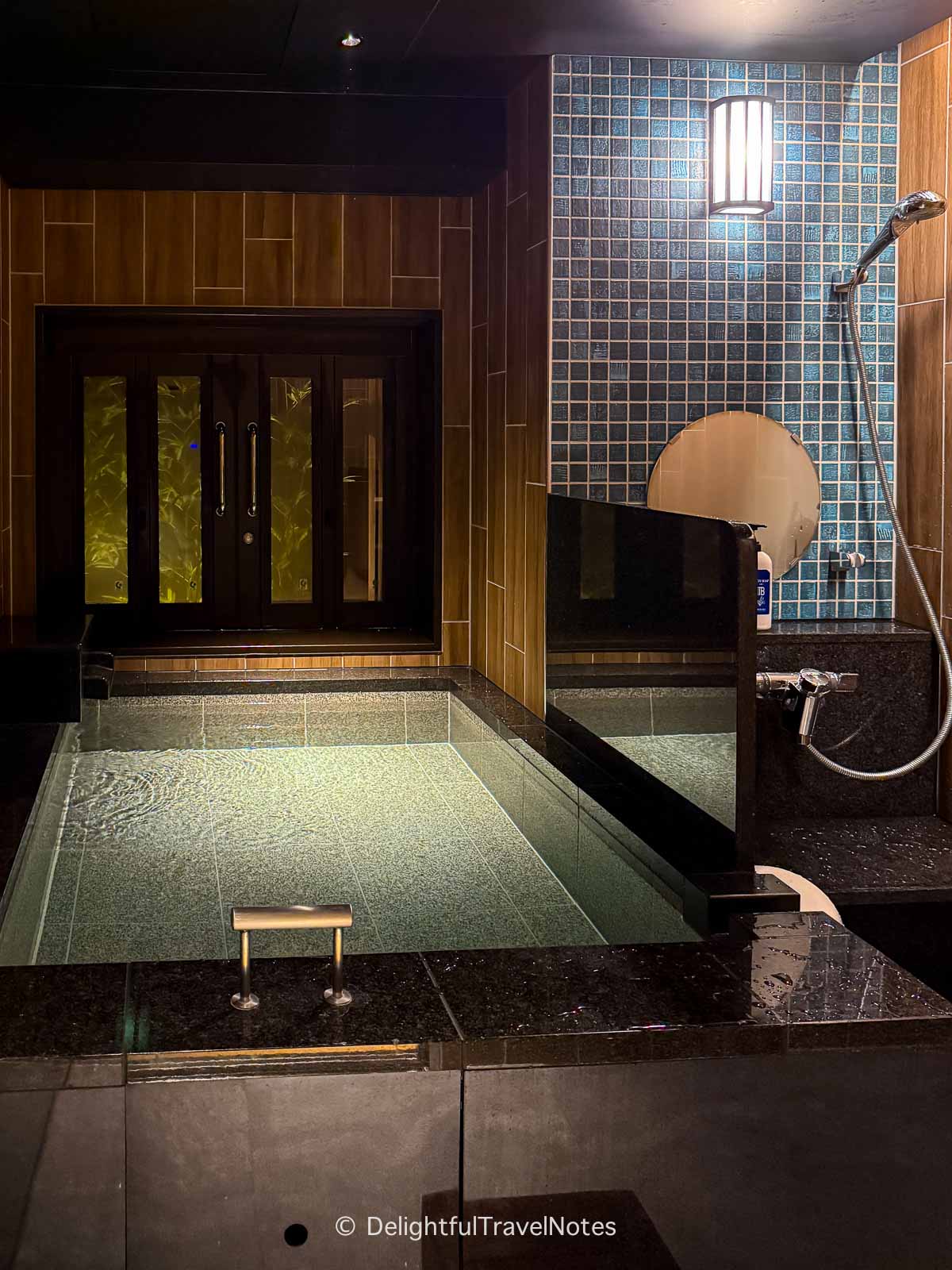
The bathroom in Mizuori rooms comes with a shower only and no bathtub. Guests in this room category can reserve a private bath, which is actually quite spacious and a pleasant experience. However, it’s worth noting that the private bath uses regular heated water, while the natural hot spring water is only available in the public onsen.
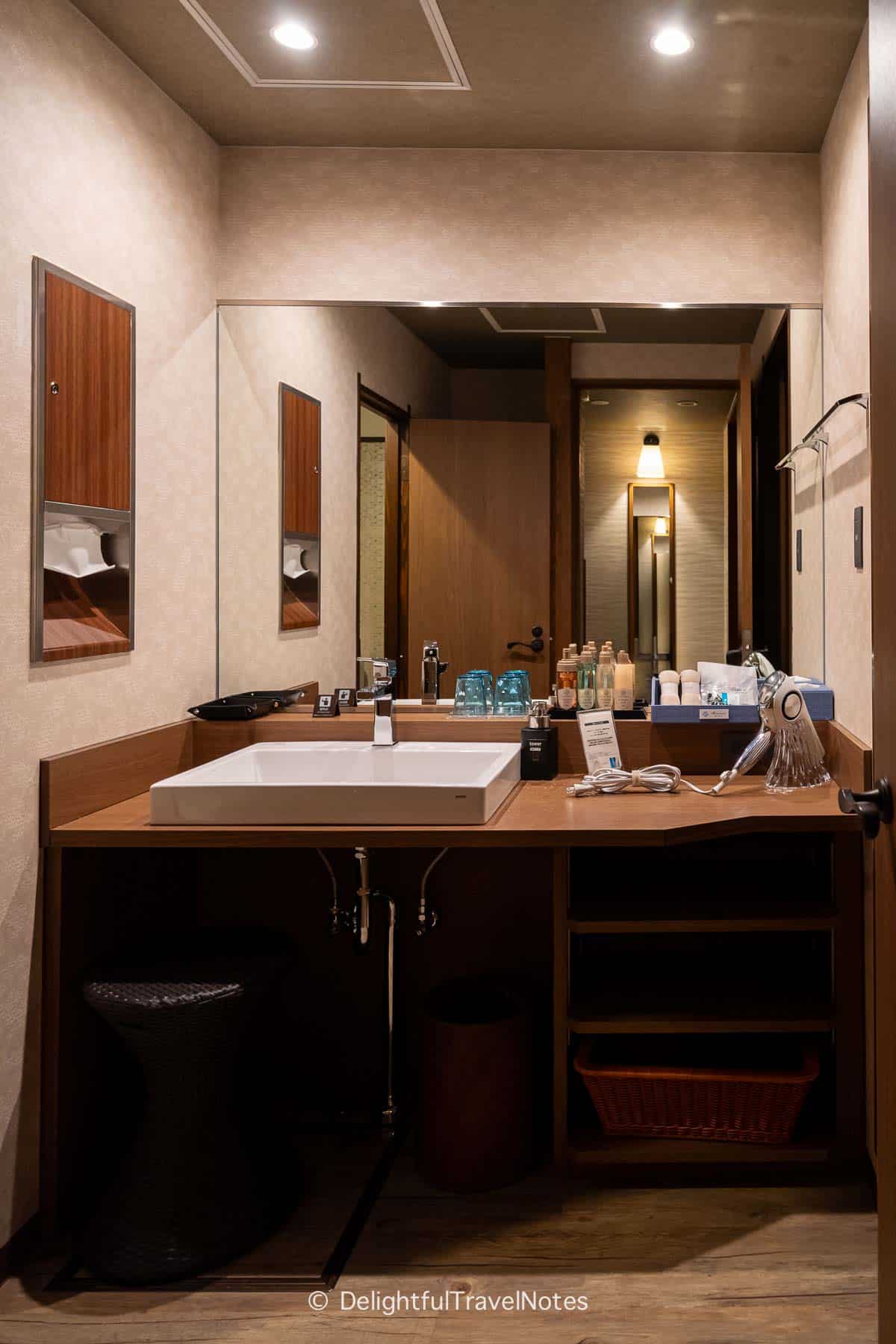
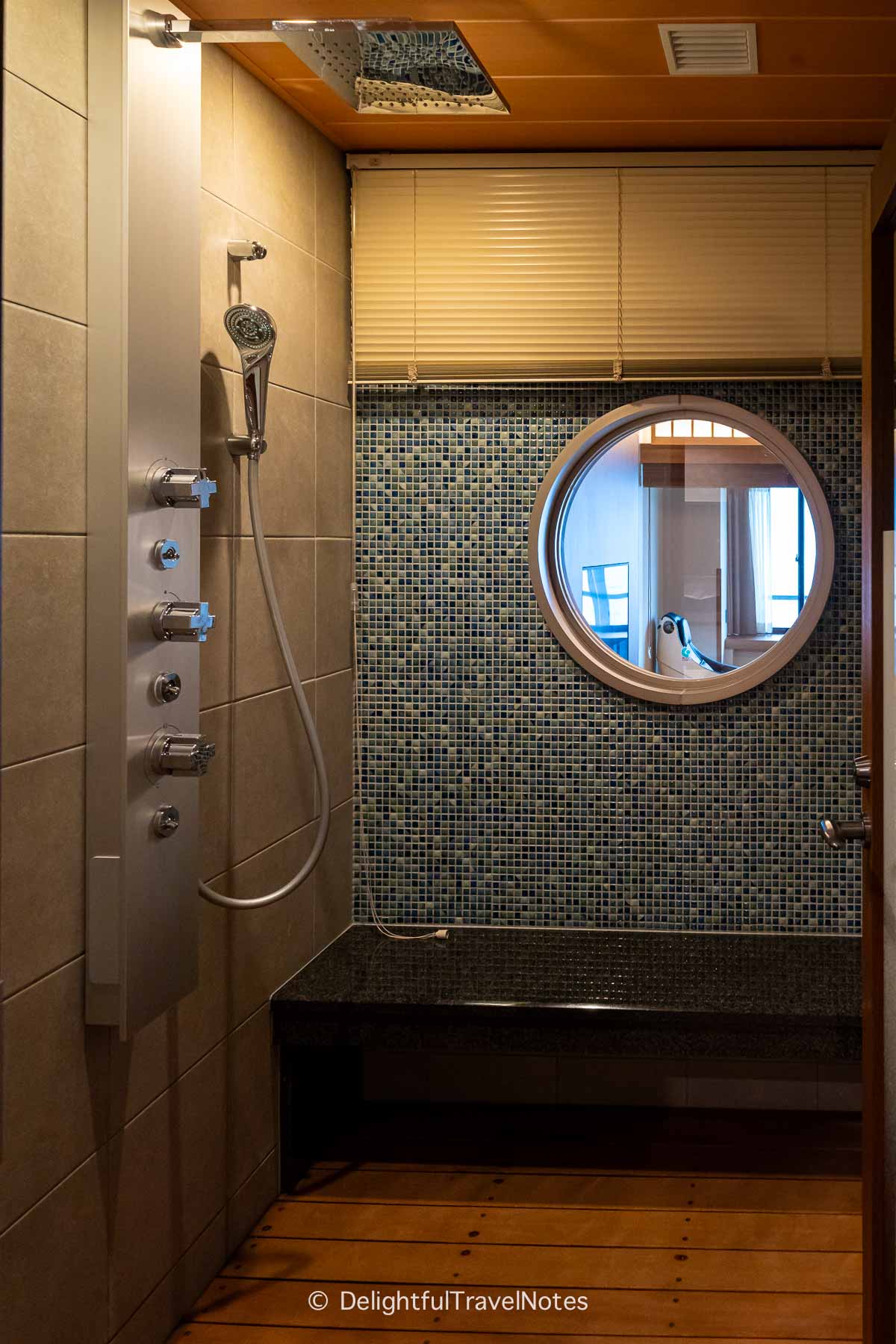
Overall, we were satisfied with the room as it is clean, well laid out and the view is very nice. That being said, I’m not a fan of futons. I found them lacking in support, and I also missed having a bedside table for a glass of water at night. If we return in the future, I would definitely choose a room with Western beds. The Mizuori room is a good option if you are curious about the futon experience or enjoy sleeping on tatami.
Rooms and suites in higher categories have in-room semi-open air baths filled with artificial hot spring water, not geothermally sourced onsen water. According to the ryokan’s website, this system uses a special mineral stone called komeiseki, which is placed in the bath to release minerals such as calcium and magnesium, recreating some of the qualities of a natural hot spring.
Dinner
Kinsuikan does offer a lower-rate option that includes breakfast only, without dinner. However, we would recommend booking the plan with dinner included. It completes the ryokan experience, as the kaiseki meal is an integral part of a ryokan stay. Besides, most restaurants on Miyajima close quite early, so dining options become very limited in the evening.
When you check in at Kinsuikan, staff will ask which time you would like to have dinner and breakfast. We knew kaiseki meals tend to be long and filling, so we picked 6:30pm for dinner so that we would have an ample rest and bath time after dinner. Our dinner was served in room and right at 6:30pm, our dinner attendant knocked on our door to start the service.
Here’s the sequencing of our late winter kaiseki dinner:
- Aperitif (yuzu liqueur)
- Hassun (seasonal small plates)
- Chawanmushi with seafood dashi
- Local sashimi
- Anago nabe with yuzu kosho (conger eel hot pot)
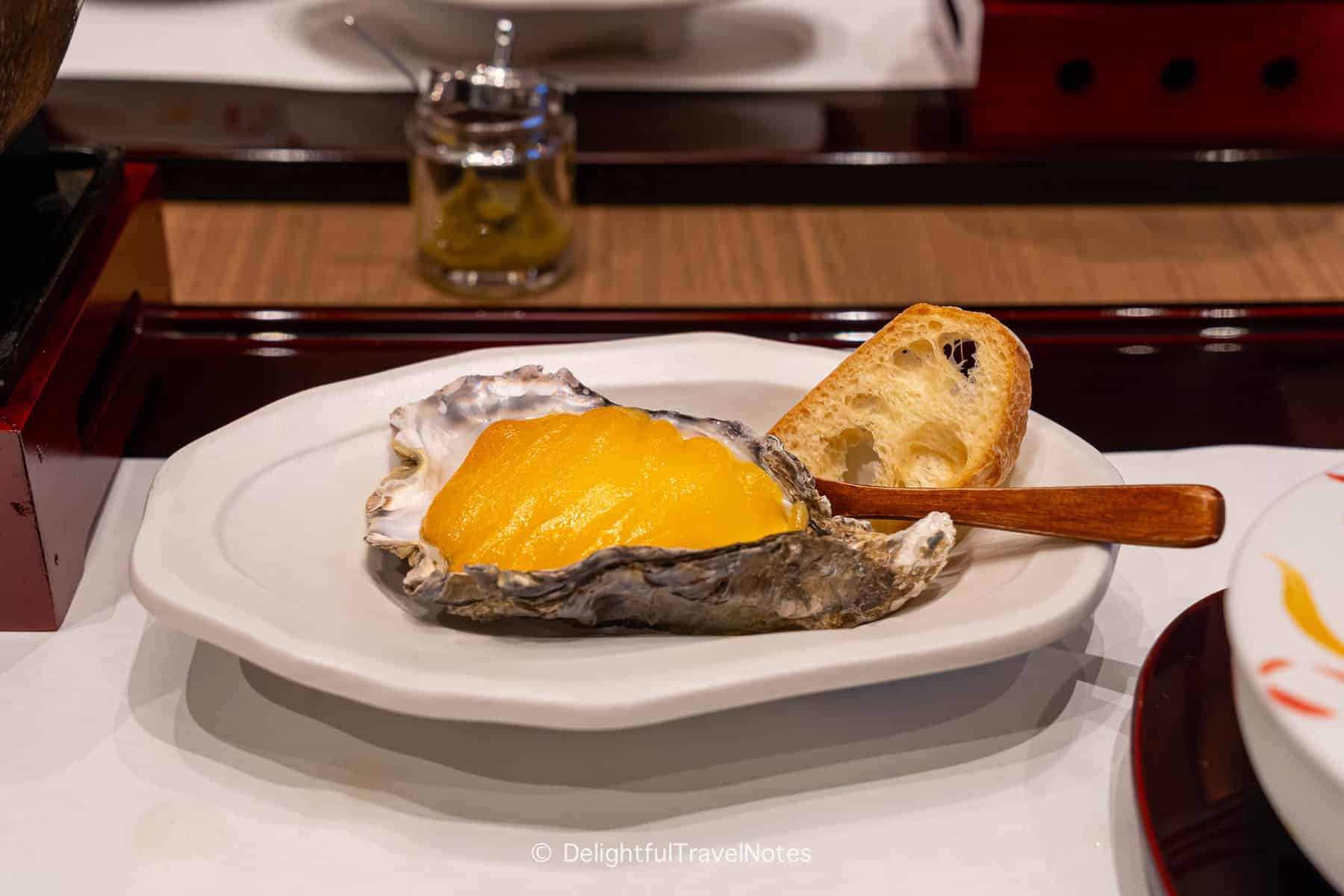
- Oyster gratin
- Steamed sea bream with turnip
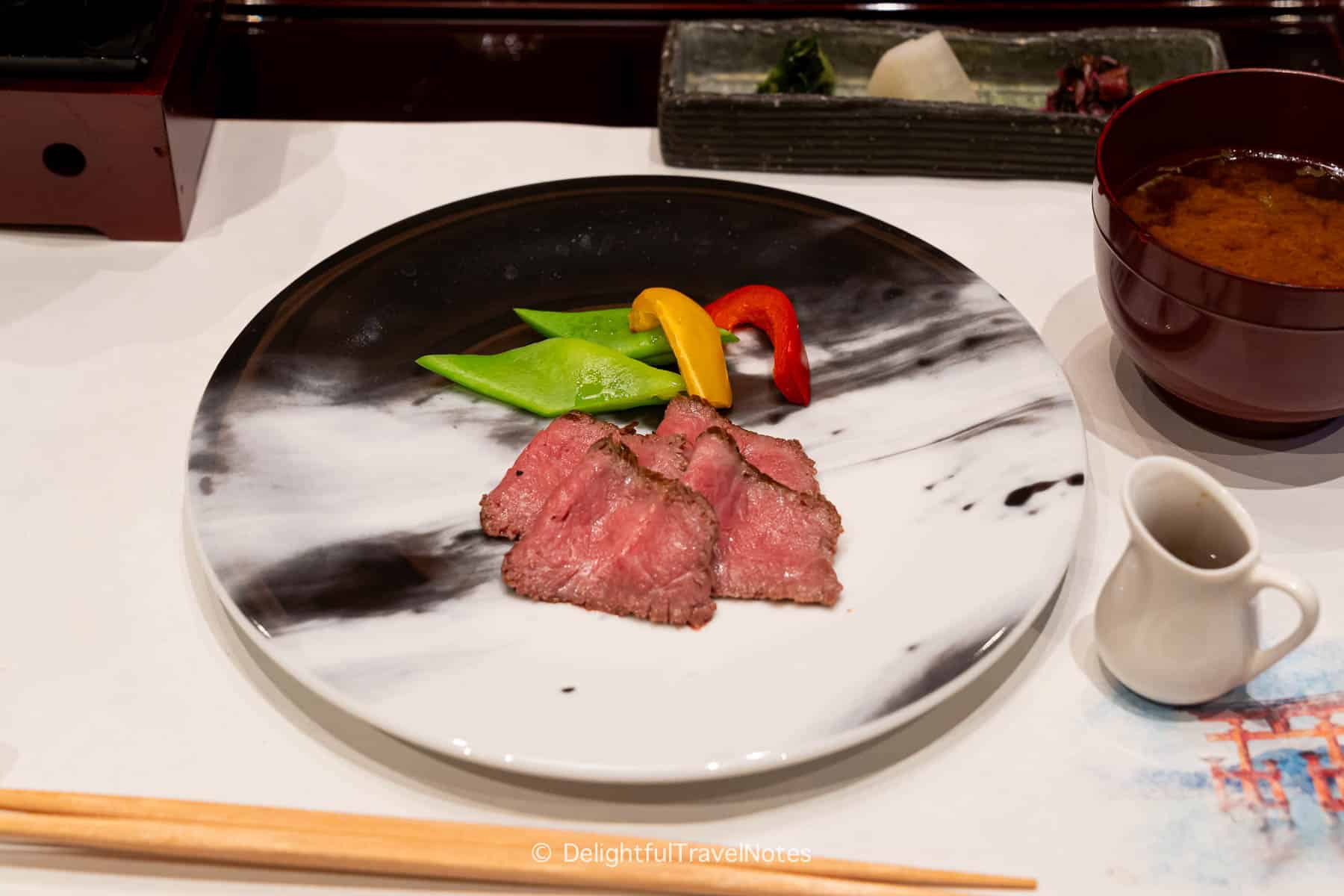
- Hiroshima roast beef with grilled vegetables
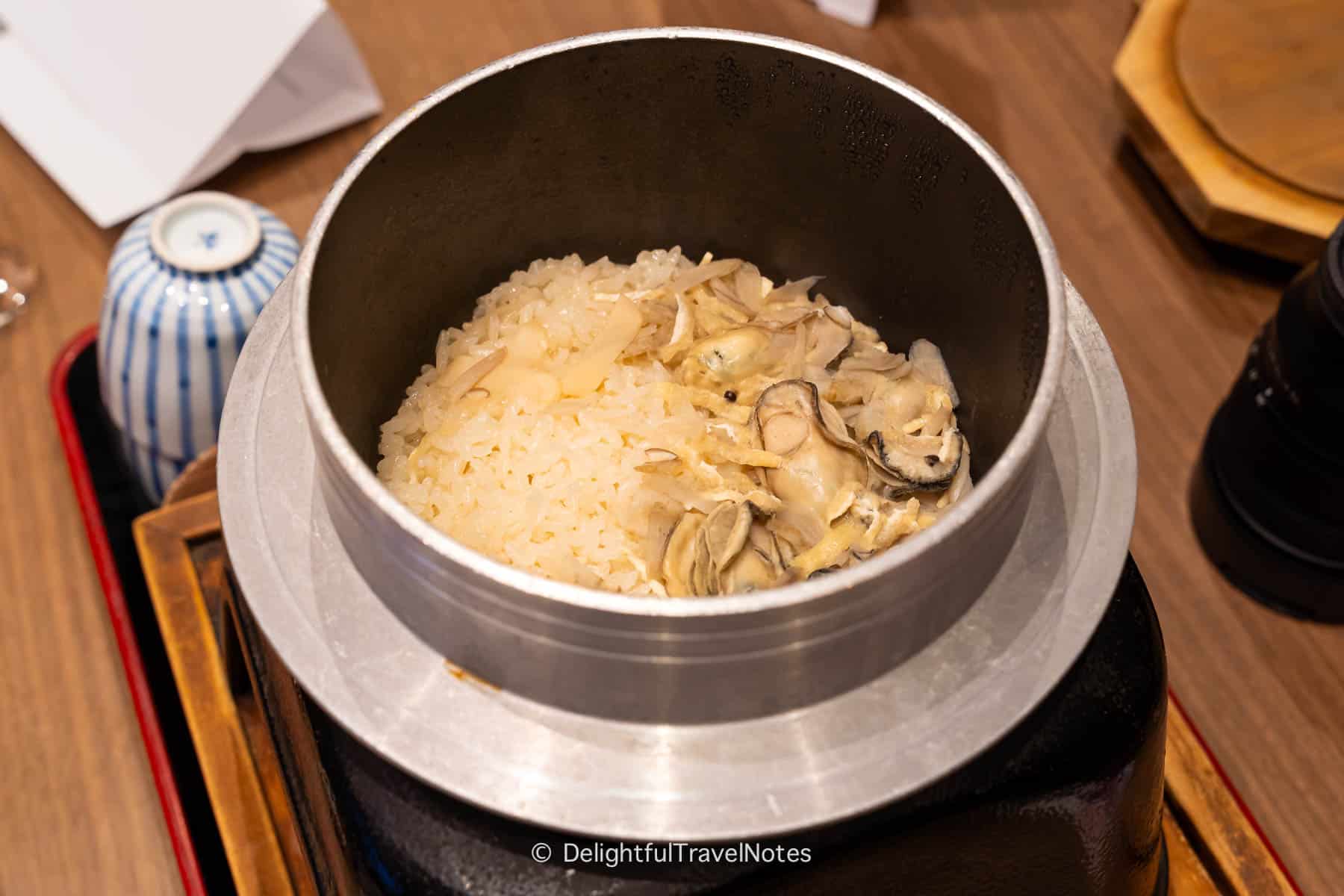
- Oyster rice + soup + pickles
- Dessert
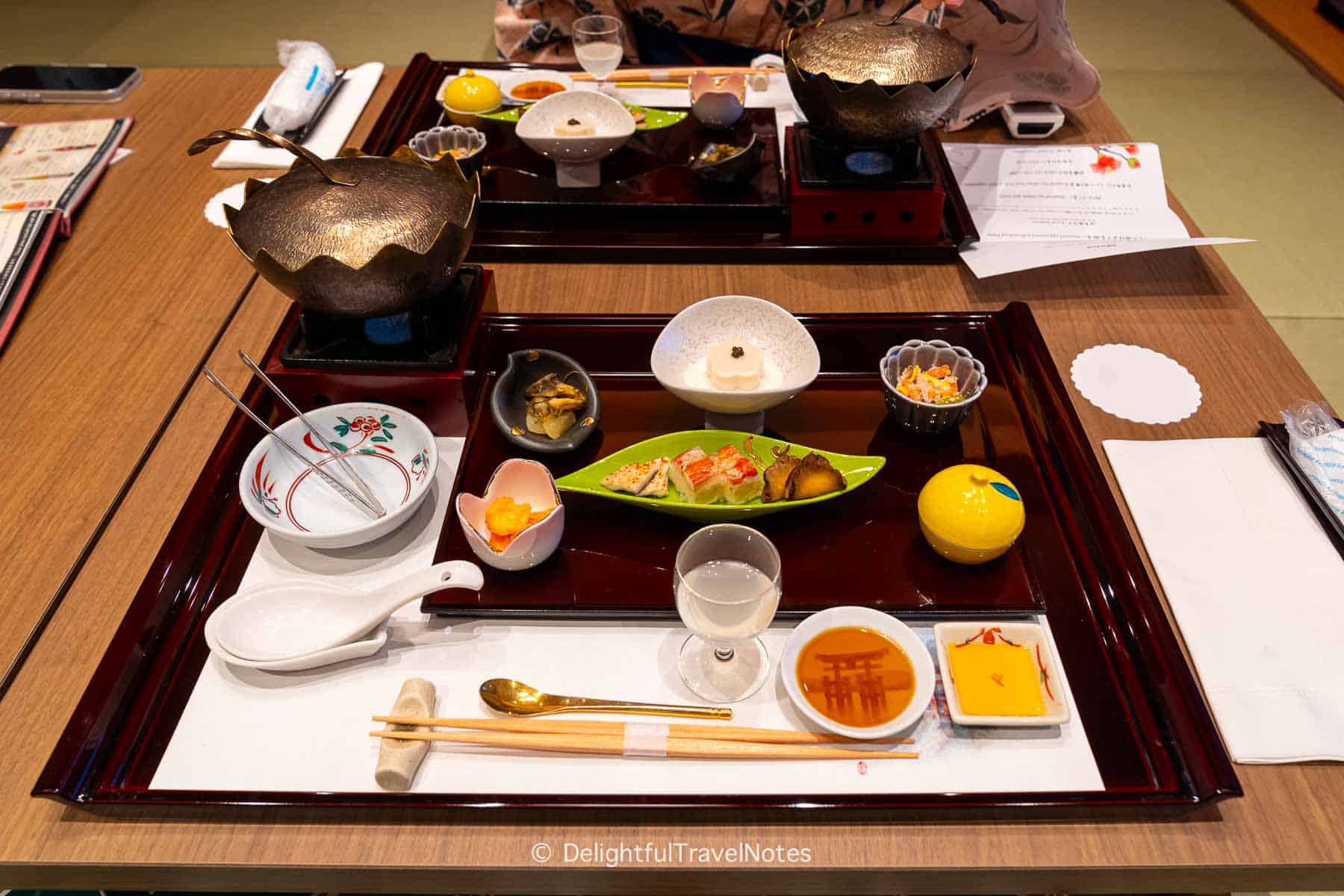
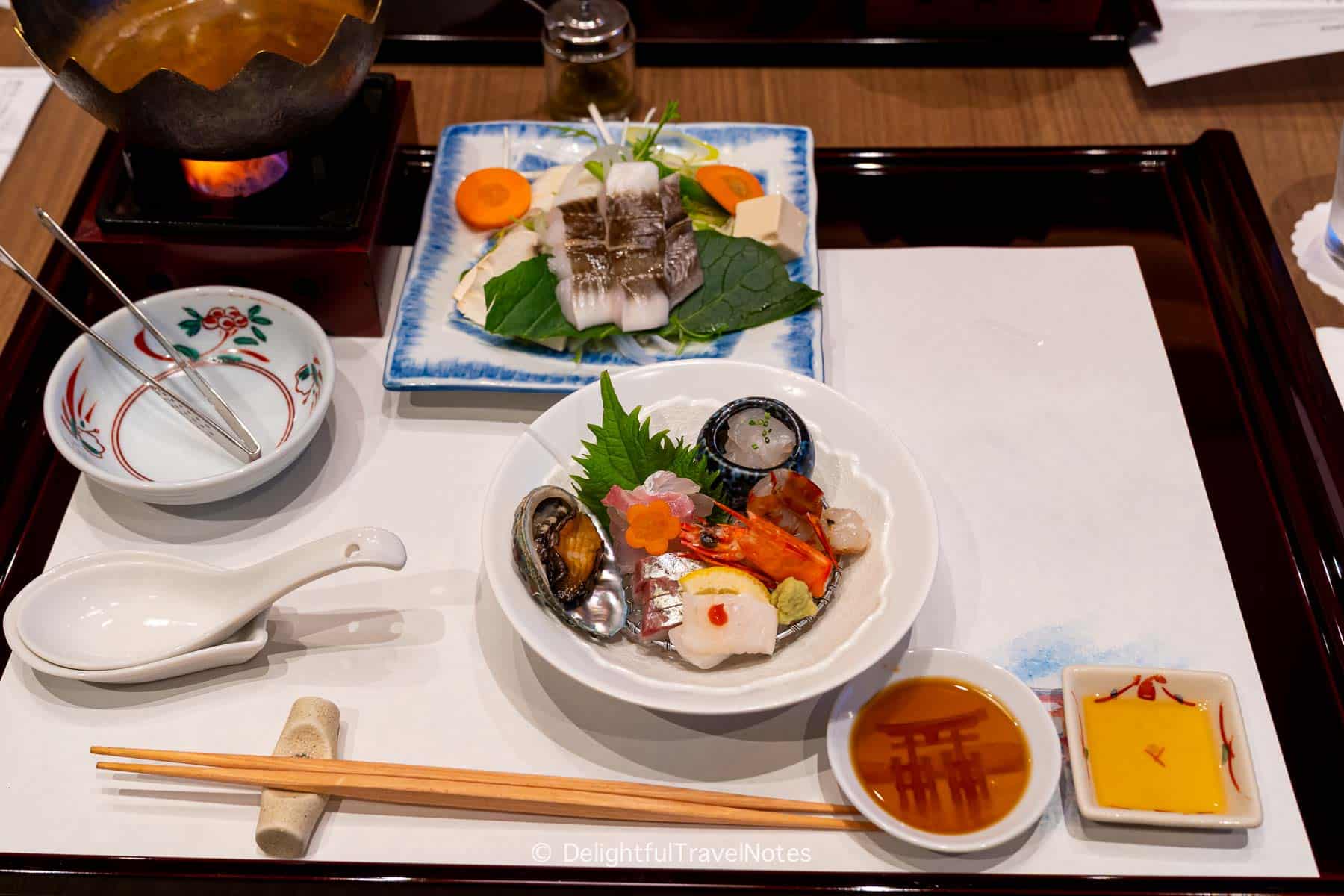
The highlight of this dinner for us was the strong emphasis on local and seasonal ingredients. Local delicacies that Miyajima and Hiroshima known for, including anago and oyster, were well represented throughout the meal. Among all the courses, the anago nabe was our most favorite.
We had tried anago several times before, mostly in the form of anago sushi or anago meshi, a well-known local dish on Miyajima Island. In those preparations, the conger eel is grilled and brushed with a sweet soy-based glaze. While popular, we often found it too soft and overly sweet, with the glaze masking the natural flavor of the eel.
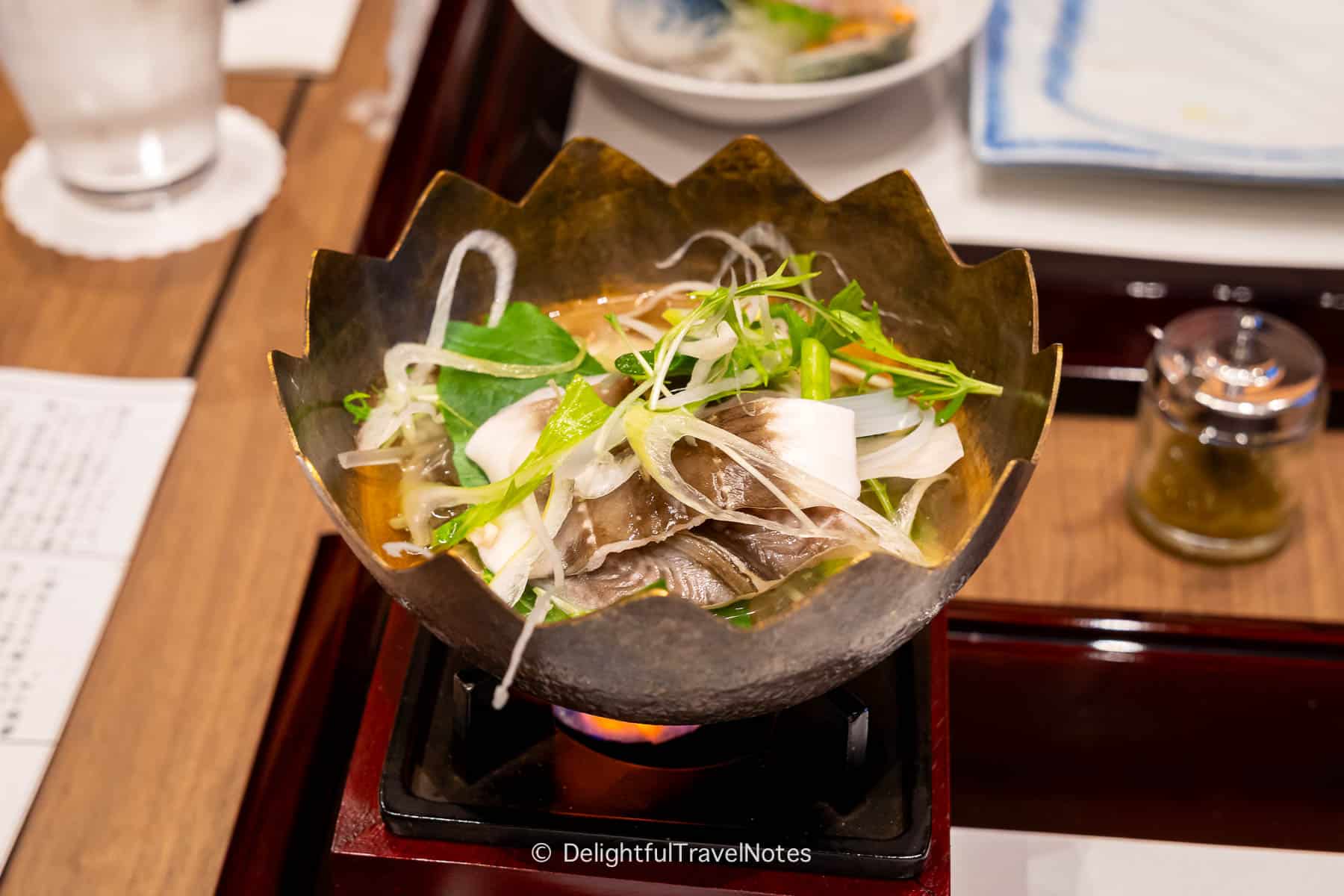
The anago nabe was like the complete opposite. Thin slices of raw anago are gently simmered in a light broth with vegetables and tofu until just cooked through. This preparation brings out the eel’s true character: delicate, clean, and mildly sweet. The texture is tender but still has a pleasant bite and not overly soft. Without the heavy glaze, the natural flavor of the anago comes through clearly.
This dish at Kinsuikan totally changed our perception of anago. Before this meal, it was never something we were particularly excited about. We enjoyed how the simple nabe unexpectedly brought out the best of this ingredient.
Other seasonal winter ingredients highlighted in the dinner included fugu (puffer fish), daikon radish and turnip. It was our first time trying fugu, and it appeared in a couple of preparations: puffer fish milt tofu and fugu sashimi. Both dishes were light, clean in flavor, and refreshing. It was a nice introduction to an ingredient we had been curious about.
At the end of the meal, we couldn’t finish all the rice and our attendant kindly offered to have the kitchen turn the leftovers into onigiri for us. Our attendant was very energetic and friendly throughout our entire dinner. Communication was no issue as he spoke English while we managed with a bit of Japanese as well.
The dinner was served on the low table with floor chairs that you could see in our photos. It’s not something we are used to, so the setup wasn’t the most comfortable for our legs. However, we were glad to try the traditional setting for in-room kaiseki.
Overall, I wouldn’t rate this as a high-end kaiseki. We had seen more refinement and sophistication in the dinner at Madoka no Mori ryokan in Hakone. The dishes were not particularly intricate and while the plating was neat and appealing, it wasn’t especially artistic. Despite that, the meal had memorable elements, especially in its use of local and seasonal ingredients. Definitely a fond meal to think back for us. We had read some mixed Google reviews about the food beforehand, but we were happy with our dinner.
Breakfast
We had breakfast in the communal dining room after an early morning walk along the waterfront, with a quick stop by Itsukushima Shrine before the crowds arrived. The breakfast at the ryokan was in a traditional Japanese set-meal style, centered around variety, balance, and subtle flavors.
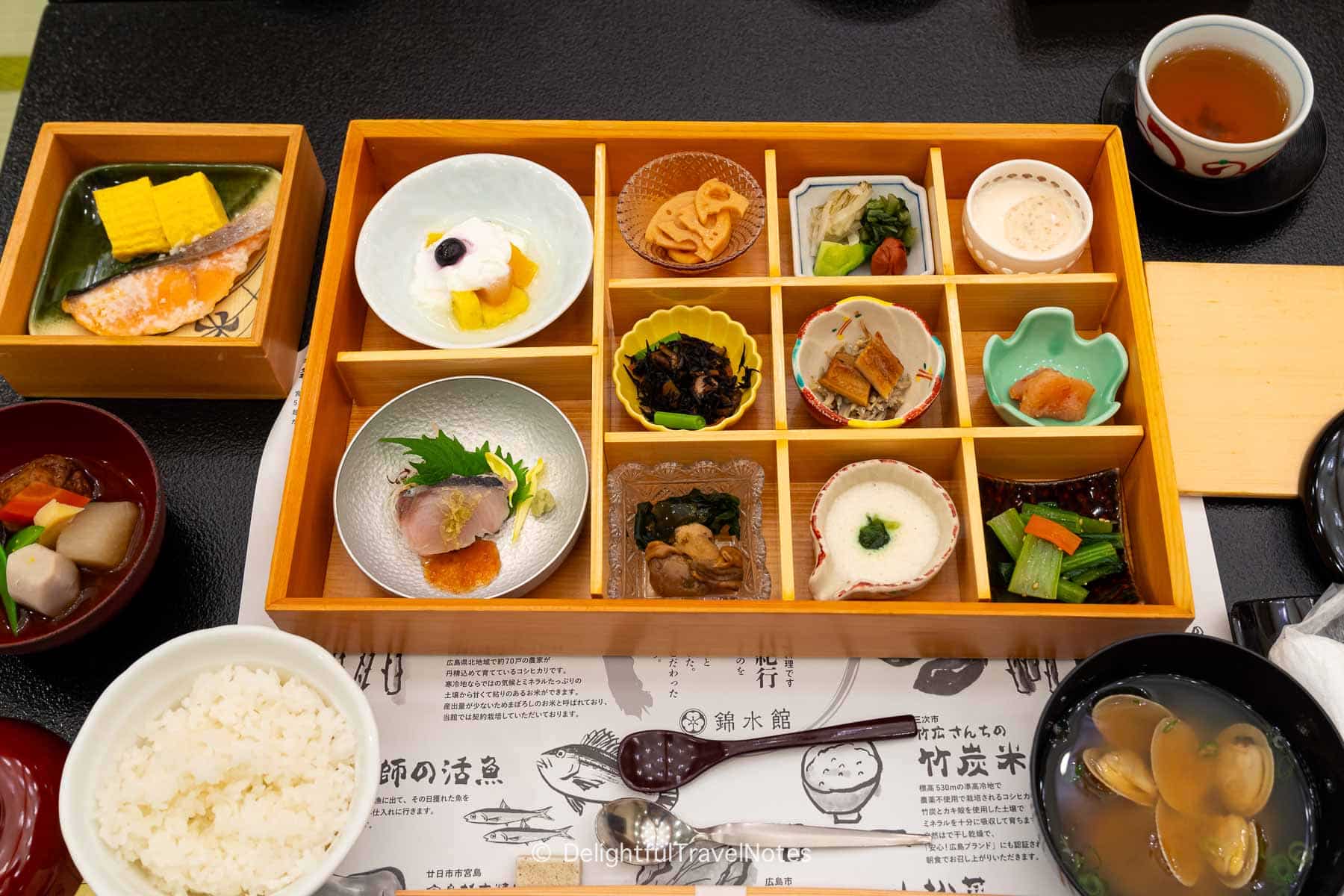
The meal begins with a selection of small appetizers presented in a neatly arranged wooden box with multiple small compartments, allowing you to sample a wide range of ingredients and textures. Local and seasonal ingredients were also presented, such as simmered Hiroshima oysters, conger eel with sansho pepper, and grated yam.
In addition to the small dishes, a few warm courses added more substance to the meal. We had a simmered dish of vegetables and fishball, salt grilled Hiroshima salmon, tamagoyaki and hot clam miso soup.
The breakfast felt comforting. It was not sophisticated, but it had the warmth of a home-cooked meal. The dining room was also very cozy, and the breakfast experience aligned with the traditional feel of Kinsuikan.
Other Amenities and Services
Yukata are provided for guests. Unlike some ryokan where they are placed in the room in a standard style, Kinsuikan has a display table with a variety of yukata patterns and colors, allowing guests to choose their preferred design at check-in. I think it adds a bit of fun and individuality to the stay.
We also received two tickets that could be exchanged for complimentary momiji manju at a nearby local shop. Momiji manju is one of Miyajima’s most well-known sweets and they are also everywhere in Hiroshima.
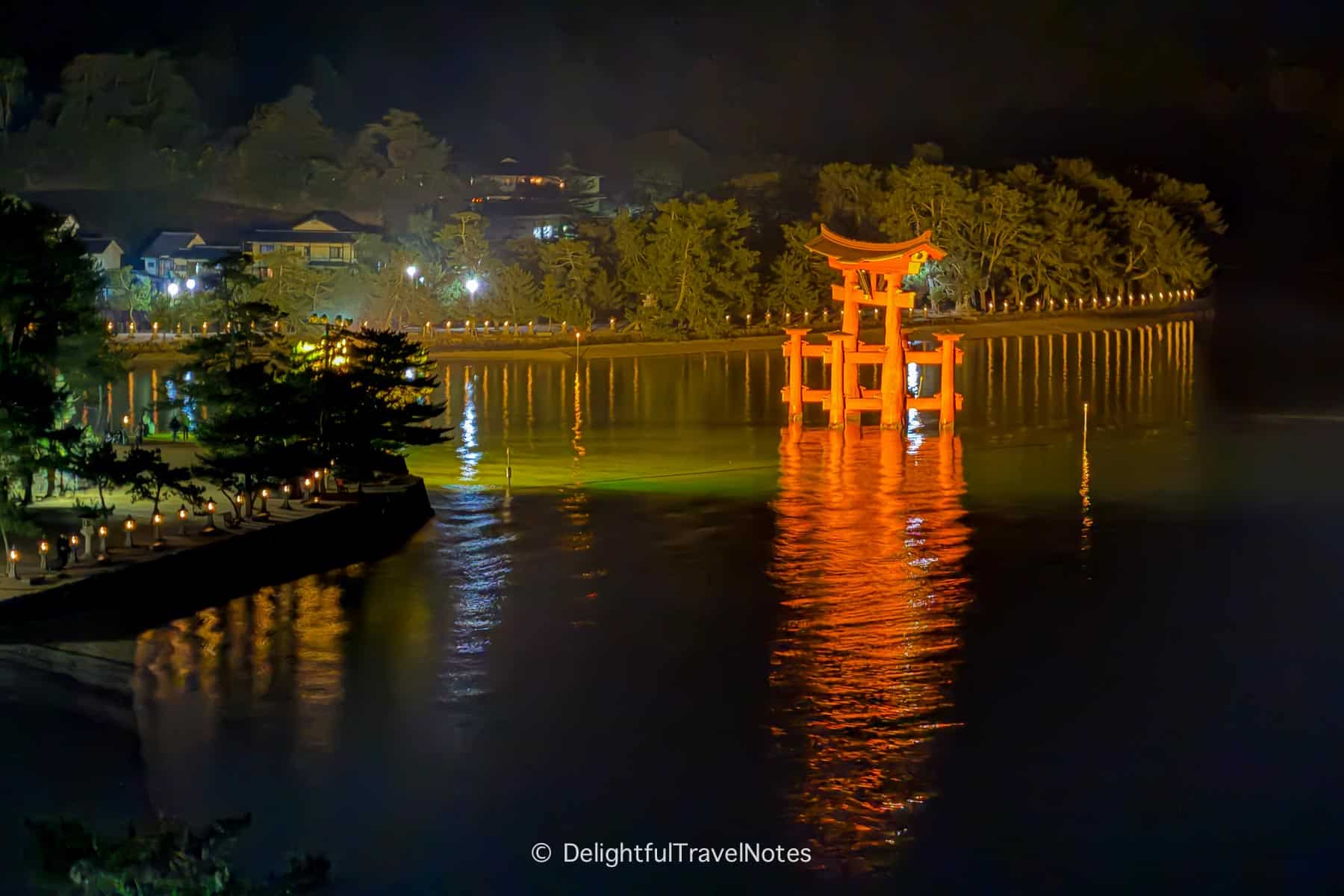
As mentioned earlier, the ryokan features a rooftop terrace with views over the sea and, in the distance, the torii gate. For bathing, guests staying in Mizuori rooms can reserve a private bath with heated normal water (the water was very hot!), while the public onsen uses natural hot spring water drawn from an underground source.
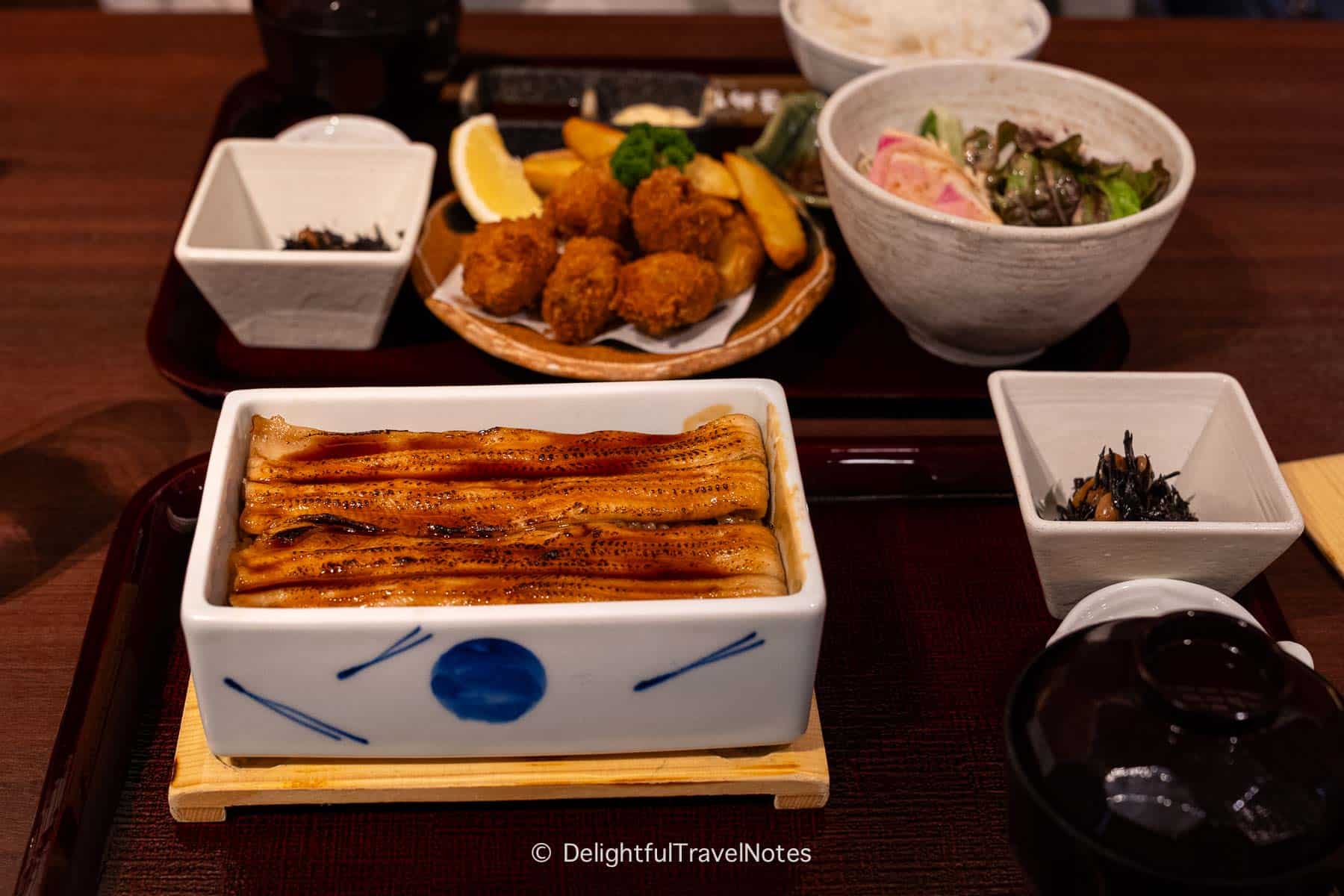
Kinsuikan is also connected to a sister restaurant, Mametanuki, which specializes in anago meshi, one of the signature dishes of the region. We had lunch there and the menu mainly focused on anago meshi and deep fried oysters set meals.
Check-in time is quite strict at 3:00pm, but guests can drop off luggage in the morning and return later. The ryokan also provides a shuttle service to the ferry terminal, which we used after check-out. I believe you can also use it for pick-up if you communicate to them in advance.
Conclusion
Kinsuikan is a solid and well-rounded choice for an overnight stay on Miyajima. The location is simply outstanding and you will get to enjoy a complete ryokan experience with warm and friendly service. While Kinsuikan may not possess the architectural refinement or design sophistication of higher-end luxury ryokan, it is still thoughtfully designed and well-equipped for a relaxing stay.
Check Prices & Availability of Miyajima Kinsuikan
Booking Agoda Expedia
Our visit was in late winter and availability didn’t seem to be an issue when booking about a month in advance. However, we did notice we could have had a lower rate if we had decided earlier. If you already know your plans and are set on staying here, it’s worth booking early to secure a good rate.
Final tips: if you plan to visit the area between Osaka and Hiroshima, I recommend checking out the Kansai-Hiroshima Area Pass. This regional rail pass offers unlimited travel on JR trains across a wide area, including the Shinkansen. It also covers the JR ferry to Miyajima! You can also use it to take day trips to Himeji and Kobe, or to Kurashiki and Okayama.
Explore More
Kurashiki and Okayama in One Day Trip from Hiroshima (or Osaka)
Miyajima Trip Report and Why An Overnight Stay is Worth It
Best Areas to Stay in Kyoto (For First-timers and Returning Visitors)