
Visiting Kitano Tenmangu During Plum Blossom Season in Kyoto
Kitano Tenmangu is a prominent Shinto shrine in northwest Kyoto. If you visit the city in early spring (end of February – beginning of March), I recommend adding this shrine to your itinerary. The shrine is home to one of Kyoto’s finest plum gardens, where blossoms in varying shades fill the air with a gentle, lingering fragrance. Amid the crisp late winter air, the beautiful flowers quietly signal the arrival of spring.
Getting There
The nearest station to this shrine is the Randen Kitano-Hakubaicho on the Randen tram line. The Randen line does not connect directly to the subway lines or major JR lines, so reaching the shrine by train is not convenient. To save time, you may consider taking a taxi to the shrine. We took one from downtown area and paid around 1,500 yen for the ride.
Kitano Tenmangu is within a 15-minute walk of Kinkaku-ji, so if you haven’t seen the golden pavilion, it makes sense to combine the two in one half-day trip.
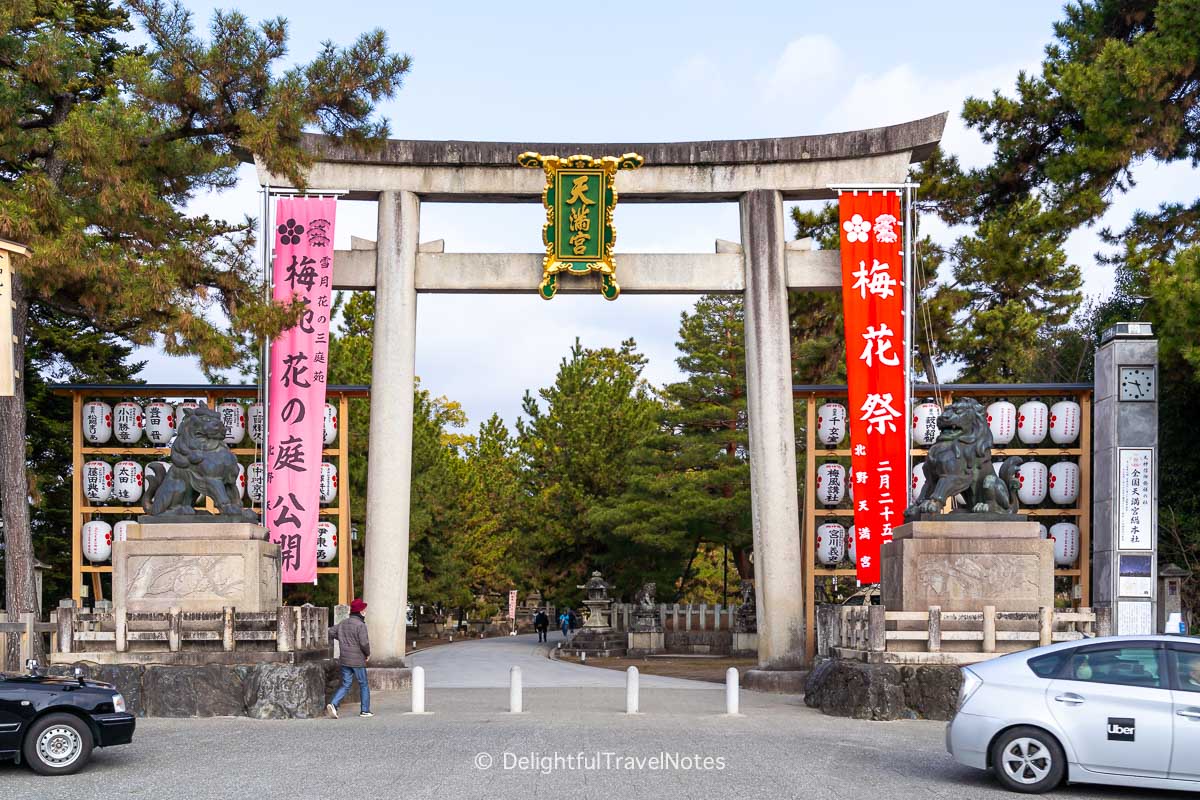
Touring the Grounds
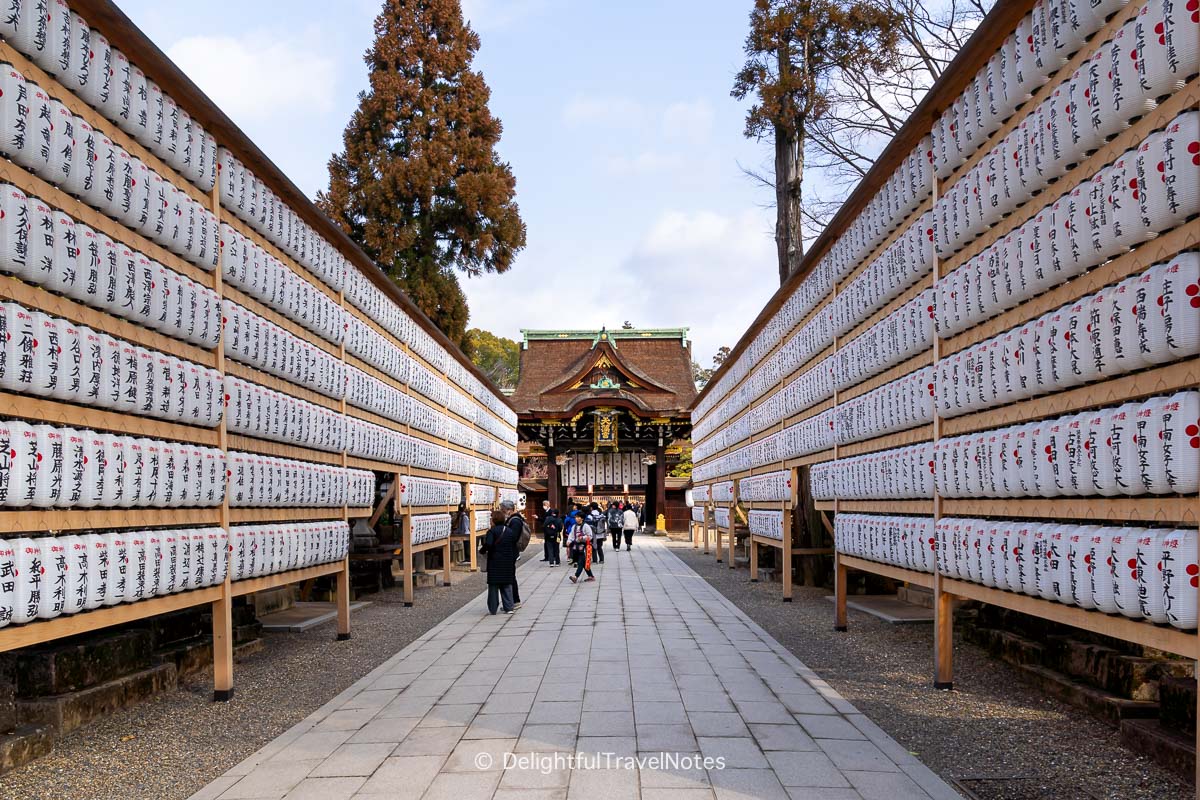
The shrine grounds are quite expansive. You enter through a series of stone torii gates, then walk along corridors lined with lanterns that guide you toward the main hall. The long rows of white lanterns create symmetry and depth, drawing your eyes forward.
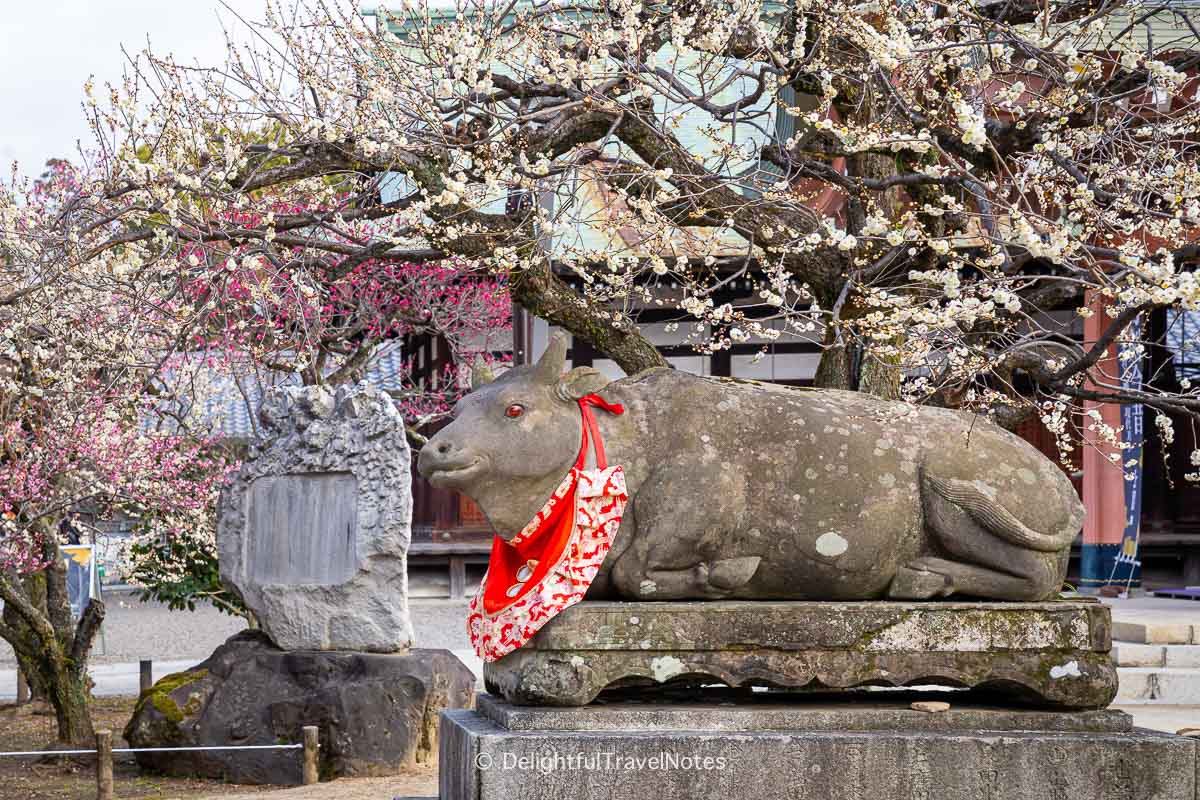
Ox statues are scattered throughout the shrine grounds. These are not random decorations as they are associated with Sugawara no Michizane, the deity enshrined here and revered as the god of learning and scholarship. We saw quite a number of students visiting the shrine, probably to pray for success in academics and exams.
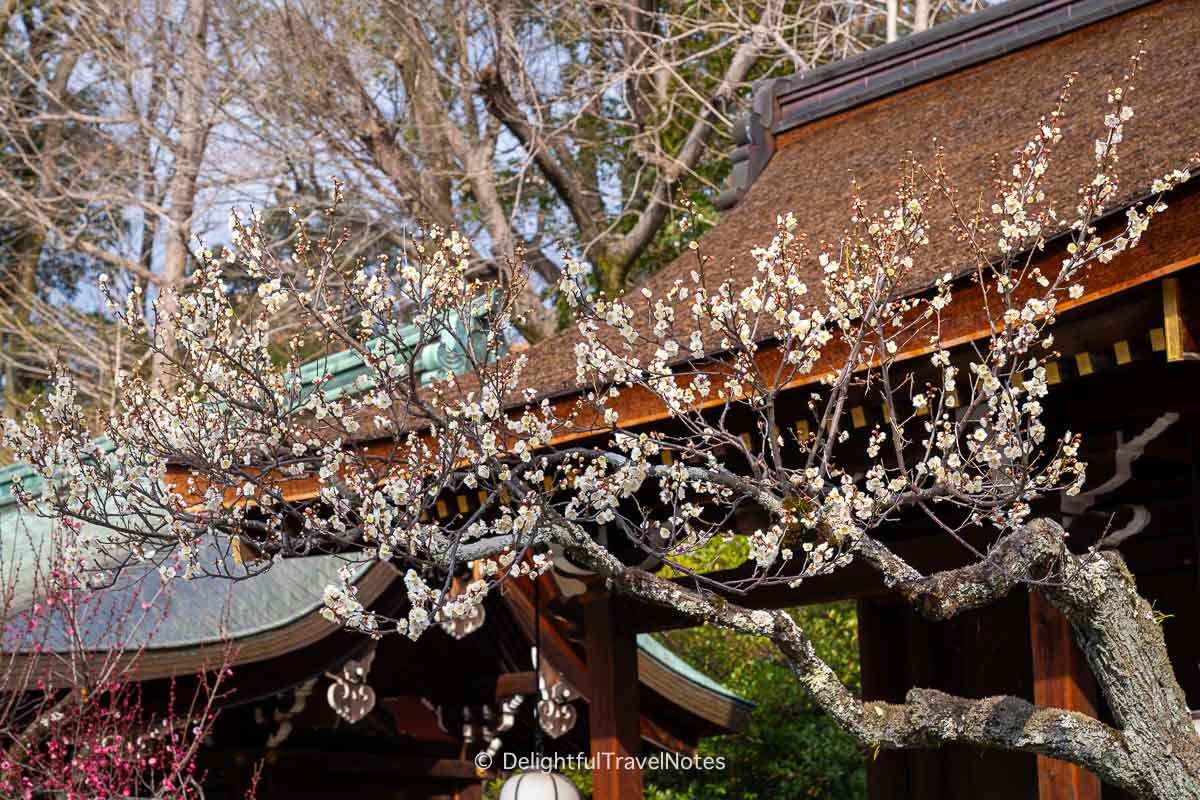
The general shrine area is free to enter and already has several ume trees. However, the scale is modest compared to the dedicated plum garden. So if you are here for the plum blossoms, give the general area a tour and then head to the garden entrance which is next to the lantern corridor.
The Plum Garden
We paid 3,000 yen per person for the ticket in February 2026, which included same day re-entry (useful if you want to return for evening illumination), a rice cracker and a cup of plum tea. As comparison, we paid 900 yen to enter the plum garden at Jonan-gu.
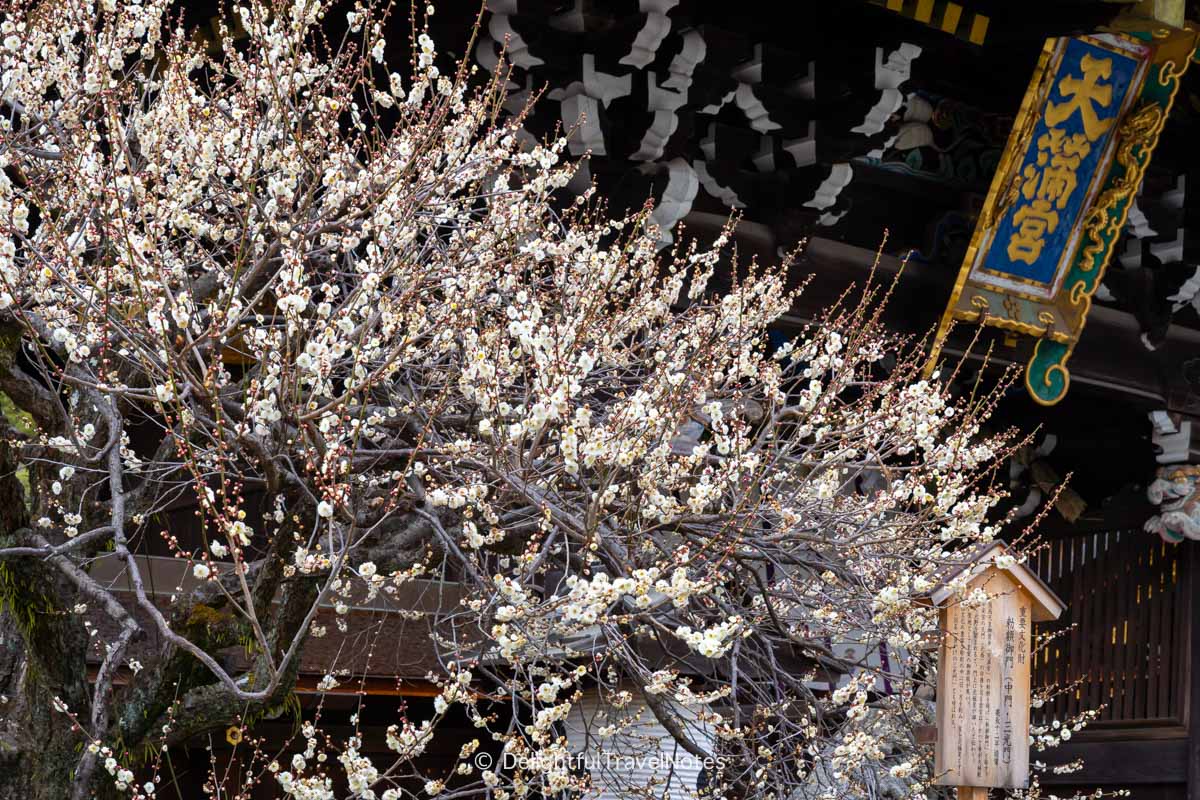
While Jonan-gu is known for its graceful weeping plums, Kitano Tenmangu has a broader range of varieties. The plum garden is also more expansive than at Jonan-gu, with a slightly festival-like atmosphere. Most trees here are upright types, with a few weeping ones among them. The upright plum blossoms reminded us a lot of peach blossoms in Vietnam.
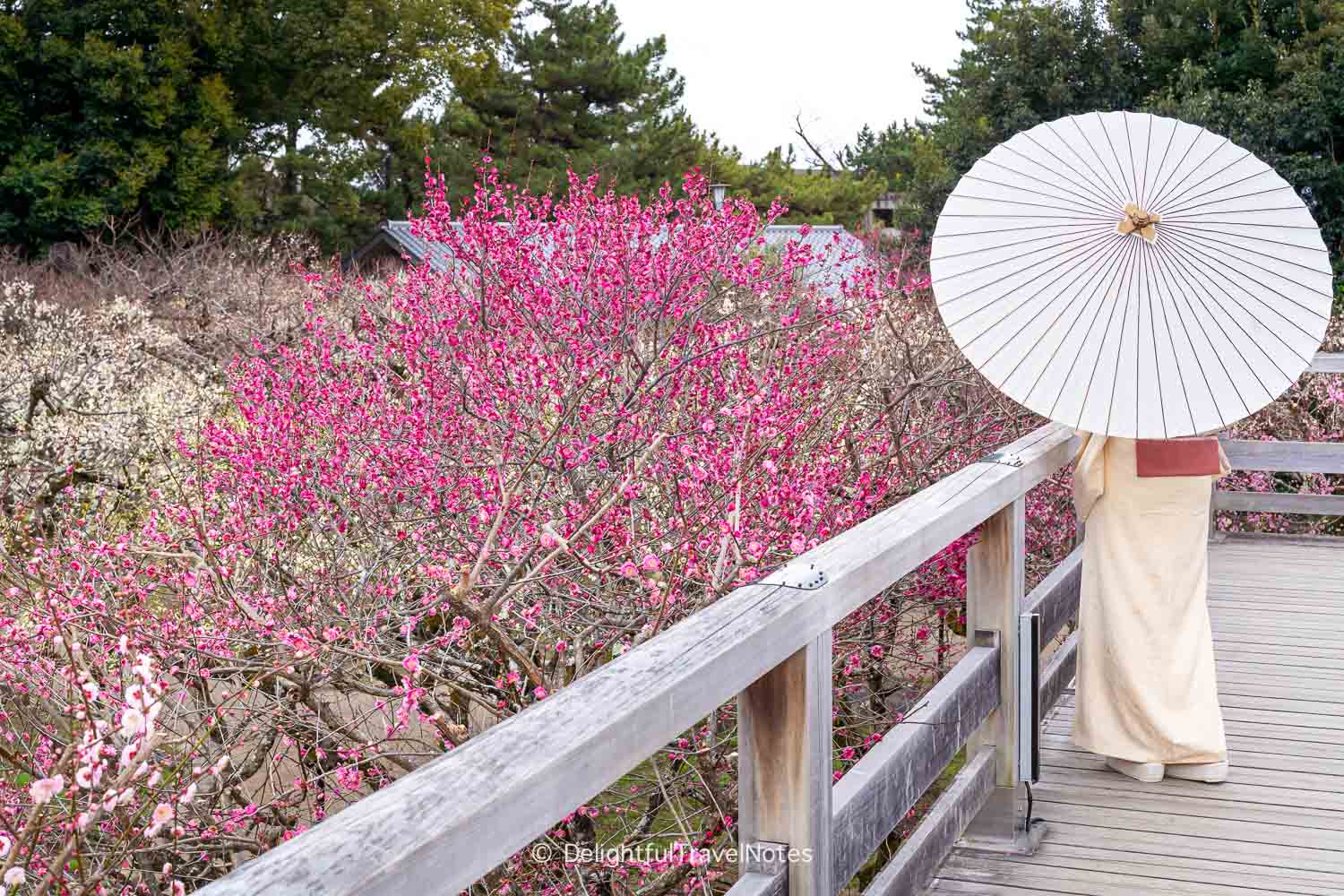
Blooms range from pure white, blush pink, bright fuchsia and deep magenta. I find it quite interesting that the deeper the color, the milder the fragrance. Is it nature’s reminder that you can rarely have everything in life?
There is one particular plum variety with yellow blossoms that has the strongest and sweetest fragrance of all, almost jasmine-like, but they are harder to find. I only spotted few trees with light yellow blooms at Kitano Tenmangu.
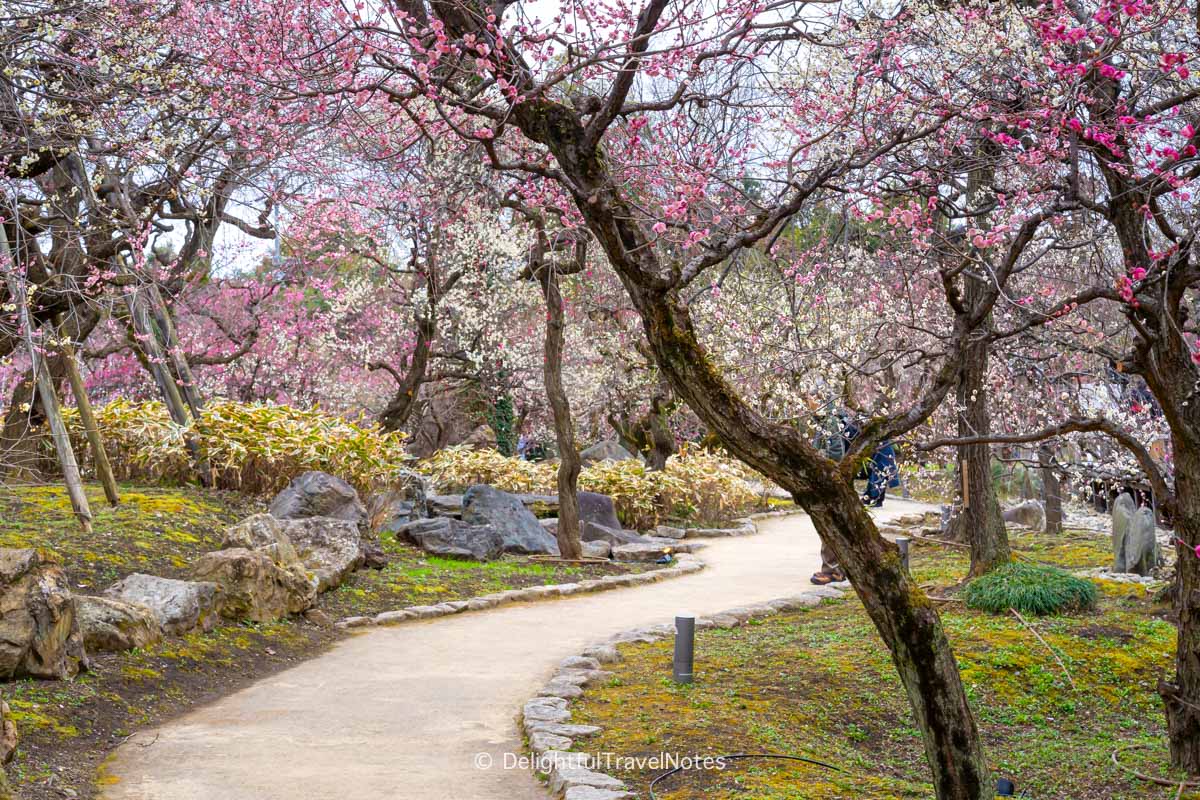
The winding paths in the garden allowed visitors to spread out. Many locals were there for blossom viewing and taking photos, but it was pretty calm and not crowded. In the central part of the garden, several white plum trees were decorated with hanging glass ornaments which caught the light and added sparkle among the blossoms.
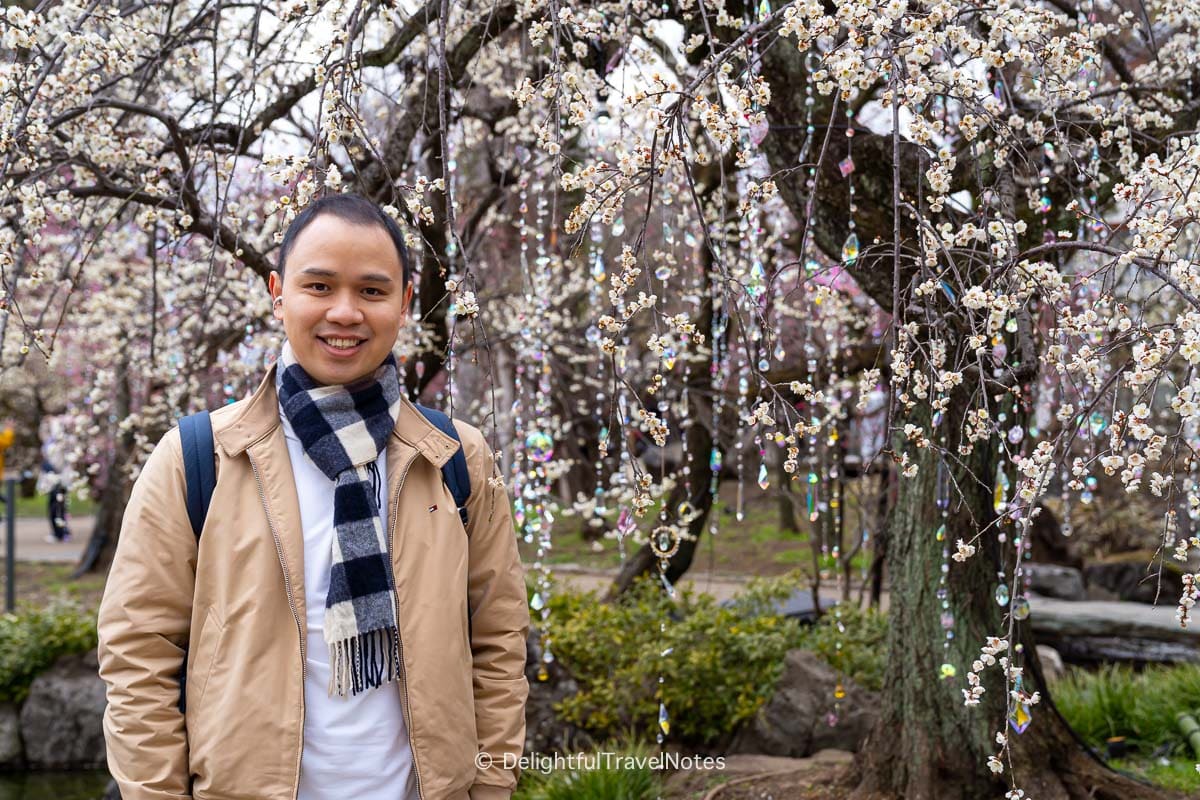
The garden was illuminated in the evening, and the same-day re-entry allowed us to return. However, we personally found it much more beautiful during the day. The night illumination felt more crowded, and most of the lighting focused on pathways rather than highlighting the blossoms. Without special lighting for the flowers, it was harder to appreciate their subtle colors and density. I thought autumn illumination was a much better experience.
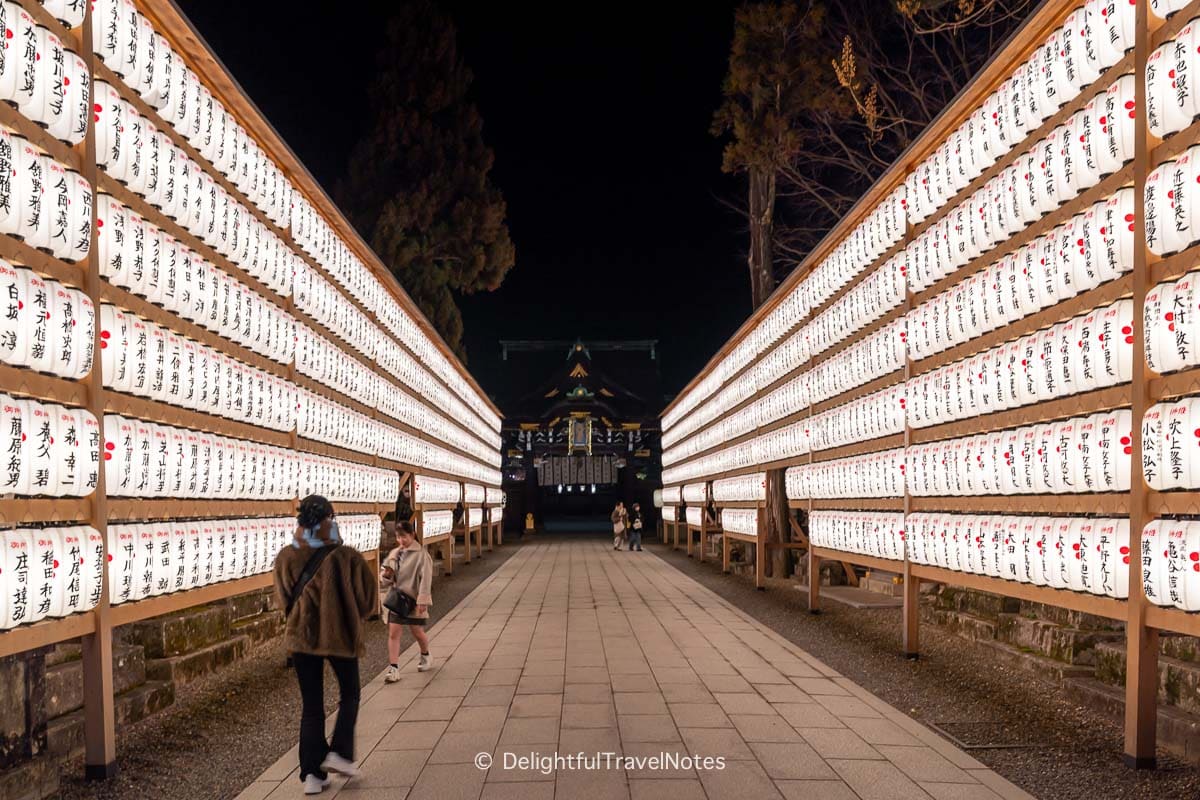
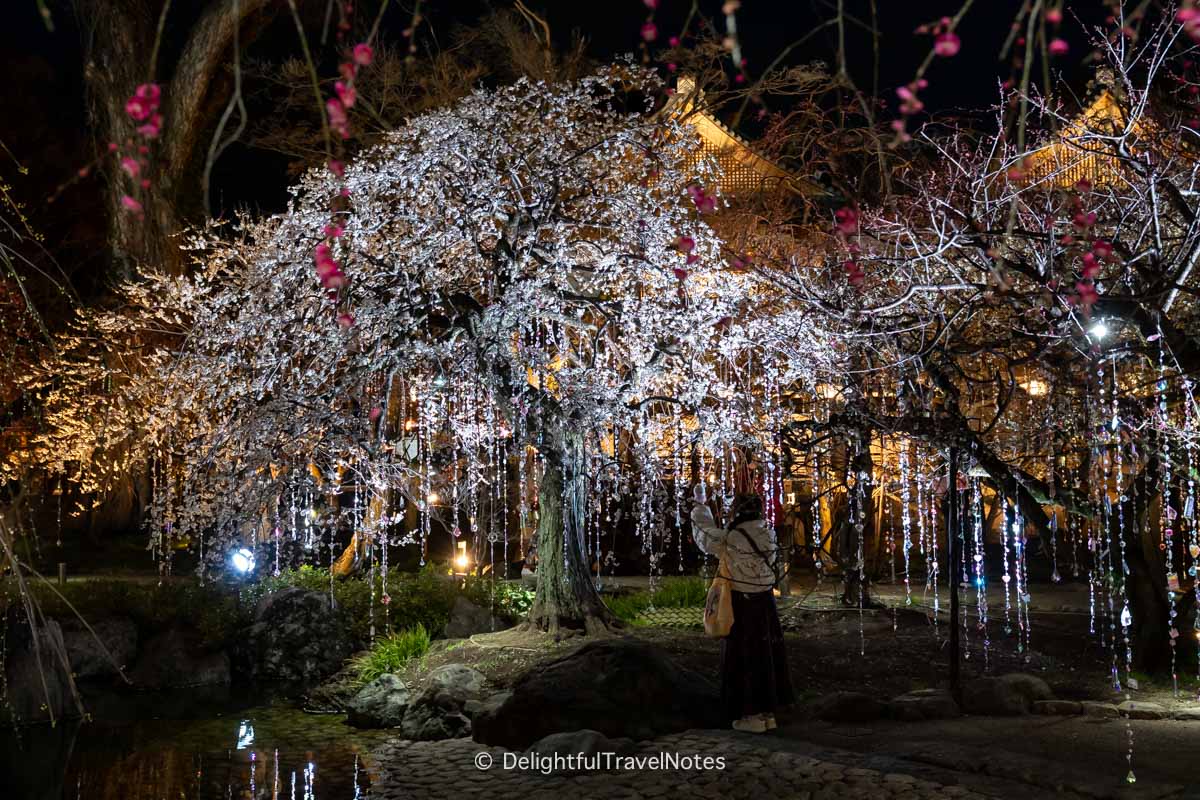
Though we didn’t like the night illumination and 3,000 yen was not a cheap entrance fee, we loved our morning visit. Walking slowly along the winding paths, we could appreciate the blossoms’ beauty and feel that hopeful energy of early spring in the air.
Explore More
Miyajima Kinsuikan Review: A Ryokan with A Century of History on the Island
Kurashiki and Okayama in One Day Trip from Hiroshima (or Osaka)
Miyajima Trip Report and Why An Overnight Stay is Worth It