
Jonan-gu: Amazing Place to See Weeping Plum Blossoms in Kyoto
If you happen to be in Kyoto in the latter half of February or early March, Jonan-gu Shrine in the southern area of Kyoto is well worth a visit. This historic Shinto shrine is home to a fairly large and meticulously maintained garden that becomes especially captivating in late winter and early spring, when weeping plums (ume) and camellias begin to bloom.
Getting There
The nearest station to this shrine is Takeda Station, which is on the Karasuma Subway Line and Kintetsu-Kyoto Line. From the station, it takes a little over 15 minutes to reach the shrine on foot.
Jonan-gu is a bit away from Kyoto’s busiest tourist spots and the walk to the shrine itself isn’t scenic. However, that slight inconvenience is precisely what keeps it peaceful. For us, the blooming ume garden more than justified the effort of getting there.
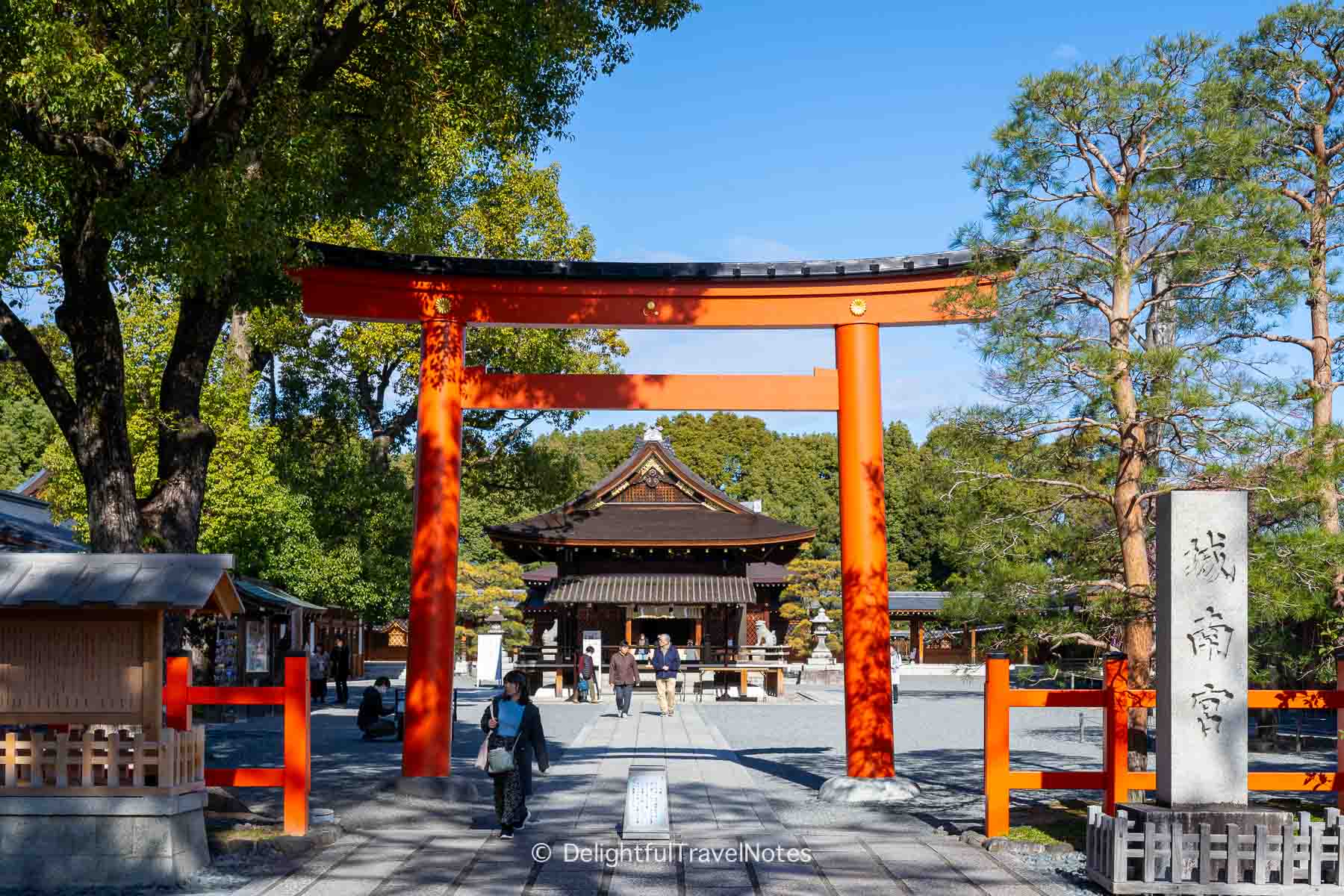
Entering through the torii gate, you will notice a sign on the left directing visitors to the plum garden. Admission to the garden was 900 yen per adult when we visited on February 17, 2026. As a quick comparison, we paid 3,000 yen per adult to enter the plum garden of Kitano Tenmangu Shrine the day before.
Weeping Plum Blossoms: The Showstopper
Ume trees come in different forms. Some grow upright, while others have cascading branches. Their flowers may be single-petaled with five simple petals or double-layered with thick, multi-tiered blooms. Colors range from pure white to light pink, deep fuchsia, and even soft yellow.
Among these types, I think weeping plum trees are the most dramatic. Their curtain-like branches hang down gracefully, making them incredibly photogenic when filled with buds and blossoms. When multiple weeping plums are planted together, the effect can be breathtaking. Jonan-gu is undoubtedly one of the best places in Kyoto to experience this spectacle.
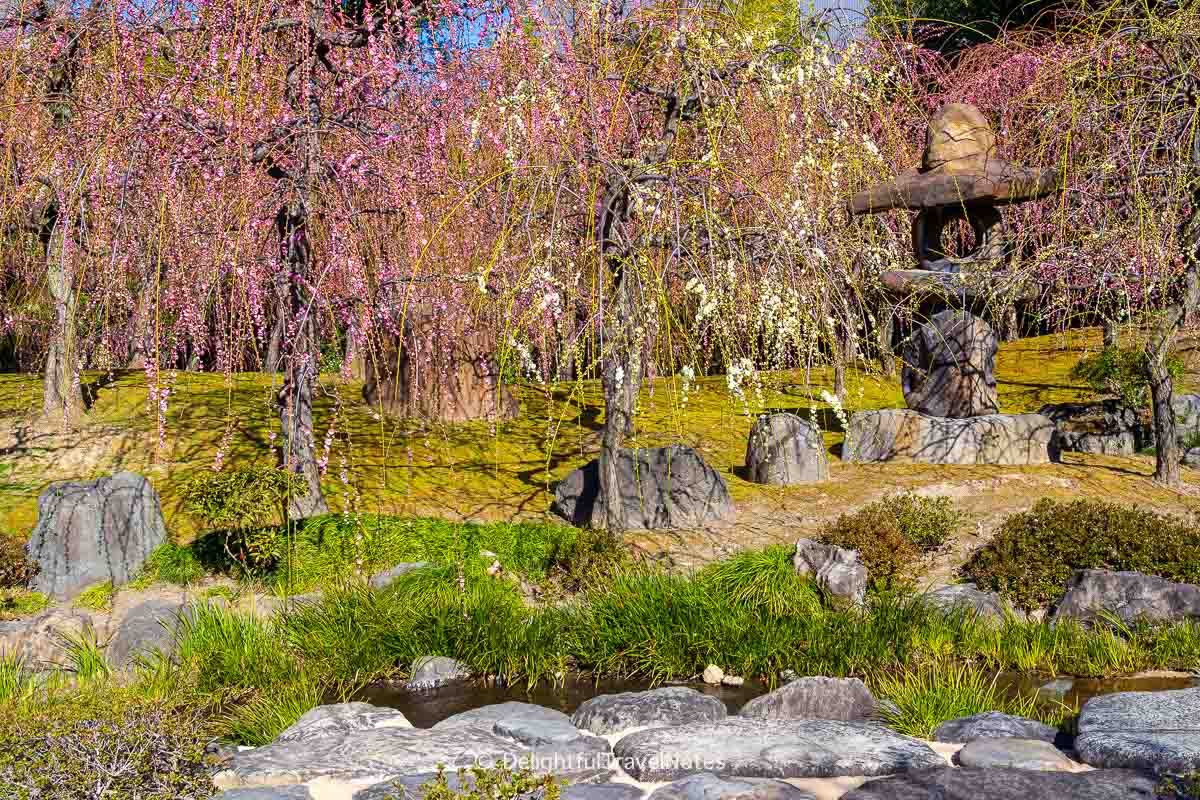
The first scene that greeted us in the garden was a cluster of weeping ume trees draping down around the old stone lantern, softening the hard textures of rock and stone. Moss and grass added lush green grounding beneath the flower canopy.
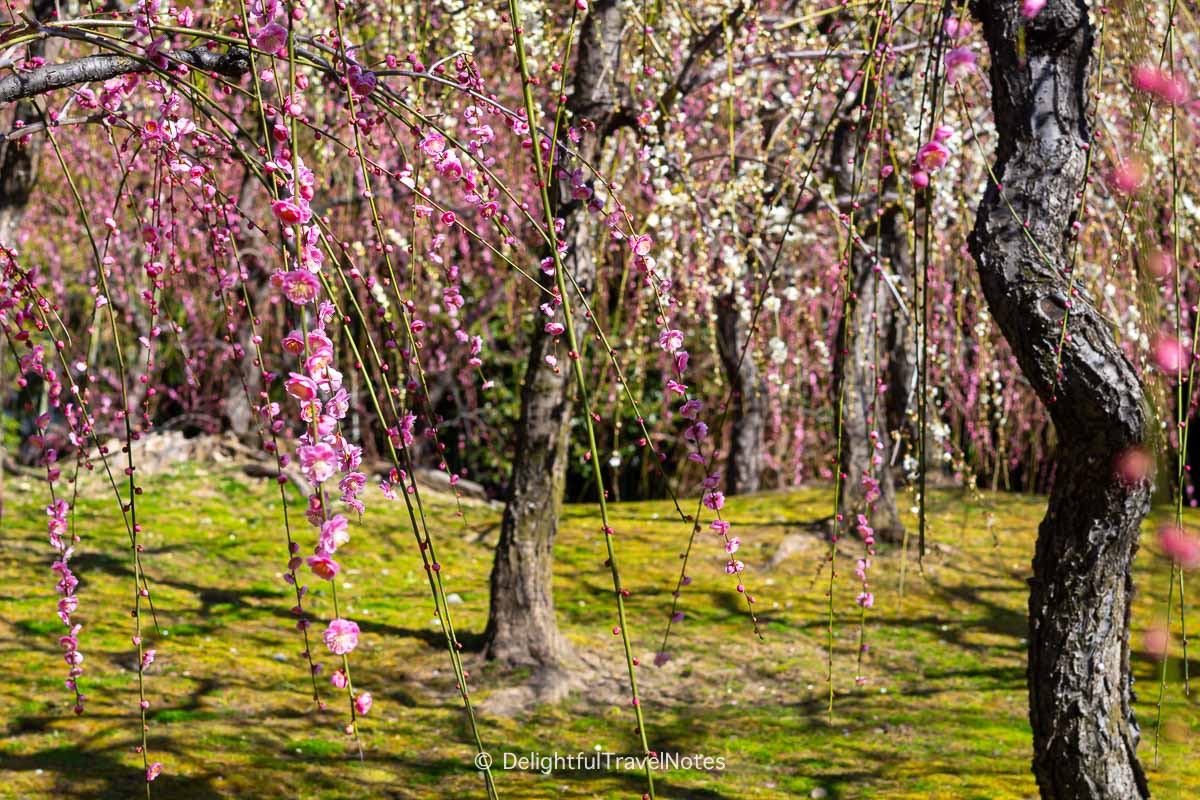
Each slender strand of branch was densely dotted with blossoms and round buds at various stages: some tightly closed, some half-open, some fully blooming. When we visited, a sign at the entrance announced that blooming was only at 30%. Yet several trees were already in full bloom, and they looked magnificent.
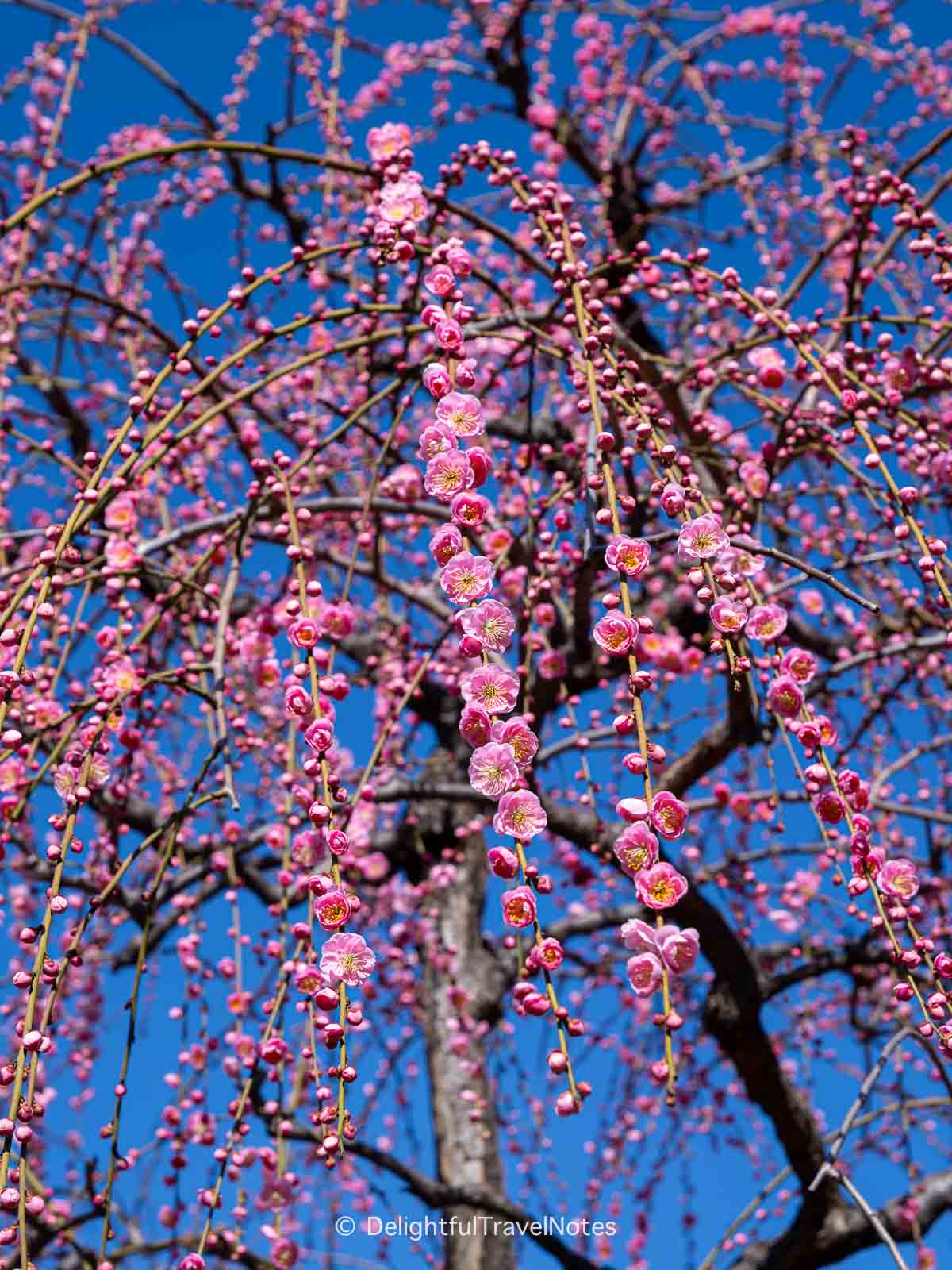
Standing beneath those fully bloomed weeping plums felt so poetic and almost ethereal to me. Layers of blossoms formed airy and elegant curtains overhead, with their soft petals glowing in the sunlight. It is a sight I want to remember forever. It somewhat felt like standing under a brilliant firework.
Compared to sakura’s fleeting beauty, to us, ume feels more resilient, signaling both winter endurance and spring renewal. While many visitors chase cherry blossoms, I honestly think ume blossoms are equally beautiful and just as worthy of admiration.
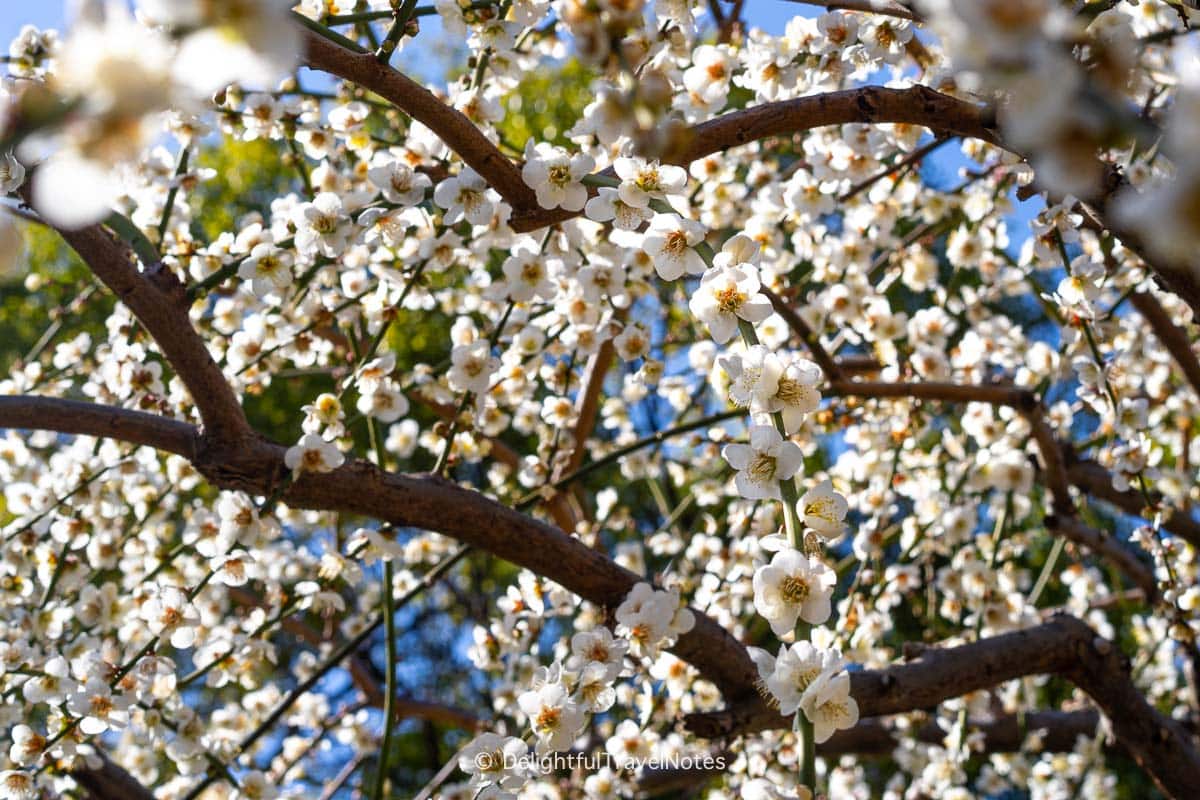
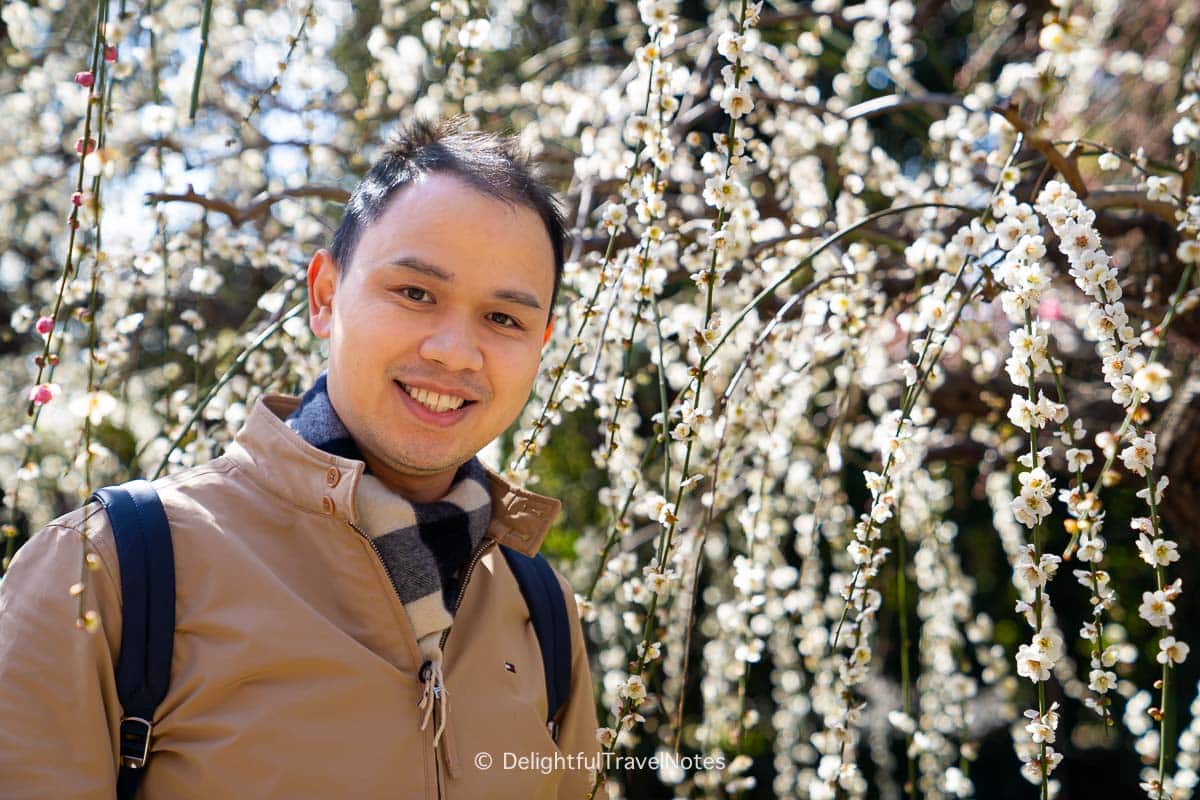
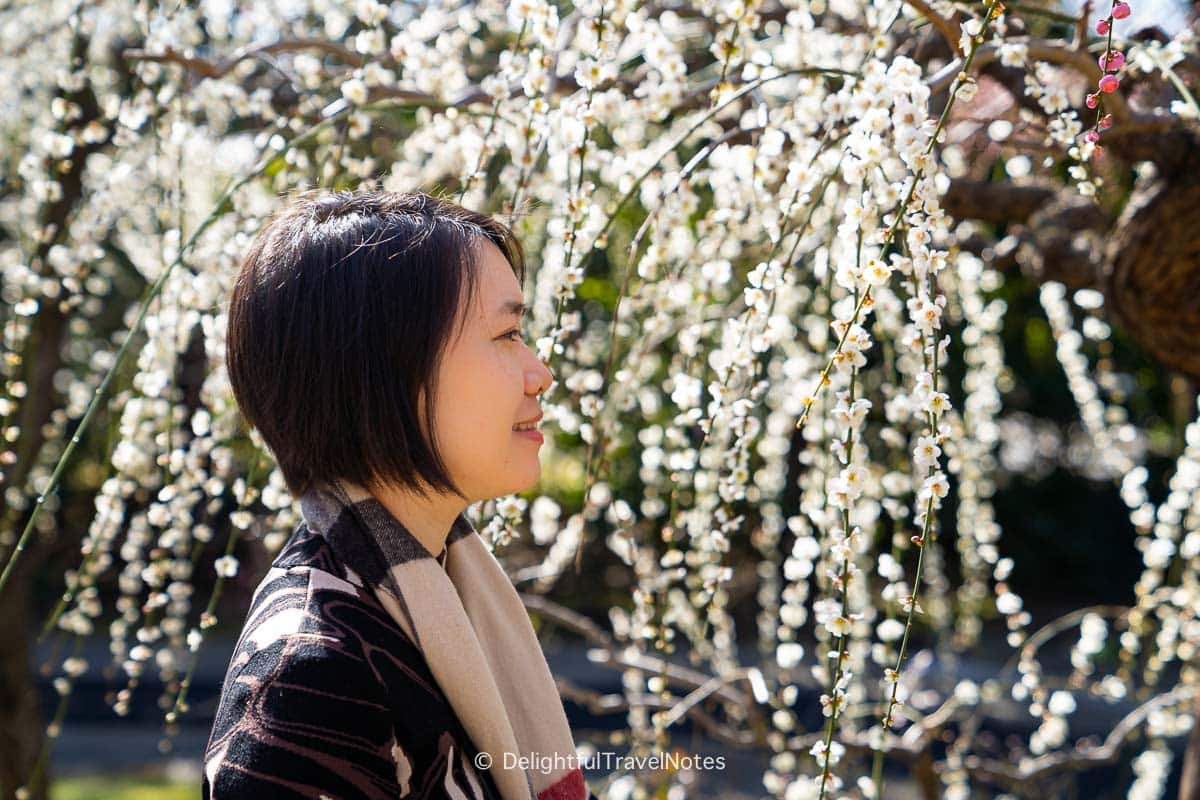
The only downside of the plum garden at Jonan-gu is that there seems to be a road right behind it with heavy traffic from cars and trucks. Although a tall hedge of trees completely blocked the view of passing vehicles, traffic noise still affected the atmosphere.
After enjoying the weeping plums, you can continue along the winding paths to explore the shrine’s other garden sections, each designed in a different style. Don’t forget to get a goshuin to remember your visit before exiting the shrine.
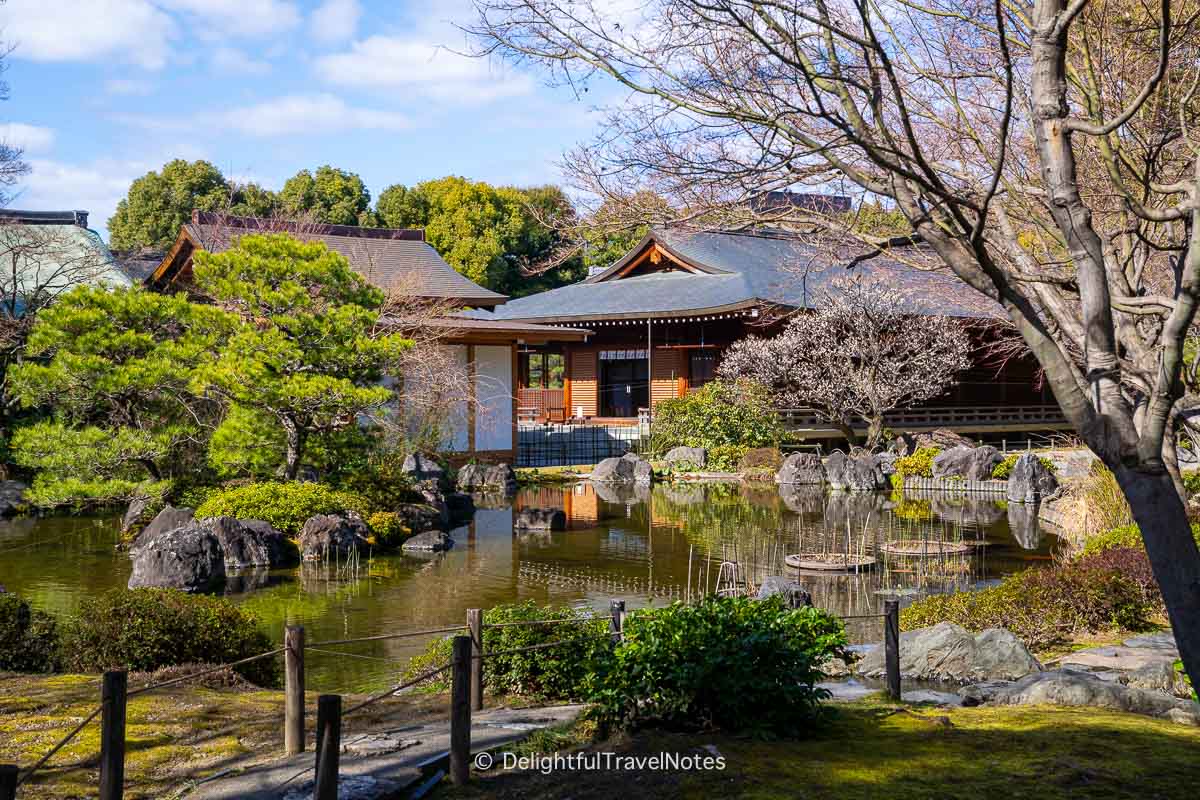
The morning we visited Jonan-gu was very sunny with few clouds. While the clear blue sky made the blossoms pop, the sunlight was quite strong and direct. The harsh light created stronger shadows and contrast than I would have preferred, but I’m pretty happy with the photos we went home with. One last thing to note is that Jonan-gu plum garden would get a lot more crowded toward full bloom.
Explore More
Miyajima Kinsuikan Review: A Ryokan with A Century of History on the Island
Kurashiki and Okayama in One Day Trip from Hiroshima (or Osaka)
Miyajima Trip Report and Why An Overnight Stay is Worth It